close window

« TRUST 2008 | Main | As America Votes »

January 30, 2008

Davos Brain Dump

I have just returned from four days at the World Economic Forum. It was the most interesting WEF in my ten years of going to Davos, because the world stock markets had just plunged; the Societe Generale debacle was uncovered; the Federal Reserve Bank had reduced the discount rate by ¾ of a point; and the attendees were confused about the implications for the coming year.

On the first day, the consensus was that the US was already in a recession, which would deepen and take the rest of the world with it. This view was widely promoted by former Treasury Secretary Larry Summers, who talked about the US “getting its comeuppance”, being only halfway through its period of trouble, a position echoed by financial services titans such as John Thain, formerly of the NY Stock Exchange, now CEO of Merrill Lynch. Meanwhile, CEOs of major companies in technology, marketing and consumer products quietly disagreed, noting that their business was continuing to move ahead, albeit a bit more slowly. By the end of the week, the viewpoints of the two sides converged, agreeing that the US was in a real slowdown (but not recession) for the next two to three quarters, to be followed by Japan now and Europe later in the year, but that the rest of the world, especially Brazil, China, India and Russia would move ahead smartly.

Rather than my usual tome on the twenty sessions I attended, I will give you my top ten Davos moments:

1) Evolution of Advertising—David Kenny, CEO of Digitas, said that advertising is moving from impressions to engagement, to serve the consumer by entertaining, informing, offering value or a way to express yourself. “The PC will know who you are, reading the patterns of where you travel or what you buy, then pulling the right ad from the air, actually dynamic advertising.” Paul Sagan, CEO of Akamai, talked about “contextual sidebars” which offer more information about products on line and a product in test at Microsoft known as AURA which allows a consumer to point a mobile phone at a product in store and find out whether it is green enough. Mark Read of WPP said that interactive advertising in the UK will be larger than TV advertising in 2009.

2) Challenge to Media—“We are trading mainstream media dollars for digital pennies,” said Jeff Zucker, CEO of NBC Universal. Sagan added that, “The subsidy for content is now decoupled, especially as classified ads evaporate from newspapers. He said that a newspaper needs 50-100 digital customers to make up for one print subscriber.” Geoff Sands of McKinsey reported that younger consumers of news are “promiscuous on brands,” relying on 12-16 news sources, half of them on line, with an emphasis on convenience as opposed to quality. The real issue is how to maintain high quality news coverage, especially investigative news, which is expensive and difficult to do. Good journalism used to mean good business; now it is not clear this is so.

3) Scariest Statistic—Did you know that half of the fuel that is imported to the US goes via the Port of Los Angeles (also 40% of the containers)? Or that per capita energy consumption in China is now only 16% of the US and 30% of Japan? Or that the consumer spending accounts for 71% of US Gross Domestic Product, while in China it is only 39%? Or that China spends 8% of GDP on infrastructure, the US only .2%? Or that the switch from a vegetarian to a red meat based diet means five times the consumption of wheat (demand for feed up 1-2% per year), at the same time as biofuels are being pushed as an alternative to hydrocarbons?

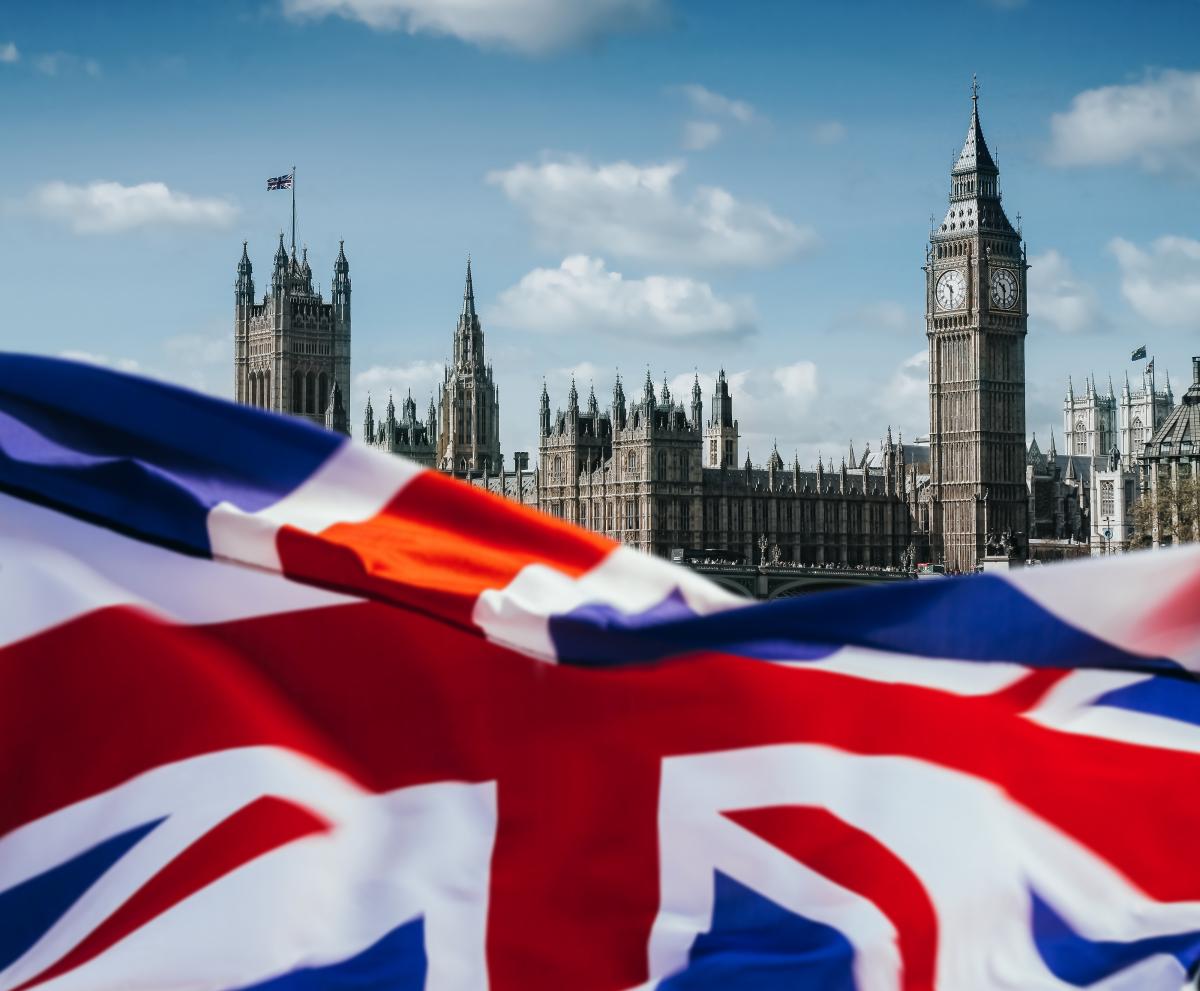
4) A Most Impressive Mind—Prime Minister Gordon Brown of the United Kingdom may not be as charismatic as his predecessor, Tony Blair, but his analysis on the intersection of business and government was incisive; he warned in particular against protectionism and heavy handed regulation. He asked the United Nations to expel “failed states” such as Zimbabwe, while calling for a revision of the charter of the World Bank (to fund environmental projects not just development) and demanding the International Monetary Fund act as a early warning system.

5) Best Speaker, Most Controversial Content—US Secretary of State Condoleezza Rice is passionate, funny and inspirational. Her defense of the Bush Doctrine was incredibly articulate. She argued that American realism “does not accept a difference between our principles/ideals and our interests,” advocated a “just model of economic development” and that “human imperfection makes democracy even more important.” The crowd began to titter in opposition as she asked, “Is a democratic Middle East just a dream? Is it worse than the Syrian occupation of Lebanon…the violent forces of reaction must be defeated.”

6) Hope for the Doha Trade Round—Pascal Lamy, chief negotiator, outlined the terms for an agreement in agriculture, at present the key stumbling block for the 152 nations discussing the 60 parameters for the treaty. Subsidies in the developed world would drop by 70-80%, agricultural tariffs in developing nations would decline by 50-60% but all nations would retain some flexibility to protect politically sensitive crops (rice in Japan, for example) by quota. Susan Schwab, the US negotiator, and Peter Mandelsohn of the EU, both claimed to have sufficient political capital to get a fair deal approved.

7) The Challenge for Eco-Friendly Products—Six of ten consumers in the US and UK say they are confused about whether they are indeed buying an environmentally friendly product and 75% of the same group say they don’t know how to make a difference on environment. Timberland CEO Jeff Swartz said consumers are not willing to pay more for the “eco-label,” noting that boots made of recycled tires and organic cotton did not sell. An IPSOS study indicated that consumers are willing to pay only $46 more on a $1000 purchase to buy a green product. Professor Ariely of MIT said that consumers need “an identifiable victim,” to humanize the ecology story, to put emotion into the purchase decision by appealing to the ego and by applying peer pressure.

8) Power of Business Philanthropy—Matthew Bishop, US editor of the Economist and author of a soon to be released book on the subject, said that government does not want to support philanthropic ventures now, given other priorities, leaving it to business to innovate. He suggested a partnership of business, government and Non-Governmental Organizations as the best and most credible way forward. In fact one third of school places in Africa are now supplied by business or NGOs. Indra Nooyi, CEO of Pepsico, said that in multi-sector initiatives, business often gets frustrated by lack of a clear leader; the parties must agree on this and be accountable for progress. Business should stick close to its core competence, where it can make a distinct impact, she added. Alberto Weisser, CEO of Bunge, talked about partnering with Conservation International and the Brazilian Government, helping local farmers change how they operate, preserving biodiversity.

9) Progress in Cancer Research—Francis Collins of the National Institutes of Health and Dr. John Mendelsohn of M.D. Anderson Hospital talked about the potential for addressing somatic (mutations during lifetime) and germ line (hereditary) cancers. As part of the human genome project, by sequencing DNA in a massively parallel manner, doctors are able to isolate overproducing highly mutated cells in tumors (Gleevec first drug for this, in leukemia) rather than all fast dividing cells (chemotherapy). Cancer rates per capita are dependent on diet, environment and heredity, with more gastric cancer in Japan, head and neck cancer in China and prostate cancer in the US.

10) Saying Kaddish with Elie Wiesel—I was asked by the chief rabbi for Russia, Beryl Lazar, to join the Nobel Prize winner in saying prayers for his dead father. As you may recall, I went to Auschwitz-Birkenau this past summer, having read Wiesel’s moving story, Night, about his time in the death camp. As I watched the now elderly Wiesel, his face lined and his hair tousled under his yarmulke, I thought about Martin Becker praying before the ovens for his own parents, about my youngest daughter’s upcoming bat mitzvah and about my own father.

As always, it was my favorite four days of the year. Forget about all those tales of champagne quaffing CEOs; it is the ultimate brain dump! I would appreciate your comments on my Davos experience.

Posted by Edelman at January 30, 2008 6:27 PM

Trackback Pings

TrackBack URL for this entry:
http://www.edelman.com/mt/mt-tb.cgi/453

Comments

I think we should have MORE of "Davos" as opposed to less. Those of us who engage at several levels for change, realize that experience brings wisdom which helps achieve consensus. Or at least that is what I hope.
Your report was very appreciated.
Thank you.

Posted by: carolina gallo at January 31, 2008 9:58 AM


Richard,

Interesting points re: Sec't Rice. She's done a great deal of foundation setting work this past year... but, how to keep it going?

If the Republican leadership had an ounce of sense, they'd ask Cheney to step aside on Wednesday as the pundits crown their nominee. Cheney leaving could take the war issue with him, especially if the leadership promotes Rice into the VP position. She is then an ideal VP candidate for either nominee. McCain needs her youth and she'd be a solid successor. Romney needs international savvy and a Washington pro. Either way, she could also render the Dem's gender/race card useless.

Posted by: Edw3rd at February 3, 2008 2:13 PM


Well, at least they're taking the ecological aspect a little more seriously now. Although they don't really know how to go about it yet, the fact that they're addressing the environment and its impact on the economy seems like a positive thing.

Posted by: Julie, writer surefirewealth.com at February 4, 2008 8:24 AM


Very interesting and useful article. Thanks. 'Impressions to engagement' - I agree with this. However, I certainly think that creative advertising / emotional engagement will always be important (just look at the success of virals such as Cadbury's Gorilla, and so on).

Posted by: Eamon at February 4, 2008 4:58 PM


Post a comment


Remember Me?

(you may use HTML tags for style)