- Global (EN)
- Africa (EN)
- Australia (EN)
- Belgium (EN)
- Brasil (PT)
- Canada (EN)
- Canada (FR)
- China (CN)
- France (FR)
- Germany (DE)
- Germany (EN)
- Hong Kong, China (EN)
- India (EN)
- Indonesia (EN)
- Ireland (EN)
- Italy (IT)
- Italy (EN)
- Japan (JP)
- Korea (KR)
- Latin America (ES)
- Malaysia (EN)
- Middle East (EN)
- Netherlands (EN)
- Spain (ES)
- UK (EN)
- Global (EN)
- Africa (EN)
- Australia (EN)
- Belgium (EN)
- Brasil (PT)
- Canada (EN)
- Canada (FR)
- China (CN)
- France (FR)
- Germany (DE)
- Germany (EN)
- Hong Kong, China (EN)
- India (EN)
- Indonesia (EN)
- Ireland (EN)
- Italy (IT)
- Italy (EN)
- Japan (JP)
- Korea (KR)
- Latin America (ES)
- Malaysia (EN)
- Middle East (EN)
- Netherlands (EN)
- Spain (ES)
- UK (EN)

Start your journey with Edelman
Looking for work that matters? Explore careers at Edelman and join a global team committed to shaping conversations, building trust, and driving change.
BROWSE CAREERS
Whether you're looking for strategic guidance or specific expertise, our team is ready to help. Contact us to explore how Edelman can partner with your business.
Contact Us
Trust Amid Insularity
Explore Report by Market
Select a market to view the local report
From a crisis of grievance to a crisis of insularity
The 2026 Edelman Trust Barometer reveals a world retreating towards insularity. As economic anxiety, geopolitical tension, and technological disruption intensify, people are narrowing their world to smaller, familiar circles that reflect their views, and this hinders economic and societal progress.
Read the 2026 report to understand a path forward to restoring trust and rebuilding connection and collaboration across society.
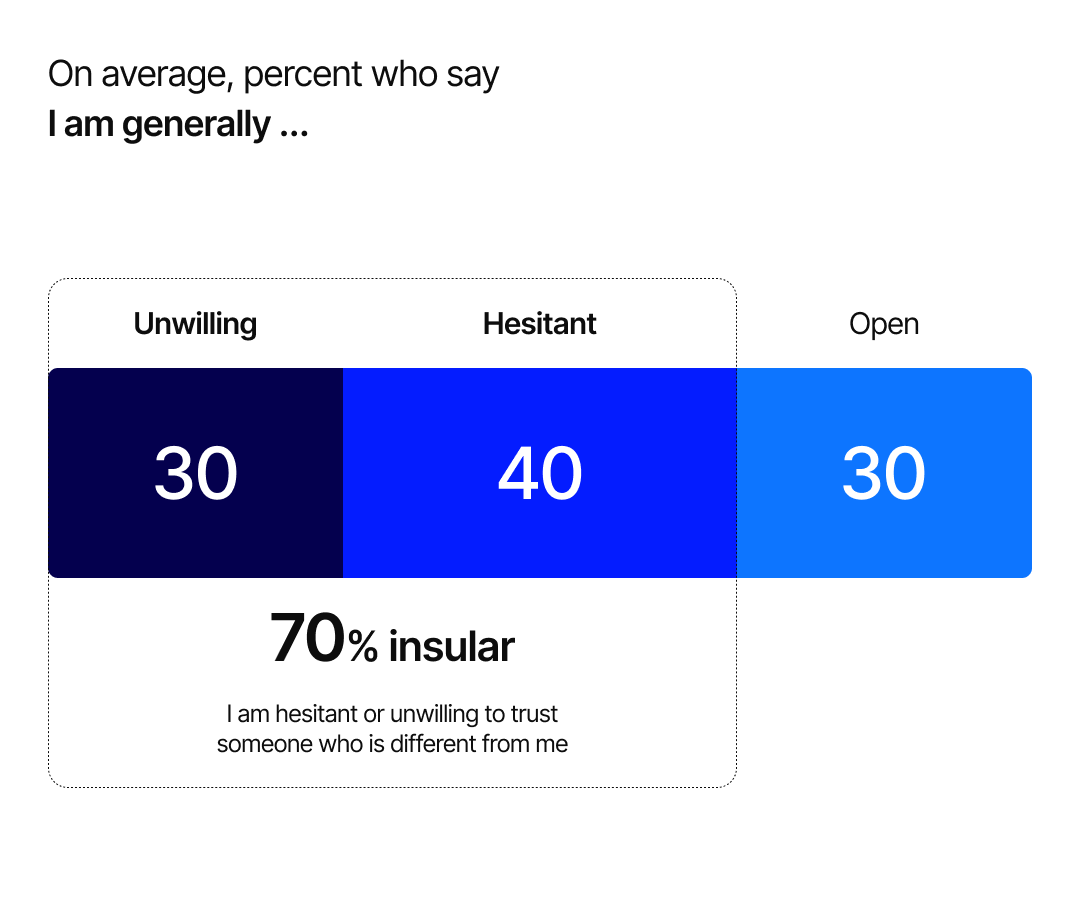
Worldwide, 7 in 10 have an insular mindset
Seventy percent are unwilling or hesitant to trust someone who has different values, facts, problem-solving approaches, or cultural background.
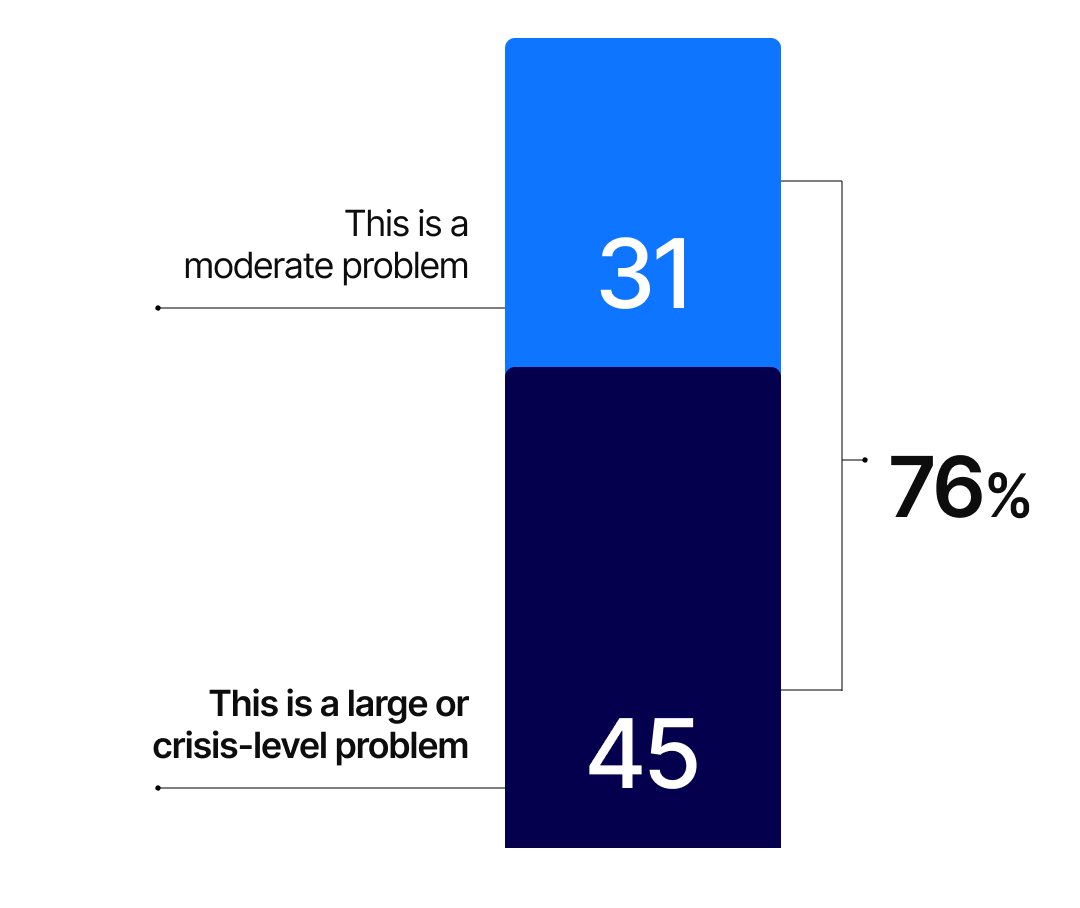
There is global consensus that insularity must be addressed
The majority believe it is a problem that people in their country distrust those with differences so much that they actively try to make things worse for one another.
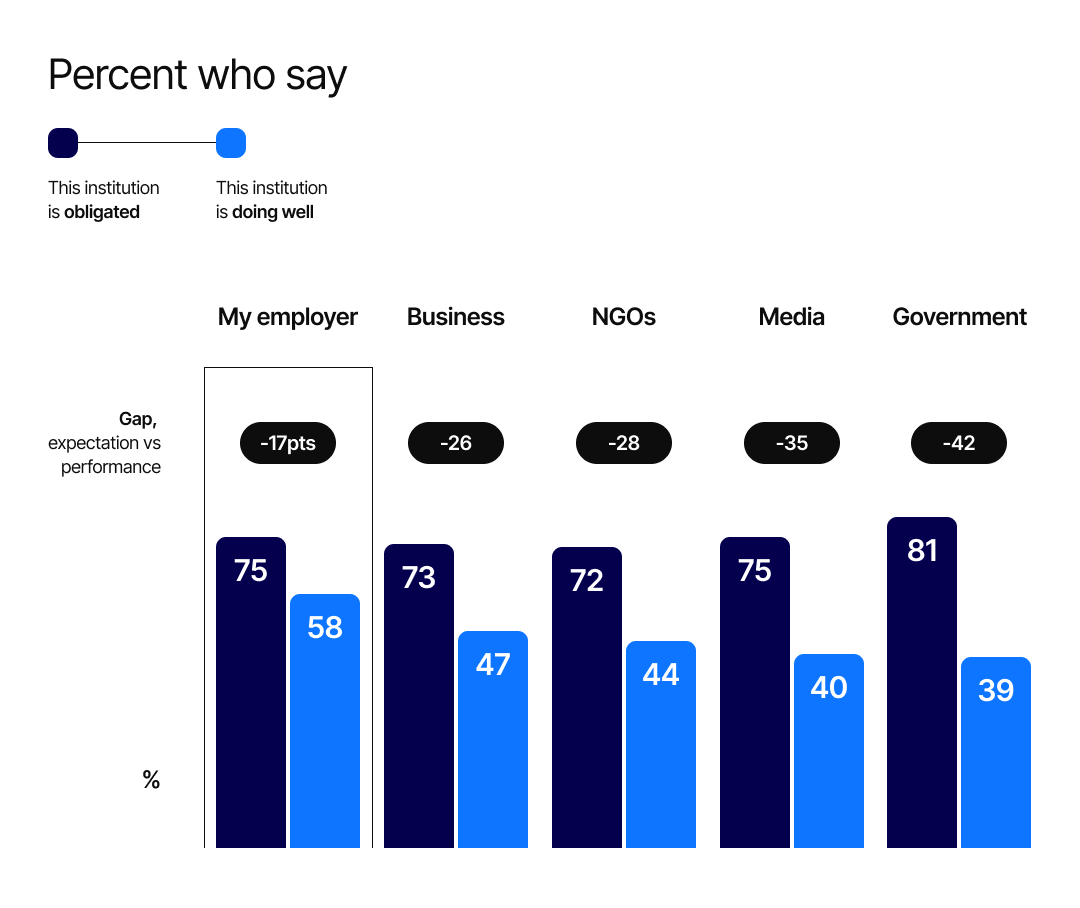
Trust brokering can help bridge divides
Globally, all institutions have a mandate to bridge divides and facilitate trust building. Employers are best positioned to broker trust, as they have the best performance score.
Featured Insights
Insularity—The Next Crisis of Trust
The 2026 Edelman Trust Barometer explores the retreat into insular circles of trust, a loss of optimism, resistance to change, and why employers must act as trust brokers to drive progress.
Discover the Trust insights shaping 2026
A full look at this year’s findings — and what they mean for businesses, leaders, and society.


Brokering trust in the age of insularity
1. Pervasive insularity stalls progressEconomic uncertainty, unmitigated fears, and pessimism have fueled a turn inward to safety and certainty. An insular trust mindset now prevails globally: 7 in 10 are unwilling or hesitant to trust someone who is different from them. In this context, perfect alignment becomes an unachievable prerequisite for trust. |
2. Business must address insularityIf left unaddressed, unmitigated differences will stall workplace productivity, undermine CEO leadership, and harden resistance to innovation. To counter geopolitical insularity, multinationals need to evolve to a polynational model, centered on investing in long-term local relationships. |
3. Trust brokering is a strategy and skillsetTrust brokering can be executed by institutions and individuals. As a strategy, it focuses on engaging people where they are rather than trying to change them. Listening without judgement and translating realities are two key skillsets of a trust broker. Done effectively, it will bridge divides. |
4. Employers positioned to scale trust brokeringEmployers have the smallest expectation-performance gap when it comes to trust brokering and a high degree of trust with their employees. This makes them well-positioned to scale trust brokering through conflict-resolution trainings and opportunities to work and interact with people who have different values. |
Explore the findings
.
Top Findings
01
Optimism for the future wanes
⟲
Globally, just 32% believe the next generation will be better off, with the biggest declines in India (-13 pts), and China (-13 pts) over the past year.
02
Trusted voices on social media open closed doors
⟲
People who trust influencers say they would trust or consider trusting a company they currently distrust if it were vouched for by someone they already trust, such as a food or lifestyle influencer (62%, among the 48% who trust one) or a financial influencer (57%, among the 44% who trust one).
03
Mass class divide deepens
⟲
Since 2012, the gap in trust between high- and low-income groups has more than doubled globally, with trust steadily rising among high earners while stagnating or lagging among low-income groups. The U.S. now shows the largest income-based trust gap at 29 points.
.
Global Launch Event
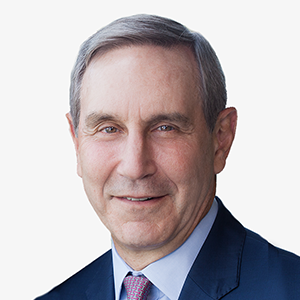
The global launch event for the 2026 Edelman Trust Barometer took place during the World Economic Forum in Davos, Switzerland. Richard Edelman, CEO, Edelman, presented this year’s findings, followed by a panel discussion moderated by Alan Murray, President, WSJ Leadership Institute; Janet Truncale, Global Chair and CEO, EY; Arvind Krishna, Chairman and CEO, IBM; Dan Schulman, CEO, Verizon; and David Miliband, President and CEO, International Rescue Committee.
Subscribe for our research and insights directly to your inbox:
Methodology: The 2026 Edelman Trust Barometer is the firm’s 26th annual Trust survey. The research was produced by the Edelman Trust Institute and consists of 30-minute online interviews conducted between October 25 and November 16, 2025. Learn more >
33,938 | 28 | ±1,200 |
.
Business has a role to play in fixing the crisis of insularity
Learn how we can help your company bridge the gap.