



Context: why connectivity policy is back at the centre of EU strategy
Connectivity has moved from being a sectoral concern to a strategic foundation of Europe’s economic, security and industrial agenda. Gigabit networks, advanced 5G, cloud computing and satellite connectivity are now critical enablers of competitiveness, underpinning everything from AI deployment and industrial transformation to public services and crisis response.
This shift has been reinforced by recent high-level policy thinking. Both Enrico Letta’s report on the future of the Single Market and Mario Draghi’s analysis of European competitiveness set out a high level of ambition for the telecoms sector, calling for deeper integration, greater scale and stronger investment conditions to overcome fragmentation.
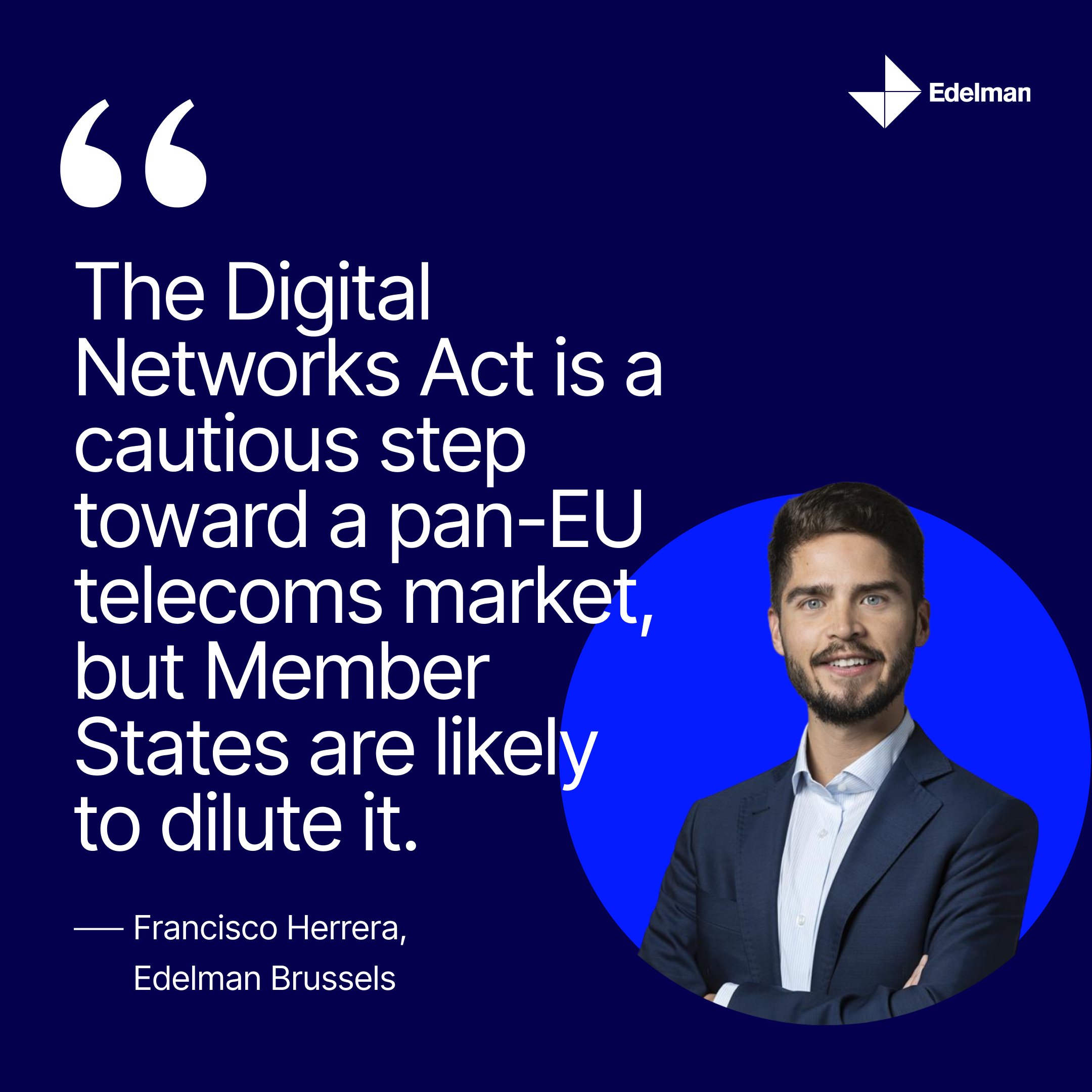
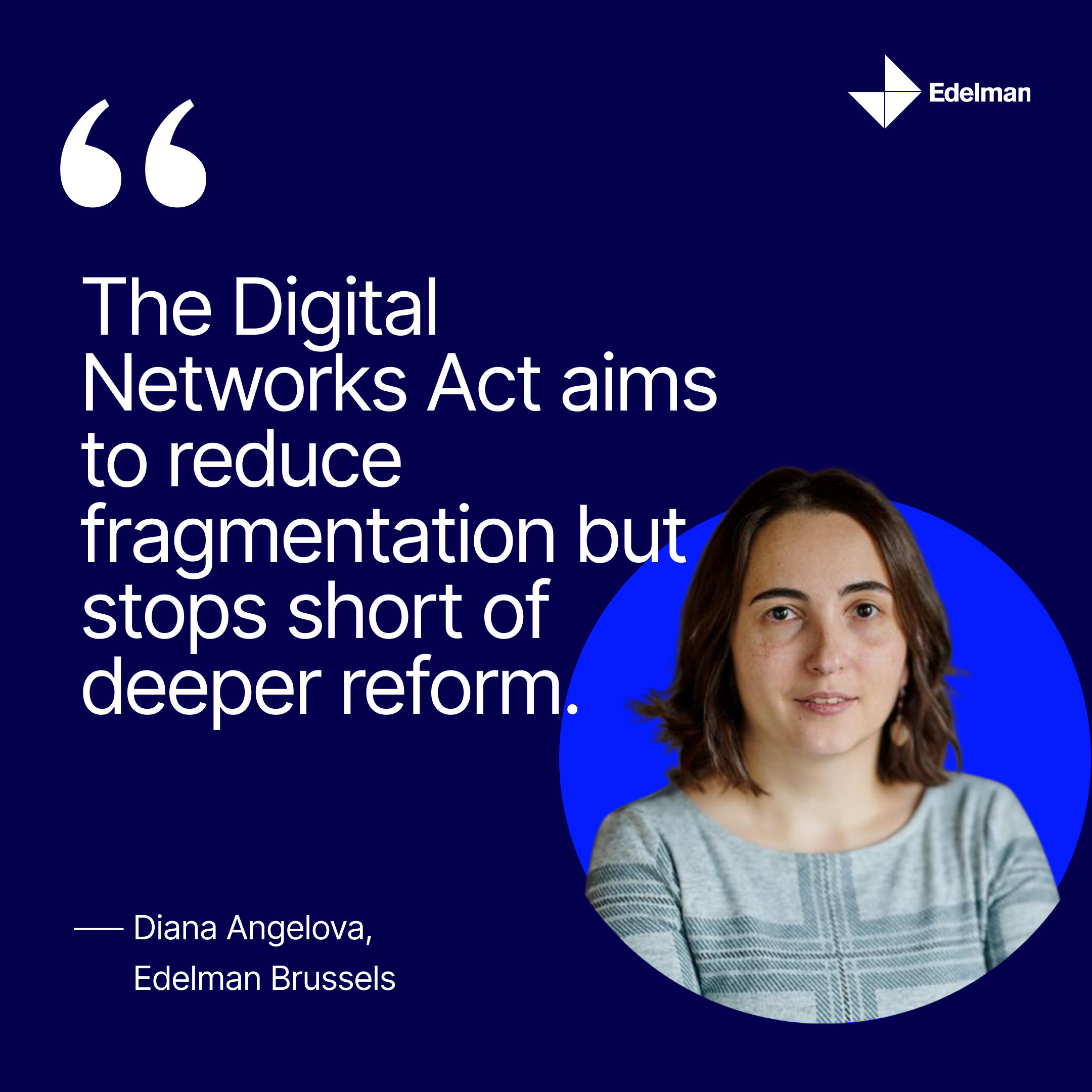
Against this backdrop, the European Commission’s proposed Digital Networks Act (DNA) represents the most consequential rethink of EU connectivity regulation in over a decade, not as a full-scale overhaul, but as a targeted effort to streamline the framework, improve coordination and bring greater uniformity across Member States, while stopping short of the more far-reaching reforms envisaged in those reports.
What the DNA is trying to fix
The Commission’s diagnosis is clear. Despite years of harmonisation, Europe’s connectivity markets remain fragmented along national lines, with divergent authorisation regimes, spectrum conditions and regulatory practices increasing compliance costs and limiting cross-border expansion.
This fragmentation increasingly clashes with how digital networks operate. As networks become software-driven, cloud-based and integrated with data and AI infrastructure, scale becomes a prerequisite for competitiveness. The DNA is designed to reduce structural friction and make it easier for providers to operate and invest across borders.
- From national silos to a more integrated market: The DNA aims to reduce persistent fragmentation by consolidating key telecoms instruments into a single Regulation and introducing a single market authorisation framework, including a Single Passport, to simplify cross-border operations while preserving national regulatory oversight.
- Fibre, spectrum and investment certainty: The proposal tackles two long-standing investment bottlenecks by establishing a coordinated transition from copper to fibre, based on national plans and conditional switch-off, and by reforming spectrum policy through longer or open-ended licence durations, enhanced EU scrutiny of assignments and stronger incentives for spectrum sharing.
- Resilience, satellites and strategic autonomy: By formally recognising digital networks as critical infrastructure, strengthening EU-level preparedness and resilience coordination, and introducing a more centralised framework for satellite authorisation and spectrum management, the DNA aligns connectivity policy more closely with the EU’s economic security and strategic autonomy objectives, including crisis response and reduced dependence on non-EU infrastructure.
What this means for businesses
The Digital Networks Act is not just a telecoms file. It reshapes the conditions under which cloud providers, AI developers, infrastructure investors, industrial users and public authorities rely on connectivity.
The direction is clear: fewer regulatory barriers, stronger coordination and a more strategic view of networks as critical infrastructure. For companies operating across borders, the legislative process ahead will be a key moment to assess how future network regulation could affect investment decisions, service models and resilience planning.
Next steps to watch
The proposal now enters the legislative process, where Member States and the European Parliament will test the balance between EU-level coherence and national flexibility. Key areas to watch include how far harmonisation goes in practice, how spectrum safeguards are framed, and how resilience obligations are operationalised.
For stakeholders across the digital ecosystem, the coming months present an opportunity to engage early on how Europe’s connectivity framework should support competitiveness, innovation and security in the next decade.
For additional information, reach out to Diana.Angelova@edelman.com and Francisco.Herrera@edelman.com.