


Prime Minister Sanae Takaichi enters her second year in office from a stronger political position than when her administration began. The LDP’s strong performance in the February Lower House election strengthened the government’s position in the Diet, while the administration’s first year established clear policy priorities across the economy, security and foreign resident policy. With much of that direction now established, the focus is increasingly shifting from building political momentum and setting priorities toward implementation and tangible policy outcomes.
The September Cabinet reshuffle reflects this transition. The retention of key economic and security ministers points to broad continuity in the administration’s core priorities, while the entry of the Japan Innovation Party (Ishin) into the Cabinet gives Ishin a more direct role in policymaking and could add momentum to regulatory and structural reform.
For businesses, the key question in Year Two will be how these priorities translate into concrete policy—from the FY2027 budget and strategic investment to security-policy revisions, regulatory reform, and workforce policy. The reshuffle therefore provides an early indication not so much of a change in direction but of how Takaichi intends to deliver on the agenda established during her first year.
First-Year Snapshot
Marking One Year Since Takaichi Took Office
Marking One Year Since Takaichi Took Office The Takaichi administration’s first year can be broadly divided into two phases. From October 2025 to February 2026, the government focused on establishing its political identity and defining its core policy priorities. The February Lower House election marked a turning point: the LDP’s strong performance significantly strengthened the government’s position in Japan’s parliament, known as the National Diet, and gave the administration greater room to advance its agenda. Since then, the focus has increasingly shifted from setting direction to implementation and delivery. | 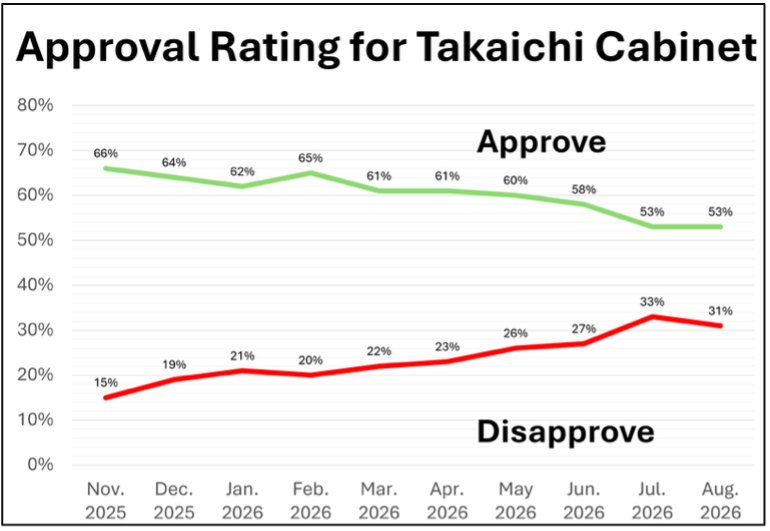 |
Public support has remained resilient. Although approval ratings have declined in recent months, the Takaichi Cabinet has maintained comparatively high support through much of its first year compared with recent administrations. Combined with the LDP’s strong parliamentary position, this gives the administration considerable political space entering Year Two—but also greater pressure to deliver.
Background of Cabinet Reshuffle
The reshuffle comes at a relatively strong political moment for Takaichi, following the LDP’s notable gains in the February Lower House election. However, with the 2027 LDP party leadership election approaching, maintaining support within the LDP remains important. The decision to retain many senior Cabinet ministers and party executives can also be viewed in this context: keeping potential leadership rivals inside the administration helps preserve party cohesion and may make it harder for them to distance themselves from Takaichi ahead of the election.
The reshuffle also marks a further step in the LDP’s cooperation framework with Ishin, formed in October 2025. Having initially supported the government from outside the Cabinet, Ishin now enters the Cabinet for the first time, shifting the partnership from extra-Cabinet cooperation to direct participation in government. This further institutionalizes the partnership and potentially gives Ishin greater influence over the administration’s policy agenda.
Policy Priorities of the Takaichi Administration
Economy and Cost of Living
The Takaichi administration has pursued an economic agenda centered on expansionary fiscal policy, often called “Sanaenomics,” combining fiscal stimulus, state-led strategic investment, and targeted tax measures. A central pillar has been expanding public investment in sectors the administration considers crucial to Japan’s resilience and security, including AI, semiconductors, defense, and energy. At the same time, persistent inflation and weak real wage growth have kept the cost of living as a top priority of the administration. The government’s response includes plans to reduce the consumption tax on food and beverages from 8% to 1% for a two-year period from April 2027, alongside a refundable tax credit system aimed to benefit low-to-middle income earners.
However, the scale of the government’s expansionary fiscal policy has increased scrutiny of Japan’s fiscal sustainability and has raised questions about how new initiatives will be funded amidst substantial public debt. The yen also experienced significant volatility during the summer, prompting a rare joint currency intervention by the US and Japan in July.
Security and Defense
During Year One, this acceleration was reflected most clearly in defense spending. The FY2025 supplementary budget added JPY 847.2 billion (USD 5.43 billion) for the Ministry of Defense, including funding to strengthen operational readiness and support the realignment of US forces in Japan. More broadly, the administration continued to advance Japan’s defense capabilities while beginning to look beyond the buildup already set out under the 2022 security framework.
Defense was already a central policy priority when Takaichi took office, following the major shift initiated by the 2022 National Security Strategy (NSS) and related documents. Her first year, however, significantly accelerated that trajectory. Within days of taking office, Takaichi committed to moving forward the 2027 deadline for defense-related spending equivalent to 2% of GDP to FY2025 and committed to an early revision of Japan’s three key security documents—the NSS, the National Defense Strategy (NDS), and the Defense Buildup Program (DBP)—by the end of 2026. Revisions to these documents will define Japan’s defense priorities and the direction of its buildup beyond the current FY2027 framework.
The decision to retain Shinjiro Koizumi as Defense Minister and Toshimitsu Motegi as Foreign Minister in the cabinet reshuffle on September 17 signals continuity in the administration’s security and defense policy priorities.
Foreign Resident and Workforce Policy
The Takaichi administration has made stricter management of foreign entry and residency a policy priority. This direction has been reinforced by the LDP’s new cooperative framework with Ishin, which actively advocates for numerical limits on the intake of foreign nationals, in contrast to the LDP’s former more moderate coalition partner, Komeito.
In January 2026, the government imposed sector-specific caps on foreign workers until the end of FY2028. Several sectors are already approaching their ceilings, creating tensions with industry representatives, who argue that the limits exacerbate already acute worker shortages. The administration has also pursued tighter controls on foreign entry and residency, strengthening the pre-existing “Zero Illegal Foreign Residents Plan,” tightening permanent residency guidelines and raising fees for residence-status applications and renewals.
Looking forward, the Takaichi administration has established a working group to discuss long-term policy toward foreign residents, including the potential “quantitative management” of the proportion of foreign residents in Japan. However, stricter controls must be balanced against Japan’s growing labor demands as the population continues to decline. How Takaichi continues to balance tighter policies toward foreign residents with businesses’ workforce needs will be important to watch in her second year.
The September Reshuffle: Personnel as a Policy Signal
The September Cabinet reshuffle marked the first major personnel reset of the Takaichi administration, nearly one year after she took office. While her first year focused on establishing the administration’s political identity and policy priorities, attention is now increasingly shifting toward implementation.
Despite changes across more than half of the Cabinet, Takaichi retained the core of her economic and security teams, including Finance Minister Satsuki Katayama, Foreign Minister Toshimitsu Motegi, Defense Minister Shinjiro Koizumi, METI Minister Ryosei Akazawa, and Economic Security Minister Kimi Onoda. Their reappointments point to continuity in the administration’s main policy priorities rather than a broader change in direction.
One notable exception to this continuity was former Internal Affairs Minister Yoshimasa Hayashi, who left the Cabinet in the reshuffle. Hayashi, who ran against Takaichi in the 2025 LDP leadership election, remains a potential contender in the 2027 race. His departure therefore adds another political dimension to the reshuffle, particularly as other potential leadership rivals remain in senior Cabinet or party positions.
The most significant structural change is Ishin’s entry into the Cabinet. Former Ishin Secretary-General Hiroshi Nakatsuka was appointed to a ministerial post overseeing regulatory reform and other policy areas, marking Ishin’s first Cabinet position since establishing a cooperation framework with the LDP in October 2025. The move brings Ishin more directly into policymaking and further institutionalizes the partnership, particularly in areas such as regulatory and structural reform.
Changes to the LDP leadership similarly combined continuity with a greater focus on execution. Most senior executives retained their posts, while former Deputy Chief Cabinet Secretary Hideki Murai was appointed chair of the LDP’s Diet Affairs Committee. His appointment drew attention given his relatively limited experience in traditional party and Diet management roles, placing a policy-oriented figure with recent experience at the center of government in charge of managing the administration’s legislative agenda.
The timing is significant. FY2027 budget formulation is underway, major cost-of-living measures are moving forward, and revisions to Japan’s three key security documents are expected later in 2026. Against this backdrop, the personnel choices emphasize continuity in core economic and security priorities while bringing Ishin more directly into government.
| Position | Former Appointee | New Appointee | Profile |
|---|---|---|---|
| Minister of Finance (MOF) | 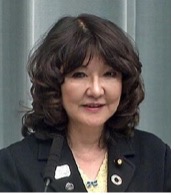 Satsuki Katayama | Reappointed | Implemented Takaichi’s “responsible proactive fiscal policy” balancing strategic investment with fiscal discipline. She played a key role in the July Japan-US currency intervention, and in Year Two, she will oversee the FY2027 budget amid competing demands for tax cuts and higher strategic and defense spending. |
| Minister of Foreign Affairs (MOFA) | 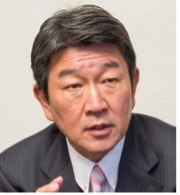 Toshimitsu Motegi | Reappointed | Strengthened ties with the second Trump administration, advanced Japan-US-ROK cooperation, and supported the launch of an updated Free and Open Indo-Pacific strategy. He also promoted concrete security tools including Official Security Assistance and defense-equipment transfers. In Year Two, he will help integrate these policies into the revised security strategy, while managing relations with the region. |
| Minister of Defense (MOD) | 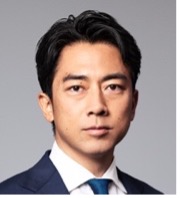 Shinjiro Koizumi | Reappointed | Has overseen the accelerated review of Japan’s Three Security Documents and the April relaxation of defense-equipment export restrictions. He has also backed efforts to adapt Japan’s defense capabilities to new forms of warfare, with the 2026 review specifically examining AI, large-scale use of unmanned systems and preparations for prolonged conflict. In Year Two, he will oversee how these priorities are translated into the revised defense strategy and FY2027 spending. |
| Minister of Economics, Trade and Industry (METI) | 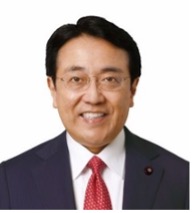 Ryosei Akazawa | Reappointed | Led Japan’s tariff negotiations with the Trump administration and now oversees the USD 550 billion Japan–US Strategic Investment Initiative. Domestically, he has pushed semiconductor and AI investment, including support for new advanced-chip production, and promoted reactor restarts and next-generation nuclear development. In Year Two, he has been tasked with strengthening strategic supply chains, expanding AI adoption among regional SMEs, and advancing fusion energy and other priority industries. |
| Minister of Health, Labor and Welfare (MHLW) | 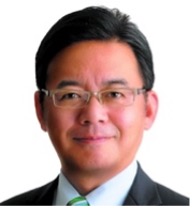 Kenichiro Ueno | Reappointed | Has overseen emergency support for hospitals and care providers facing higher costs, the FY2026 medical fee revision, changes to the high-cost medical expense system, and a 2.03% interim increase in long-term care fees to support care-worker wages. In Year Two, he will continue implementing social-security reform while balancing lower insurance burdens for working-age households against the financial sustainability of healthcare and long-term care providers. |
| Minister for Digital Transformation |  Hisashi Matsumoto | 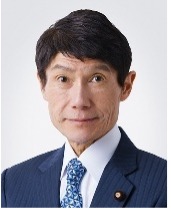 Toshiharu Furukawa | A physician and lawyer with a background spanning healthcare, law, digital policy and innovation, Furukawa enters the Cabinet for the first time as Minister of Digital Transformation. He will oversee the 2026 Priority Plan for Digital Society, including wider use of AI across government, stronger data-sharing infrastructure, and digital and AI talent. He previously served as Deputy Head of the LDP’s Digital Society Promotion Headquarters and advised on science, technology, and innovation strategy. |
| Minister of State for Regulatory Reform |  Minoru Kiuchi | 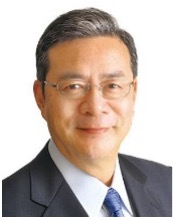 Hiroshi Nakatsuka | A former Mayor of Hirakata and Ishin Secretary-General, Nakatsuka has been closely involved in Ishin’s reform agenda. As Minister of State for Regulatory Reform, his portfolio also includes children and declining birthrate policy, where Ishin has advocated for measures such as free childbirth and expanded childcare support. His appointment marks Ishin’s first-ever Cabinet post, giving the party direct responsibility for implementing parts of its policy agenda. |
| Minister of Internal Affairs and Communications | 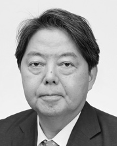 Yoshimasa Hayashi | 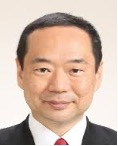 Hisayuki Fujii | A former Home Affairs bureaucrat and Deputy Mayor of Hikone, Fujii also served as Japan’s first Digital Vice Minister, working on digital and regulatory reform. He has advocated using new industries such as AI, drones and semiconductors to revitalize regions facing population decline. His appointment is drawing political attention as he replaces Hayashi, a potential Takaichi rival ahead of the 2027 LDP leadership race. |
From Political Momentum to Policy Delivery: What to Expect in Year Two
The first year of the Takaichi administration was largely about establishing political direction. The second will be more heavily defined by execution. With a stronger position in the Lower House and many of the administration’s major policy frameworks already established, the central question is increasingly whether the government can translate its political capital into tangible policy outcomes.
Several immediate tests will provide an early indication of the administration’s ability to deliver. These include planned consumption-tax reduction legislation during the autumn extraordinary Diet session, formulation of the FY2027 budget and revisions to Japan’s three key security documents by the end of 2026. Further development of social security and foreign resident policy will also be important, particularly for businesses facing structural workforce shortages.
Continuity among key economic and security ministers should reduce the potential for policy disruption as these initiatives move forward. Finance Minister Satsuki Katayama, METI Minister Ryosei Akazawa, and Economic and Fiscal Policy Minister Minoru Kiuchi remain in place as the FY2027 budget takes shape, providing an important test of how the administration prioritizes and funds its economic and strategic-investment agenda. Foreign Minister Toshimitsu Motegi, Defense Minister Shinjiro Koizumi, and Economic Security Minister Kimi Onoda will similarly oversee the next phase of the administration’s security agenda as the three security documents move toward revision.
The clearest structural change entering Year Two is Ishin’s move from outside-Cabinet cooperation to direct participation in government. Former Ishin Secretary-General Hiroshi Nakatsuka’s appointment to oversee regulatory reform gives the party direct responsibility for an area closely associated with its reform agenda. Year Two will therefore test not only the durability of the LDP-Ishin relationship, but also how effectively the two parties can convert their policy agreement into coordinated government action. Cabinet participation gives Ishin greater opportunity to shape implementation, but also greater ownership of the administration’s overall performance. Differences over reform priorities, fiscal choices, or legislative sequencing may become more visible as broad commitments move toward implementation.
Against this backdrop, the focus for businesses will increasingly shift from the administration’s broad policy direction to how those priorities translate into concrete budgets, regulations and policy measures. As the FY2027 budget, revisions to the three security documents, regulatory reform, and foreign resident policy move forward, businesses will need to assess how the continuity and changes signaled by the reshuffle affect investment opportunities and the broader operating environment.
Taken together, the reshuffle provides an early indication of how Takaichi intends to use the greater political room she carries into Year Two. With the core of her economic and security teams intact and Ishin now sharing direct responsibility for government, attention will turn to the tangible results of that agenda—from household costs and economic growth to security, workforce policy, and Japan’s longer-term competitiveness.