- Global (EN)
- Africa (EN)
- Australia (EN)
- Belgium (EN)
- Brasil (PT)
- Canada (EN)
- Canada (FR)
- China (CN)
- France (FR)
- Germany (DE)
- Germany (EN)
- Hong Kong, China (EN)
- India (EN)
- Indonesia (EN)
- Ireland (EN)
- Italy (IT)
- Italy (EN)
- Japan (JP)
- Korea (KR)
- Latin America (ES)
- Malaysia (EN)
- Middle East (EN)
- Netherlands (EN)
- Spain (ES)
- UK (EN)
- Global (EN)
- Africa (EN)
- Australia (EN)
- Belgium (EN)
- Brasil (PT)
- Canada (EN)
- Canada (FR)
- China (CN)
- France (FR)
- Germany (DE)
- Germany (EN)
- Hong Kong, China (EN)
- India (EN)
- Indonesia (EN)
- Ireland (EN)
- Italy (IT)
- Italy (EN)
- Japan (JP)
- Korea (KR)
- Latin America (ES)
- Malaysia (EN)
- Middle East (EN)
- Netherlands (EN)
- Spain (ES)
- UK (EN)

Start your journey with Edelman
Looking for work that matters? Explore careers at Edelman and join a global team committed to shaping conversations, building trust, and driving change.
BROWSE CAREERS
Whether you're looking for strategic guidance or specific expertise, our team is ready to help. Contact us to explore how Edelman can partner with your business.
Contact Us
How do people make health decisions when information is everywhere and trusted authority is dispersed?
In collaboration with the Yale School of Public Health, the 2026 Edelman Trust Barometer Special Analysis: Health Decisions in the Age of Information Overload offers a deep dive into how people make health decisions in a complex and fragmented information environment.
Drawing on previously unpublished findings from the 2026 Edelman Trust Barometer Special Report: Trust and Health, this analysis explores how beliefs, values, relationships, lived experiences, and information sources intersect to shape the health choices people make every day.
The findings point to a clear imperative for healthcare providers and communicators: move beyond persuasion and invest in the experiences, relationships, and community presence that build trust and ultimately shape health decisions.
Download the Special Analysis to discover what shapes health decisions today.
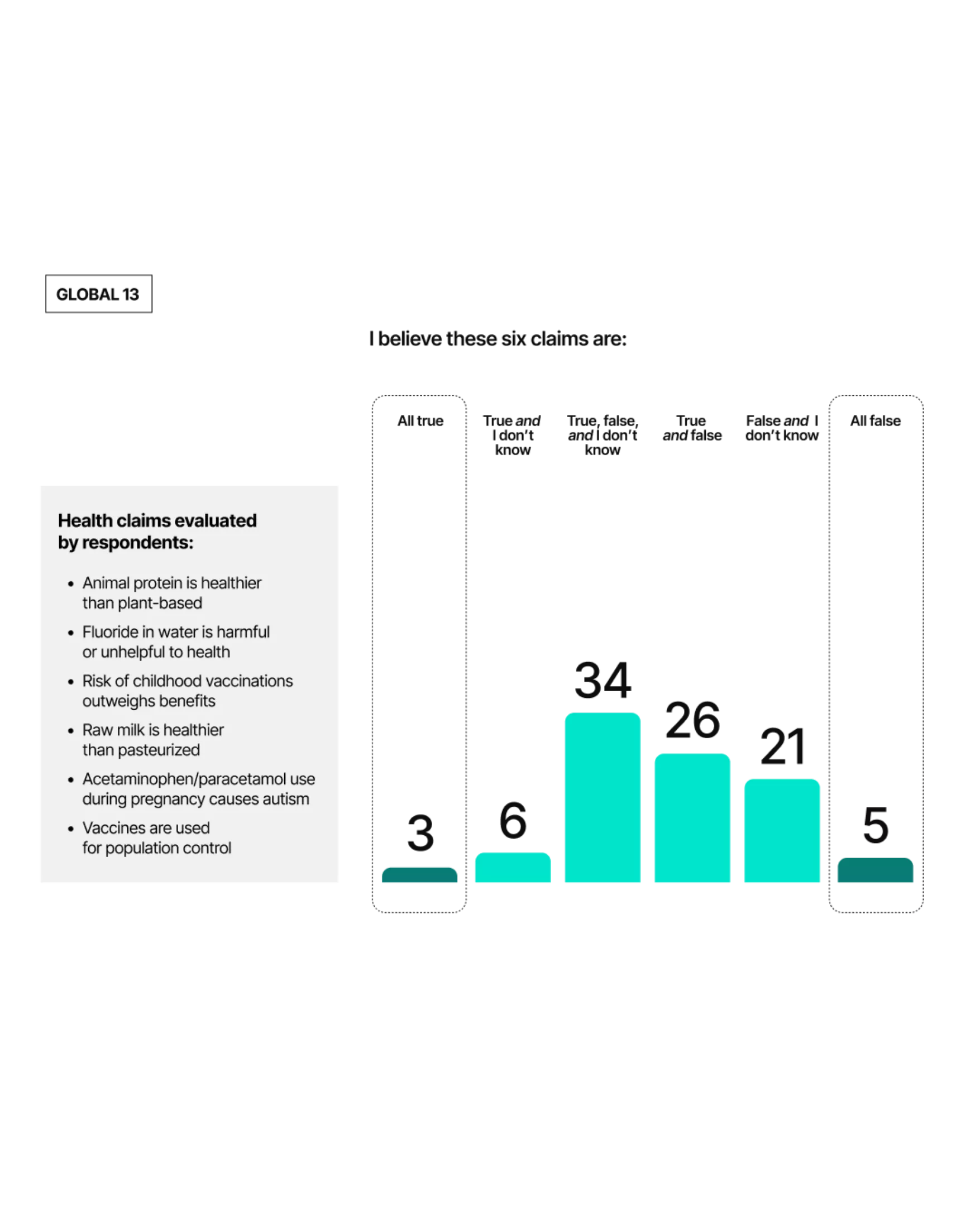
Health beliefs rarely fall into simple categories of true or false
Across six divisive health claims, just 3% of respondents rated all six as true, while only 5% rated them all as false. Instead, the vast majority hold a mix of beliefs: 34% combine true, false and “I don’t know” responses, while another 26% consider some claims true and others false.
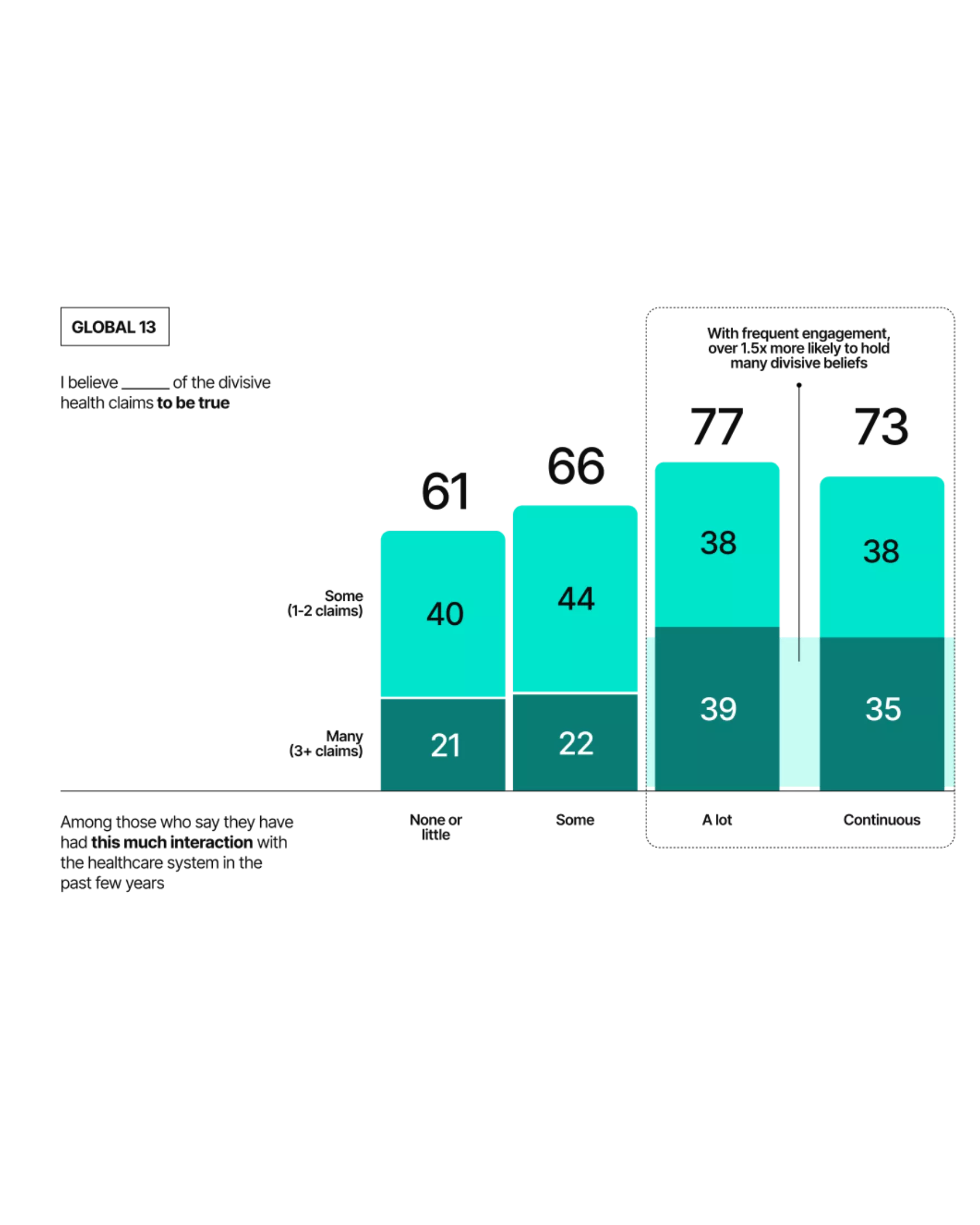
More interaction with the healthcare system does not necessarily mean fewer divisive health beliefs.
People with frequent (a lot or continuous) healthcare-system interactions in the past few years are over 1.5x as likely to hold three or more divisive health beliefs as those with little or no interaction.
Community environments play a powerful role in shaping health beliefs.
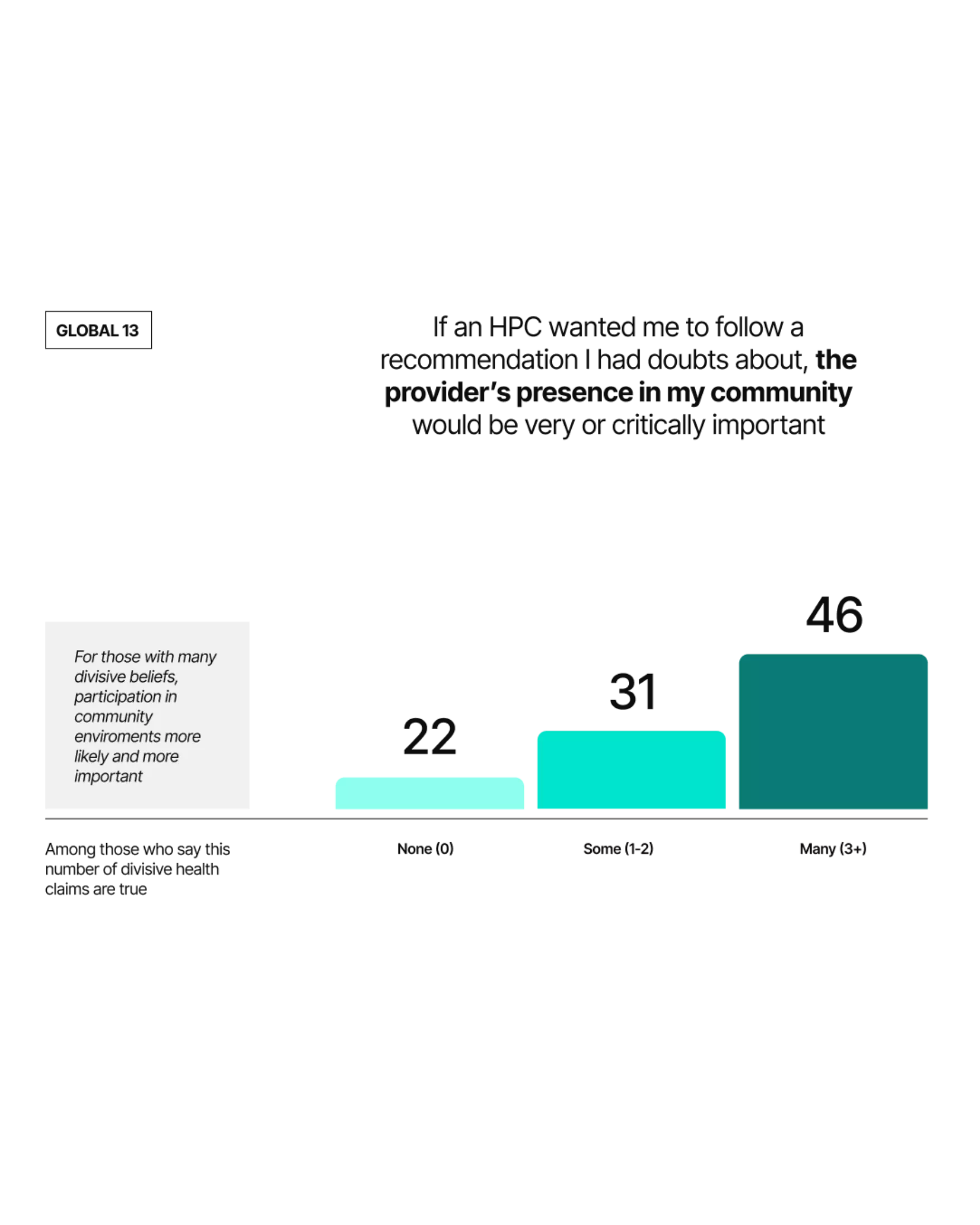
Among people who hold three or more of the divisive health beliefs tested, 50% regularly engage with a group or community where health information, advice, and experiences are shared.
Top Findings
01
A doctor's recommendation does not guarantee that people always follow it
⟲
When faced with conflicting recommendations from doctors and other sources, only 51% globally say they always followed the doctor's recommendation. One-third (34%) say it depends on the situation, while 15% say they always followed the other source.
02
The same source shape vaccine hesitancy and vaccine acceptance
⟲
Personal experience, scientific evidence found online, and healthcare providers are among the top influences shaping views on vaccines, regardless of whether individuals are hesitant or accepting of childhood vaccines.
03
Belief in divisive health claims is rarely all or nothing
⟲
When asked about six divisive health claims spanning food, vaccines, and medicines, very few respondents rated the claims as either entirely true (3%) or entirely false (5%). Instead, most hold a mixed view across the claims, deeming some true and some false.