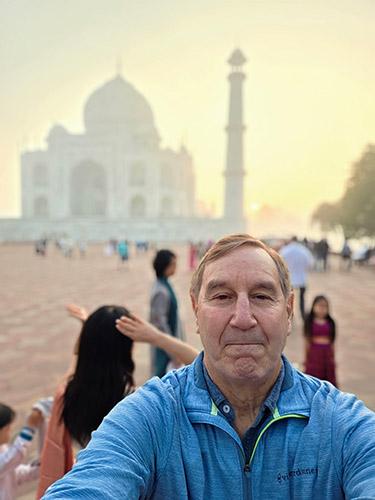

I have spent the last week in Mumbai, Delhi, and Agra, meeting with business leaders, government officials, journalists, and academics while soaking in the culture. It is a time of acute self-reflection, about geopolitics, Brand India, and solving energy shortages prompted by the conflict in Iran. Here are a few observations about the market:
- Friend to All: Indian tankers are some of the few allowed to move through the Straits of Hormuz, carrying essential oil and liquified natural gas (LNG) from the Middle East. India is also receiving energy from Russia. The relationship with the U.S. is strained by tariffs but remains essential. The EU has just concluded a 10-year negotiation that will allow food and wine to be sold in India, in return for access to India’s auto and textiles. India does not want to choose sides, preferring strategic autonomy in diplomatic relations. The Iran conflict is posing severe challenges, with the Government having to manage gas supply to households, restaurants and industries. The Government is considering new energy supply possibilities including South America and West Africa.
- India Inc: The Government seems to be replicating the model of South Korea, with large Indian companies leading the charge as industrial champions, including Tata, Mahindra, Reliance, and Adani delivering scale and efficiency. The Hindustan Unilever model of 40 percent local ownership of the company is a powerful asset in an increasingly nationalistic marketplace. Small business accounts for only one-third of GDP; entrepreneurs are a major growth opportunity for the country but startups could do with more access to credit and less paperwork. Executives agree that India can grow 8-10 percent per annum in the next decade.
- Deregulation: Since 1991, India has steadily moved from a controlled economy toward a modern, market-oriented economy driven by the private sector. The insurance market has been privatized for 25 years but the top two companies are state-owned. Delivery of services is steadily eliminating the middleman; Reliance and Allianz are launching an online direct to consumer insurance business which will mimic the low-cost Reliance cell phone service, with the goal of advancing the national target of delivering insurance for all by the 100th anniversary of India’s independence in 2047.
- Manufacturing Ambition: There have been important success stories such as automotive (Chennai as the new Detroit), steel (second largest producer in the world) and the production of a quarter of all iPhones globally. But the manufacturing sector will need to grow by 15 percent year on year to achieve the goal of 25 percent of total GDP in the next two decades. Target industries include pharmaceuticals, electronics, and food products. Labor costs remain low but capital costs are high, with limited Foreign Direct Investment and high cost of logistics given excessive inventory used as a hedge against delivery risk. The Government has concluded nine free trade deals with 38 nations in the past five years, mostly with countries having capital surplus, aiming to attract inward investment to India.
- Companies Are Focused on Domestic Market, Not Abroad: This was the most surprising finding of the week. The growth opportunities, whether in entertainment, retailing, healthcare or technology, are greatest at home. Companies are targeting a market of over 400 million Gen Z consumers and a population with a median age of 29, roughly a decade younger than in the U.S. or China. Hindustan Unilever has created a largely local supply chain (97 percent of raw materials are sourced in India) by helping to build cold storage and financing farmers.
- Correcting Bias in AI-Driven Narratives: I also believe we need to confront a critical challenge in the age of AI-driven search. LLMs are often shaped by a predominantly Western media lens, which means the narratives that surface in GEO results can carry inherent bias, especially when it comes to foreign companies and markets like India. While this is not a surprise, it does present an opportunity -- Asian champions have a powerful role to play in shaping a more balanced and representative global narrative. By strengthening earned coverage and ensuring diverse, credible voices are reflected in the information ecosystem, organizations across the region can help correct this imbalance and build trust at scale.
- Changed Media Marketplace: India has the largest YouTube audience in the world, with approximately 500 million active users as of late 2025. Brands are spending ten times as much on digital media as on television (sole exception being sports, especially Cricket Championships which are must-see TV). One marketer said, “Ten years ago it was all about branding; now it is performance, with spend concentrated on social media platforms like Instagram and Google, and e-commerce platforms like Flipkart and Amazon.” Industrial giants Reliance and Adani have substantial broadcast media holdings. This is enabling the rise of local brands, often connected to local influencers. One example is OZiva, a local supplement brand that exploded in popularity after a podcaster promoted the product on a recent segment. E-Commerce is about 7 percent of total commerce in India, projected to expand to 14 percent by 2030, with quick commerce accounting for about 10 percent of that by gross merchandise value (GMV).
- The Creator Shift: In India, I see the creator economy entering a far more mature phase, with audiences moving toward raw, relatable storytelling and deeply engaged communities over mass reach. In a market shaped by vernacular growth and peer-led influence, creators are no longer just amplifiers but cultural influencers. This means co-creating with creators -- bringing them in early, investing in long-term partnerships, and building ecosystems where content, community, and real-world engagement intersect. In India especially, where trust is often built through word-of-mouth and social validation, brands must move beyond transactional engagement and build sustained, purpose-driven relationships that turn storytelling into a trust-building engine.
- Remarkable Progress in Infrastructure: I could not believe the change along the waterfront in Mumbai, with the coastal road now enabling the traveler to zip between meetings at Taj Lands’ End to the bottom tip of the city in 20 minutes. Subways have opened in major cities; underground metro is expanding in Mumbai. Commuting to work will get easier soon. With new roads have come beautiful apartment towers and expansive office complexes.
- Spirituality: My most profound moment was a visit to the Elephanta Caves, a 20-minute boat ride from the Gateway of India. This 7th century Hindu shrine was dug into a rock face atop a mountain, constructed by monks with hammer and chisel. Dedicated to the god Shiva, it depicts life stages of marriage and death, betrayal and punishment, love and loyalty. I also took the opportunity to visit the popular ISKCON temple for a Sunday Hare Krishna service. Parents, grandparents and children sang together as the priest twirled candles and chanted the scripture, showing the best of religion and humanity.
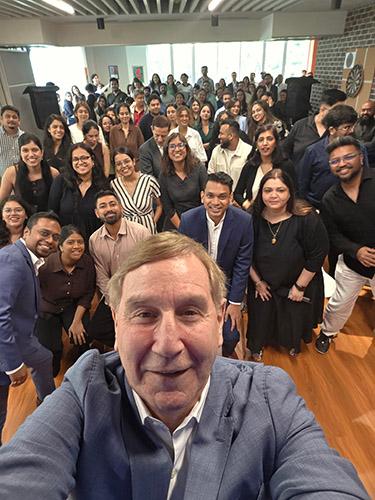
I leave India convinced that the market is a massive opportunity for smart businesspeople willing to play the India for India game, with affordable products sold via e-commerce and creator marketing. The country could well become the new linchpin for the region, avoiding the geopolitics while enabling its private sector to play in a deregulated context. The market is moving beyond outsourcing and low cost to quality and sophistication with a human touch. To my team at Edelman India, let’s roll!
Richard Edelman is CEO.