
twitter

Diplomacy without the “Golden Era” 

British Prime Minister Sir Keir Starmer and Chinese President Xi Jinping met in the early hours of this morning (UK time) at the Great Hall of the People in Beijing, providing the diplomatic centerpiece of the prime minister’s first visit to China. President Xi called on both countries to “rise above their differences” in the interests of global peace and stability. The language was familiar and carefully calibrated. What matters now is less the symbolism of the encounter than what follows it.

With the formalities complete, Starmer’s challenge shifts from atmospherics to accountability. At home, voters will expect to see tangible benefits from any thaw in relations with Beijing—in trade, investment and economic opportunity—as well as clarity about the compromises such engagement entails. That tension sits at the heart of this visit, which represents the most significant attempt to reset UK–China relations since Theresa May travelled to Beijing in 2018.

The prime minister arrived in China with a large delegation, including the secretary of state for business and trade, highlighting the government’s emphasis on commercial engagement. Officially, the focus is trade and investment. In practice, the agenda is far broader and more politically charged, spanning economic resilience, diplomatic stability, and the future shape of engagement with a country that is simply too large, and too consequential, for a British prime minister to ignore.

Downing Street’s official readout of today’s Xi-Starmer bilateral meeting was polite and clinical:
 

"“They agreed they would continue to enhance co-operation on areas of mutual interest, while maintaining frank and open dialogue on areas of disagreement.”  


Beyond meetings with senior Chinese leaders, the prime minister’s program includes engagements with British firms operating in China and efforts to reassert a credible UK diplomatic presence in Beijing. These are not decorative add-ons. They are intended to signal that the government is prepared to deal with China as it is, rather than as some in Westminster wish it to be. The message being tested on this visit is one of managed engagement: selective cooperation where interests align, coupled with firmer boundaries where they do not.

Early signals from the prime minister suggest a deliberately restrained, commercially focused approach. Addressing more than 50 UK CEOs travelling with him, Starmer emphasized the pursuit of practical progress on trade and investment, while again rejecting both a return to “golden age” rhetoric and any slide into an “ice age.” Economic engagement, he has stressed, must sit alongside the protection of national security.

Trade access, market barriers, and investment conditions are all under discussion, but so too are areas where friction is unavoidable, such as technology security, supply-chain dependencies, human rights concerns, and China’s increasingly assertive posture in the Indo-Pacific. With allies—particularly in Washington—watching closely, Starmer is keen to demonstrate that engagement does not mean indulgence.

Even so, the prime minister arrives having already absorbed domestic political costs. The UK’s approval of Beijing’s long-stalled plans for a new mega-embassy in London has been widely interpreted as the price of access, reinforcing a familiar asymmetry in dealings with China—concessions are often immediate and visible, while reciprocity can be incremental and uncertain. That reality is sharpened by developments within China itself, where President Xi has continued to consolidate power, highlighting the extent to which authority is centralized and policy tightly bound to his long-term strategic priorities.

This is the environment in which the prime minister is seeking progress—aware of the limits of influence, conscious of the optics, but equally mindful that disengagement is not a strategy. Once the China leg concludes, the prime minister will travel on to Japan, a deliberate contrast that underlines the UK’s parallel emphasis on trusted partnerships in the Indo-Pacific. Taken together, the trip reflects a central reality of his foreign policy: China cannot be wished away but must be handled with clear eyes and a steady sense of national interest. 


Where progress is possible—and where it is not 

With a large business delegation accompanying the prime minister and his colleagues, trade and investment will clearly be the central pillar of the visit. The government is under no illusions about the scale of the UK’s growth challenge, nor about the role that foreign capital—including Chinese investment—could play in supporting economic recovery. The message being taken to Beijing is a carefully calibrated one: the UK remains open to Chinese investment, but not indiscriminately.

Certain sectors of the UK economy are clearly off limits. Strategic technologies, defense-adjacent capabilities and critical national infrastructure will remain tightly protected. Elsewhere, however—including advanced manufacturing, green energy, life sciences, consumer markets, and selected infrastructure—the government is keen to encourage capital flows.

There is also scope for incremental progress on mobility and exchange. Negotiations have already led to the prime minister announcing that UK citizens will be able to travel visa-free to China for trips under 30 days. This, together with broader business mobility, academic exchange, and tourism all matter to both sides and sit below the geopolitical radar. Even modest easing in these areas will be politically low-cost, economically useful, and symbolically important in resetting the tone of the relationship.

Diplomatically, the British embassy in Beijing also looms large. Plans to expand the UK’s own diplomatic footprint in China have effectively been frozen for years, held hostage to the approval of China’s embassy in London. With that hurdle now cleared, the UK will be keen to move forward, strengthening its capacity on the ground in a country where sustained engagement and deep understanding are essential.

Some of the most sensitive issues on the prime minister’s agenda are unlikely to feature prominently in public discussions. UK government concerns relating to China—including strategic technology policy, industrial capacity pressures, security activity, and human rights issues—are expected to be raised privately. That is not a failure of diplomacy so much as a reflection of political reality of seeking to balance economic engagement with strategic caution. 
 

The view from Edelman colleagues based in China

China views Prime Minister Starmer’s visit—the first by a UK leader in eight years—as a pivotal opportunity to stabilize and elevate bilateral ties. Beijing highlights the Labour Government’s stated commitment to developing a consistent, long-term, and strategic China–UK relationship and sees the visit as a moment to strengthen political trust and reinvigorate dialogue.

Chinese analysts note that the UK is arriving with an explicitly economic agenda, with “economic outcomes overriding all other priorities,” and point out that British companies have found engagement with China markedly easier since Labour took office. Beijing also places particular weight on concrete economic deliverables. China expects to sign trade and investment cooperation agreements aimed at creating new growth drivers, promoting complementarities, advancing the coordinated development of goods and services trade, and supporting two-way investment. Priority areas include green energy, healthcare and life sciences, creative industries, and intelligent manufacturing.  

Financial cooperation is another focal point, with expectations for progress in regulatory coordination, London-Shanghai/Shenzhen stock market connectivity, and cross border data sharing issues. Chinese media also note the significance of the UK’s large, finance heavy business delegation—with senior figures from HSBC, Standard Chartered, Schroders and the London Stock Exchange Group—viewing it as a signal of renewed commercial confidence. While cooperation in health, climate, and cultural and language exchange is anticipated, Chinese media also acknowledge the UK’s interest in progress on whisky tariffs. In addition, Beijing is actively preparing for the 2026 China–UK Entrepreneur Committee meeting, with over 100 enterprises already registered.

Overall, China views the visit as economically driven, strategically significant, and an opportunity to open a “new chapter” in stable and mutually beneficial relations. 


Lowering the temperature without lowering the guard 

All of this will unfold under the close, if largely unspoken, scrutiny of Washington. But the story here is less about Britain attempting to balance between two superpowers, and more about how Sir Keir Starmer is beginning to define a distinctly post-Brexit approach to China. Since entering office, the prime minister has sought to move away from the oscillation of recent years—neither the rhetorical confrontation of the late Johnson period nor the uneasy strategic ambiguity that followed—in favor of a more disciplined, interest-driven approach.

That approach has been characterized by restraint rather than reset. Starmer has been careful to lower the temperature without lowering the guard—reopening channels of dialogue, signaling openness to trade and investment, and engaging Beijing on areas of mutual economic interest, while maintaining firm red lines on national security and values. It is a posture designed to project seriousness and predictability—qualities that have often been lacking in the UK’s China policy since Brexit.

The context, however, is shifting. With Donald Trump preparing to visit China himself, the notion of a rigid, US-led front line is already under strain. Engagement with Beijing is no longer, in itself, a marker of disloyalty. What matters instead is intent, scope, and credibility. The UK’s China policy will be judged less on whether it talks to Beijing and more on whether it does so from a position of strategic clarity rather than economic expediency.

For Starmer, the challenge is to ensure that engagement is seen as purposeful rather than permissive. In a post-Brexit world, where Britain is seeking growth, global relevance, and diplomatic agency outside the EU framework, China inevitably looms large. But the space for miscalculation is narrow. A China policy that is too cautious risks irrelevance; one that is too transactional risks eroding trust with allies.

In that sense, the prime minister’s visit to Beijing is not about reviving an old “golden era,” nor about hedging between Washington and Beijing. It is about whether Britain can articulate—and sustain—a coherent China strategy that reflects its economic needs, its security interests, and its alliances, without drifting into ambiguity. Whether that model can endure amid sharpening geopolitical competition is the question that will linger long after the prime minister has returned from Asia. 


Materials presented by Edelman’s public & government affairs experts. For additional information, reach out to PublicGovtAffairs-Germany@edelman.com.
2026 will be a crucial year for the German government. Whether the coalition will perform or cease to deliver will show in the months ahead. There is only a small window for key decision-making between now and September, meaning that companies need to interact now to shape policies, leverage public support, and help the German industrial giant come back onto its feet. 


A Coalition Under Pressure to Deliver 

Entering 2026, Germany’s federal coalition has settled into a working rhythm marked by internally cohesive decision-making through the coalition committee. This body increasingly functions as the primary engine of policy resolution, buffering tensions and limiting public conflict. While public debate before and after those committees is crucial for the success of policy initiatives, once there has been an agreement, Germany switches into implementation. This stands in contrast to the prior legislative period, where visible disputes often undermined government credibility. The coalition’s operational focus has shifted from negotiation over identity to delivery of outcomes, driven by heightened expectations from voters, business stakeholders, and international partners.

State level elections in Saxony-Anhalt and other states in September are shaping up as crucial inflection points. These regional contests increase political incentives within the coalition to maintain unity on contentious bills, particularly on fiscal and social reforms that shape everyday economic life. Weak performance at the state level could feed narratives exploited by opposition parties and populist formations—undermining federal cohesion. Thus the window for reform decision-making is between now and September 2026. 


Economic Backdrop: Stabilization, Not Yet Momentum 

Germany enters 2026 after narrowly exiting recession. GDP grew by around 0.2% in 2025, with forecasts for 2026 ranging between 0.5% and 1.0%, depending on external demand and domestic investment. Inflation is easing toward the 2% range, while unemployment remains elevated at just over 6%. The overall picture is one of stabilization rather than strong recovery.

This economic environment directly shapes the political agenda. Weak growth has narrowed policy options and increased the urgency of structural reform. Incremental adjustments are no longer politically or fiscally sufficient, and the coalition faces rising expectations from business, voters, and international partners to address long-standing structural constraints.

This especially is true as Chancellor Merz has been involved heavily at the European and geopolitical stage trying to hold together NATO, while making early steps for different European paces—such as through an even closer coordination with France and the UK. Nonetheless, 2026 is the year where the chancellor needs to look inwards and solve inner policy issues. 


2026 as the Year of Structural Reform: Key Legislation in the Pipeline

Several politically sensitive reform tracks converge in 2026, with concrete legislative initiatives either advancing or in preparation:

  • Pensions: Following the Rentenpaket 2025, further proposals from the government-mandated Alterssicherungskommission are expected. These are likely to focus on long-term financing, demographic sustainability, and incentives for longer workforce participation.
  • Healthcare and Long-Term Care: Draft legislation to stabilize statutory health insurance (GKV-Stabilisierungsgesetz) and a broader Pflegereformgesetz are moving through preparatory stages, driven by rising costs, labor shortages, and demographic pressure. The German pharma industry is also working in a renewed Pharma Dialogue with the German government on updating the German price negotiation systems (AMNOG), especially as Trump’s Most-Favored-Nations approach puts further pressure on the German drug manufacturing and research environment.
  • Tax Policy: Inheritance tax reform remains contentious, particularly regarding exemptions for large estates and family businesses. Targeted corporate tax adjustments and measures to reduce “cold progression” are part of the broader fiscal debate on competitiveness and investment incentives. The key issues will be whether a reduction in corporate tax will come sooner than planned in the coalition treaty.
  • Energy and Climate Frameworks: Legislative initiatives to accelerate renewable deployment, streamline permitting, and modernize grids are advancing, alongside regulatory frameworks for hydrogen infrastructure, storage, and cross-border energy integration. Germany’s hunger for rare earths needs to be addressed in line with striving for more autonomy.
  • Infrastructure Acceleration: Measures to shorten planning and approval timelines for transport, digital, and energy infrastructure projects are politically central, responding to persistent criticism of slow implementation. As the German extra budget of 500 Mio has already earmarked a majority of its spending to infrastructure projects, investors need to look at where there is still room for gaps and find political support for changes in plans.
  • Defense spending: Germany has understood the push back from the US in the defense sector and has already shifted gears in defense spending. The growing defense ecosystem is also an economic stimulus, but it needs to be seen whether this can be upheld over the next decade. Typical German values such as ingenuity matter again and are now coupled with an open investment environment in new defense technologies. 


What This Means for Business 

Germany is in a phase of transition rather than decline. Political incentives increasingly align with economic reform, and coalition cohesion improves the likelihood of implementation. If investment continues to flow and energy costs trend downward, structural reforms in social systems, taxation, and infrastructure can begin to address long-standing weaknesses.

For companies, 2026 is a year to engage early. Regulatory frameworks are being shaped now, and policy outcomes will define cost structures, investment conditions, and competitiveness for the next decade. If companies want to be part of the German economic model, they need to lean in now. 


Materials presented by Edelman’s public & government affairs experts. For additional information, reach out to PublicGovtAffairs-Germany@edelman.com.

2026 will not be remembered as a year of grand policy announcements. It will be remembered as the year delivery became a political liability.

The UK enters 2026 under cumulative pressure rather than acute crisis. Fiscal headroom remains narrow. Public services are brittle. International instability continues to intrude on domestic priorities. And across the electorate, tolerance for promises that do not translate into visible improvement in daily life is wearing thin.

For the Labour Government, the defining question has shifted. It is no longer What do we want to do? but What can we realistically deliver within existing budgets, legislative capacity and political tolerance?

For business, this matters profoundly. Political attention, funding, and regulatory tolerance will be rationed. Policy ambition will be filtered through execution risk. Effective engagement will increasingly accrue to those who can help government demonstrate progress or avoid visible failure.

This analysis piece sets out the key political and policy dynamics that will matter most in 2026. Taken together, they point to a year in which delivery becomes the decisive test—and where those able to align with government priorities, constraints, and risk appetite will be best placed to shape their operating environment. Here are eight significant forces that will shape UK politics and policy in 2026. 


1. Geopolitical permacrisis and the UK’s constrained power 

What is changing

The global system is no longer punctuated by crises; it is defined by them. Political conflict, economic fragmentation, and climate shocks now reinforce one another, creating a condition of permanent instability, or permacrisis, rather than episodic disruption. The assumptions that underpinned globalization—predictable rules, enforceable norms, and efficiency over resilience—no longer hold. For governments and businesses alike, volatility is not an external shock to be managed but a structural feature of the operating environment.

What to watch

Despite a long-term decline in relative influence, the UK continues to punch above its weight on European security, particularly on Ukraine, under Keir Starmer. This leadership role comes at a moment when the UK must navigate an increasingly delicate triangle—a more transactional and less predictable United States, a cautious but indispensable EU, and an international system where informal power often matters more than institutions.

The risk is strategic overstretch. As the rules-based order that has amplified UK influence for decades continues to fracture, the UK faces a difficult question: How far can it shape outcomes rather than merely respond to them?

Why it matters

The outcome of the war in Ukraine will shape European security for a generation. UK security assessments are clear: Russia represents a persistent and adaptable threat, with escalation always possible. As a mid-sized power outside the EU but inside NATO—with a nuclear deterrent and a UN Security Council seat—the UK retains influence, but only if it is willing to invest politically, fiscally, and institutionally at home. For business, this translates into sustained geopolitical exposure: higher defense spending, tighter security regulation, and a less predictable external environment that increasingly takes up political bandwidth and constrains domestic policy choices. 


2. The end of economic ambiguity: growth, living standards, and fiscal reality 

What is changing

Prime Minister Starmer tells us 2026 is the year the UK economy is going to turn the corner. That means it is the year where the space for economic ambiguity will narrow sharply. The public wants evidence of rising living standards, not simply stabilization after a period of turbulence. With high borrowing, high stocks of debt and interest rates, though falling, much higher than for most of the period since the financial crisis, the government’s capacity to use fiscal measures to change the situation are highly limited. Economic performance will move from context to center stage, with growth, wages and household pressure becoming the primary lens through which government competence is judged at home and so will steer its policy interventions.

What to watch

Headline growth and inflation figures grab the attention. But keep an eye out for employment figures and productivity growth. Are people moving into better-paid, more secure work? Are supply-side reforms shifting the long-term growth trajectory? If the government can shift these then it will be in line to surprise on the upside. The Spring Statement on March 3 will be another moment of heightened tension where the government’s record on the economy and public finances will, once again, come under the microscope. Coming just weeks before local elections, it will expose the gap—or alignment—between fiscal reality, political ambition, and economic delivery.

Why it matters

This is where the Labour Government’s economic credibility will be most directly tested. If growth and living standards disappoint, the political debate will shift quickly from arguments about inheritance to questions of choice—what to tax, what to spend, and what to reform. On the other hand, if the government’s theory of Political Economy is meaningful and accurate then results should begin to materialize. How the government navigates trade-offs between short-term delivery and longer-term structural reform will shape not just its economic record, but its broader authority going into the second half of the Parliament. For business, the direction of travel on tax, regulation, and reform will increasingly be shaped by delivery pressure rather than ideology. 
 

3. State capacity as the central political faultline 

What is changing

A quieter but more consequential question is moving to the center of British politics: Does the state still have the capacity to deliver? Under sustained fiscal, geopolitical, and demographic pressure, and rising demand, core systems—from the NHS and local government to transport and justice—are operating with little or no slack. Public frustration manifests itself in the personal or hyperlocal experience: Do appointments happen on time? Do my council run services properly? Has that pothole been fixed? These symptoms point to deeper structural fragility which must be addressed before failures become crises.

What to watch

While NHS performance will remain politically dominant, strain is likely to intensify elsewhere: courts, prisons, local authorities, and universities all represent under-acknowledged pressure points. Local government finances, in particular, risk becoming a recurring national issue as service reductions and emergency interventions expose systemic weakness. At the same time, efforts to drive public-sector productivity, through pay restraint, automation and reform, will face both operational and political resistance.

Why it matters

Visible delivery is the currency of political authority. A Labour administration elected to “fix” the state now risks being constrained by the weakened condition of the very systems it must use to deliver change. If improvement is not evident, ministers will face rising pressure to demonstrate action quickly, often through interventions that prioritize speed and optics over structural reform. Failure to show meaningful improvement also creates space for populist alternatives that promise to disrupt and challenge the status quo—a dynamic already visible on the political fringes. For business, this raises the likelihood of abrupt policy shifts, reactive regulation, and a less predictable operating environment. 


4. Devolution and the return of territorial politics 

What is changing

After a period of Westminster’s dominance of the UK’s political agenda, 2026 will bring a sharper focus back to the UK’s territorial politics. Elections to the Scottish Parliament and the Welsh Senedd, alongside English local authority elections (including the whole of London) and the continued rollout of devolution deals in England, will shift attention towards how power and responsibility are actually exercised across the country.

What to watch

The rise of the fringe parties—the fragmentation of the traditional two-party system is accelerating. Reform and Plaid Cymru look set to become by far the largest parties in Wales, making Labour a tiny part of the political landscape they dominated for more than a century. Reform are set to eclipse the Conservatives in Scotland, and Labour—who were confident of winning a year ago—could slip to third. Labour’s dominance in London could end with pressure from the Greens as well as the other main parties.

In Scotland, the central question is whether constitutional debate resurfaces or whether the campaign is shaped instead by public services, economic performance, and trust in government. In Wales, the first election under a reformed Senedd will test new institutional arrangements and could alter coalition dynamics and policy influence. In England, directly elected mayors will continue to grow in importance—not just as partners for central government, but as political actors in their own right, with increasing visibility and leverage.

Why this matters

Policy delivery on housing, infrastructure, energy, and health will continue to increasingly sit outside Westminster. Political divergence will complicate any notion of a single “UK-wide” approach. For businesses engaging government in 2026, understanding where power lies, where decisions are made, and how priorities diverge by place will be essential. Political volatility at the sub-national level will increasingly shape national policy choices. And if Reform does make the successes that the polls predict, its proposition as an alternative government will only increase. 
 

5. Leadership, opposition, and political volatility 

What is changing

Almost two years since the General Election, a central issue for political leaders is whether they command authority. With the immediate post-election period over, expectations around delivery, coherence, and political grip are hardening. For the Government, this means sustaining discipline while rebuilding and broadening support. For the Opposition, it means translating positioning into credible policy.

What to watch

Keir Starmer’s leadership is under huge pressure. That doesn’t necessarily mean it will translate into a direct leadership challenge. His political strategy is questioned and his capacity to set direction and follow through on it is doubted by many of his party and natural supporters. A year of delivery in 2026 will have to mean a new approach to political management—not just “better communications” but also a clearer sighted setting of objectives, priorities, and outcomes.

On the Opposition benches, Kemi Badenoch’s task is to rebuild the Conservatives with sharper analysis of what the public wants and why the Conservatives were rejected so dramatically in 2024. While confidence has grown, clarity on policy positioning and electoral strategy remains elusive. And of course, from the outside, Nigel Farage and Reform are moving from a pressure group to an established party of local government and a serious contender for power. Could this be the year that the perennial populist outsider becomes the front-runner for power?

Why it matters

Leadership dynamics shape policy risk. How the political field reshapes will directly affect the policy choices the government chooses to make. Pressure from the left on delivery and public services, combined with fragmentation and competition on the right, will influence where ministers focus their political capital and how bold they feel able to be. Devolved and local election results will feed into this calculation, shaping perceptions of risk and reward and, ultimately, the direction and pace of policy. 
 

6. The UK–EU relationship moves from reset to hard choices 

What is changing

The UK–EU relationship is moving beyond symbolism into substance, with the prime minister signaling moving closer to the EU Single Market, on a sectoral basis. Following the May 2025 UK–EU Summit, attention will turn to implementation and leverage rather than intent. At the same time, limits to cooperation are also becoming clearer, with the collapse of SAFE negotiations and a more politically charged review of the Trade and Cooperation Agreement now approaching.

What to watch

The pace and substance of implementation of the 2025 summit agreements will be an early test of whether the reset translates into tangible outcomes for business and government, or stalls amid familiar institutional and political friction. The failure of the SAFE talks will sharpen questions about where deeper cooperation is realistic, particularly in sensitive areas such as security, defense, and industrial policy. Alongside this, the TCA review will become an increasingly important focal point, forcing choices about regulatory alignment and market access.

Why it matters

As the relationship moves from rebuilding trust to exercising leverage, trade-offs will become harder to defer and more exposed politically. Decisions taken in this phase will shape growth prospects, supply chains, energy policy, and security cooperation, often outside the spotlight of headline politics. For businesses, shaping the operating environment will depend on understanding not just the direction of travel, but where implementation risk sits, where negotiations have stalled, and how EU-facing decisions intersect with domestic political constraints. 


7. Trade, tech, and geopolitical exposure 

What is changing

In an era of persistent geopolitical instability and a more transactional relationship with the United States, the UK’s exposure to global shocks is becoming faster, more direct, and harder to buffer domestically. Trade policy will continue to look beyond Europe, but it will be shaped less by market access ambitions than by strategic alignment, supply-chain resilience, and political risk. At the same time, technological change, particularly in AI, is moving decisively from future opportunity to present governance challenge. As AI becomes embedded across the economy, it is no longer treated as a discrete digital issue, but as a cross-cutting risk that cuts across competition, labor markets, ethics, data governance, and national security. This shift will pull technology policy into the center of mainstream economic and political decision-making.

What to watch

Expect renewed momentum behind trade and investment relationships with the Gulf states and other strategically aligned partners, reflecting a pragmatic effort to secure capital, energy links, and growth opportunities in a more fragmented global economy. These relationships will be framed less around liberalization and more around stability, co-investment, and long-term alignment. In parallel, pressure to move from principles to practice on AI regulation will intensify. As regulatory frameworks begin to harden, attention will shift from headline commitments to questions of enforcement, liability, and accountability. Businesses should expect growing scrutiny not just of compliance, but of how AI systems are governed in practice, including data provenance, risk management, and decision-making transparency.

Why it matters

Trade, technology, and geopolitics are no longer separate policy domains; they now intersect directly with domestic economic and regulatory choices. External shocks, from geopolitical escalation to supply chain disruption, can rapidly constrain fiscal headroom and force reprioritization at speed. Meanwhile, decisions taken on AI and emerging technologies will shape the UK’s competitiveness, investment climate, and growth trajectory for the next decade. For business, this creates a more volatile and politicized operating environment. Policy decisions will increasingly be taken under time pressure, sometimes with limited consultation and a heightened focus on risk. Organizations that understand how global pressures translate into UK political decision-making—and that can demonstrate credible governance, resilience, and alignment with national priorities—will be better positioned to manage exposure and sustain influence. 


8. Net zero, energy, and infrastructure politics 

What is changing

Net zero and infrastructure are no longer framed primarily as long-term ambitions; in 2026 they become a test of whether the government can translate strategy into delivery. Political debate is shifting from targets and commitments to outcomes that are immediately visible to households and businesses: energy prices, security of supply, housing availability, and progress on major projects. These issues now sit at the intersection of economic credibility, state capacity, and political risk. As fiscal constraints tighten and public tolerance for delay diminishes, ministers will be forced to prioritize projects that can demonstrate momentum and manage cost, even where this requires compromise on pace, sequencing, or design.

What to watch

Energy policy will remain a focal point, particularly where affordability, security, and decarbonization pull in different directions. The government’s ability to reconcile these tensions, through market reform, investment frameworks, and regulatory decisions, will be an early indicator of its delivery credibility. Planning reform and housing delivery will provide a second, highly visible test. Progress will depend less on headline legislation than on whether the government is willing to confront local opposition and streamline decision-making in pursuit of national objectives. At the same time, infrastructure bottlenecks, notably in grid capacity, transport and digital networks, will expose the gap between strategic intent and execution capability. The evolution of industrial strategy will also matter, particularly where it links net zero investment to jobs, supply chains, and regional growth. How clearly these trade-offs are articulated—and who is asked to bear the cost—will shape both political support and investor confidence.

Why it matters

This is where delivery failure is most visible and politically costly. Delays, cost overruns, or stalled projects quickly translate into higher bills, constrained growth, and reduced investor confidence, undermining not only net zero objectives but the government’s wider economic and reform agenda. Conversely, credible progress on energy and infrastructure offers one of the few areas where the government can demonstrate competence at scale. For business, this creates both risk and opportunity. Those able to reduce execution risk, accelerate delivery, or align projects with national and local priorities will find a more receptive policy environment. Those perceived as adding cost, delay, or complexity will face greater political and regulatory scrutiny as delivery pressure intensifies. 


Materials presented by Edelman’s public & government affairs experts. For additional information, reach out to Alex.Moore@edelman.com.

Ceremony and strategy 

Britain will welcome German President Frank-Walter Steinmeier for a State Visit from December 3–5, 2025—the first by a German head of state in nearly three decades. In a gesture of reconciliation, the visit will include a stop at the ruins of Coventry Cathedral, destroyed during the Second World War. While the occasion will carry the usual ceremonial weight, it also marks a significant moment in the quiet but deliberate reset of Anglo-German relations.


That reset has been gathering pace for several years. Its foundations were laid during the King’s inaugural overseas visit in 2023, when his warmly received address to the Bundestag praised Germany’s steadfast support for Ukraine in the wake of Russia’s invasion. The tone he struck—outward-looking, collaborative, and anchored in shared democratic values—helped re-energize diplomatic ties between London and Berlin. Since then, momentum has only grown. The Labour Government’s broader push to rebuild and stabilize relations with the EU has created new political space for closer UK–German cooperation, turning what might once have been a routine State Visit into a marker of renewed purpose in the bilateral relationship.


The renewed closeness between London and Berlin was exemplified by Prime Minister Keir Starmer and Chancellor Friedrich Merz’s summer trip to the UK, during which he visited Airbus’s site in Stevenage to signify growing industrial and defense collaboration. The visit culminated in the signing of the Kensington Agreement, a wide-ranging bilateral treaty that laid the structural foundations for deeper cooperation on defense, energy, migration, and youth mobility.


Both governments are keen to show that post-Brexit Britain can still play a strategic role in Europe. The State Visit will not bring new policies, but it will publicly affirm a partnership increasingly seen as vital to Europe’s stability and prosperity. It is also part of a broader effort to stabilize European diplomatic dynamics amid shifting global realities. The symbolism of a German president visiting Britain at this juncture sends a clear message: the UK is no longer a peripheral actor in European politics, but a re-engaged partner. 


The changing face of Europe

Since Labour’s general election victory in 2024, Prime Minister Keir Starmer has steered Britain toward a more pragmatic relationship with the EU. The emphasis has been on rebuilding trust without reopening membership debates. Germany, under Merz, has been particularly receptive. For Berlin, a functional UK–EU relationship bolsters Europe’s broader strategic posture, especially with renewed threats from Russia and instability across the Atlantic.


The Kensington Agreement reflected this shared realism: a structured bilateral framework outside the EU, focused on joint delivery. Its scope is wide but grounded in clear, deliverable outcomes—from integrating defense supply chains to reviving student and youth exchanges. For both sides, it is a way of putting political rhetoric behind practical results.


Both Merz and Starmer see in their renewed partnership a way to lead by example in a Europe that is too often reactive and fragmented. Rather than waiting for consensus through slow EU machinery or transatlantic diplomacy, the UK and Germany are demonstrating that major powers can act bilaterally with purpose.
 

The view from Berlin

Germany has always viewed the United Kingdom as an important player on the European and global stage—both an economic partner and a pillar of the transatlantic alliance. However, Brexit and the domestic political instability in London after 2016 led to a noticeable distance. The German public has given less weight to the role of the UK as a foreign policy partner in recent years, especially compared to the United States and France. At the same time, the UK slipped significantly down the ranking of Germany’s trading partners after 2016.


With Keir Starmer taking office in July 2024, cautious trust returned. In addition to the hoped-for restoration of relative political stability, the reason was initially quite simple: as a head of government from the “left” camp, Keir Starmer was a natural contact point for the foreign-policy-weak Social Democratic Chancellor Olaf Scholz. The signing of the Trinity House Agreement in October 2024 was a logical consequence of the rapprochement in the face of geopolitical developments.


The change in the chancellery to the conservative Friedrich Merz did not interrupt this trend. Merz, who in his first months in office was effectively the “foreign-policy chancellor,” continued his predecessor’s work and signed the Kensington Agreement this July. In Berlin, this treaty is seen not only as strengthening the “E3” triangle, but also as a model for cooperation with an important European partner outside the EU.


Germany’s focus on the UK—as a relevant actor on the international stage and a bridge to the US—is sharpening again. Military capabilities, highly developed intelligence services and global soft power were never in doubt. Especially in comparison to the still cumbersome Franco-German collaboration, which everyone wants but which begins to show strain when it comes to details, Germany appreciates the return of reliability from London. Critical voices that call for greater integration into EU formats are rare; instead, bilateral agreements and the E3 dialogue are seen as useful additions to European integration. The German public views the new political stability in London largely positively and welcomes the visible rapprochement with a reliable partner in uncertain times.


The pragmatic allies 

This is also a moment of political convergence. Starmer and Merz, though from different political traditions, are pragmatic enough to see in each other a valuable ally. Both face populist challengers at home: Reform UK in Britain; the AfD in Germany. Each understands that international cooperation is part of the antidote to domestic polarization. Delivering results through bilateral success is, for both, a political and strategic imperative.


Both leaders also face restive electorates tired of promises and polarization. Their bet is that practical progress abroad can support legitimacy at home. It’s a risky but calculated move: to use foreign policy success as a counterweight to domestic instability. Whether on defense, energy, or migration, each knows that failure to deliver may cede space to the populists.
 

Energy and defense cooperation

The Kensington Agreement is ambitious in scope. Defense collaboration is central: London and Berlin are moving to integrate aspects of their defense industries, coordinate procurement, and align strategic doctrine. This reflects shared concern about Europe’s defense capabilities, especially in light of Russian aggression and uncertainties within NATO. Germany has also backed the UK’s associate participation in SAFE, the EU’s new defense procurement fund. Although the talks fell apart just before the November 30 bid window, the episode underscored two things: first, a lingering mismatch between Brussels’ legal caution and London’s desire for flexible third-country access; and second, the extent to which partners such as Germany view UK involvement as strategically important. The collapse of negotiations is therefore less a repudiation of cooperation than a reminder that Europe’s defense integration still struggles to keep pace with its geopolitical needs.


Energy cooperation is another major area. Joint investment in North Sea wind projects, a prospective hydrogen corridor, and grid interconnectors signal a shared commitment to long-term energy security. These initiatives are both geopolitical and green, helping to reduce dependence on fossil fuels and counter authoritarian energy suppliers.


The Kensington Treaty also launched initiatives in digital policy, AI, and semiconductor supply chains, reflecting a desire to stay competitive in a rapidly shifting global economy. In a time of technological rivalry between the US and China, both countries see the value of building European capacity and reducing vulnerability in key tech sectors. There are also proposals to create a bilateral Business Forum, focused on fostering investment and innovation in green technology and digital industries. This move would create structured engagement between UK and German firms and align with broader EU–UK economic coordination. It is not a return to the single market, but it is a signal that pragmatic alignment is back on the table.
 

Outlook for 2026

2026 will test the resilience of this renewed partnership. Joint defense procurement will require careful coordination; energy and climate projects must navigate regulation and infrastructure gaps. Review of the UK-EU Trade and Cooperation Agreement (TCA) may also bring EU–UK frictions back into play, requiring deft management to maintain momentum.
But the outlook is promising. The Kensington Treaty’s built-in mechanisms for review and progress tracking—including biannual summits—will help ensure follow-through. With both governments politically aligned and strategically invested, Anglo-German relations are set to enter their most constructive phase in a generation.


Still, there are risks. Economic headwinds in both countries could strain capacity for delivery. A resurgence of nationalist sentiment are re-politicizing migration, trade, and defense debates. And international shocks—from Middle East instability to Chinese assertiveness in global markets—could test the flexibility of this bilateral framework.


Nonetheless, the strategic case for cooperation remains strong. Both Starmer and Merz know that European security, prosperity, and political stability are better served through joint effort. Their bilateralism is not about replacing the EU or NATO, but about filling in gaps, speeding up delivery, and signaling intent. It is a model that may well appeal to other European leaders watching closely.


The December State Visit is not just a ceremonial occasion. It is the public crest of a new wave of cooperation—a reaffirmation that Britain and Germany, despite Brexit and global volatility, are determined to work together as partners of purpose in a world increasingly defined by instability, inaction, and division.


Materials presented by Alex Moore (Edelman UK) and Fiete Starck (Edelman Germany). For additional information, reach out to Alex.Moore@edelman.com or Fiete.Starck@edelman.com

UK Budget 2025: Choices and Consequences

Today Rachel Reeves gave her second Budget as Chancellor. It was a moment of ultimate political risk and a Budget straining under the weight of expectations. The cheers from Labour backbenchers told their own story and, for now, the Chancellor has bought herself some breathing space. After months of leaks, hints and counter-briefings, Reeves delivered what may well be the most trailed Budget in modern times while more than doubling her fiscal headroom.

But one question remains: Has she has done enough to quiet her critics and chart a credible path back to economic strength?
 

At a glance:
 

  • Chancellor Reeves says Budget will set “strong foundations for a secure future.”
  • Growth forecast is up, but productivity growth is down, as OBR says Budget will meet fiscal rules.
  • Income tax thresholds are frozen as a Mansion Tax is introduced alongside changes to savings and pensions tax benefits.
  • Labour MPs are pleased by cost-of-living policies including freezing fuel duty, rail fares, prescription charges and reducing energy bills alongside an increase to the National Living Wage and abolition of the two-child benefit cap.
     

Read our P&GA UK team’s Budget report for a deep dive into the political fallout from the Budget and the main measures it contains.
 

Download here

Latin America Elections Report: November 2025

Elections are reshaping Latin America’s​ political landscape. In the coming months, the region will undergo key processes that will define its political and economic direction: Argentina ​has renewed part of its Congress; ​Bolivia has entered a new phase following the end of the MAS party era; Chile is heading toward highly competitive presidential and legislative elections; while Brazil, Peru, Colombia, and Costa Rica are already preparing for their 2026 elections.​

This monthly report by Edelman compiles ​information, insights, and updates on the region’s main electoral processes, featuring analysis developed by our Public & Government Affairs Thought Leadership team in Latin America. Our goal is to provide a concise and strategic overview of the political scenarios shaping the region’s future. 

Download here

China–US Relationship: Xi-Trump Summit Delivers a One-Year Time-Out

The October 2025 summit between Presidents Xi Jinping and Donald Trump marked a tentative easing in China–US tensions. The leaders agreed to a one-year pause on tariffs and export controls—a truce that brings short-term stability but does not resolve the underlying disputes. This temporary deal offers welcome relief to markets and businesses while injecting a dose of cautious optimism into bilateral relations.

The meeting also reinforced China’s expanding influence as a global diplomatic and economic power. By setting clearer expectations for both markets and policymakers, it signaled a shared interest in stability, even as both sides prepare for continued competition.

The truce lays limited but important groundwork for cooperation, keeping open the possibility of renewed escalation. The coming year offers a narrow window to advance meaningful progress and assess whether the two countries can turn this pause into a path toward more predictable engagement.

Both nations face significant pressing domestic priorities. China is expected to prioritize domestic economic stability over short-term reactions to US trade measures. The US, meanwhile, is focused on domestic manufacturing, US investment, and supply-chain security.

Success for multinational companies will depend on their ability to balance commercial ambitions with evolving national security priorities and navigate a shifting policy landscape shaped by economic nationalism on both sides of the Pacific. Businesses should adopt cautious optimism and strategic flexibility, diversifying supply chains, ensuring compliance, and enhancing risk preparedness through multi-level engagement and close monitoring of political signals. A more balanced corporate positioning will be essential to maintain a degree of political “social distance,” safeguarding business ambitions and resilience.

International trade partners should evaluate how political dynamics influence existing trade practices and ongoing trade negotiations, especially tariffs and export control measures.


For our full analysis on what this means for global supply chains, risk preparedness, and how companies can navigate a landscape defined by economic nationalism and evolving security priorities, please reach out to Cynthia Xing, Head of Edelman Public & Government Affairs, Greater China: Cynthia.Xing@Edelman.com or Matt Streit, Head of Edelman Public & Government Affairs, US: Matt.Streit@Edelman.com

Post-Election Report: Argentina’s 2025 Legislative Shift

Argentina’s 2025 national legislative elections mark a pivotal moment in the country’s political trajectory. President Javier Milei’s coalition, La Libertad Avanza (LLA), secured a strong win, gaining ground in both the House of Representatives and the Senate. With victories in 15 of 24 districts — including key provinces like Buenos Aires, Santa Fe, and Córdoba — the ruling coalition is now better positioned to advance its reform agenda.

This report, prepared by Edelman’s Public & Government Affairs team in Argentina, offers a data-driven analysis of the results and their impact on congressional dynamics, policymaking, and the broader governance landscape.


Panorama Postelectoral: Elecciones Legislativas 2025 en Argentina

Las elecciones legislativas nacionales de 2025 representan un punto de inflexión en el escenario político argentino. La coalición del presidente Javier Milei, La Libertad Avanza (LLA), obtuvo una victoria contundente, ampliando su presencia tanto en la Cámara de Diputados como en el Senado. Con triunfos en 15 de los 24 distritos —incluidas provincias clave como Buenos Aires, Santa Fe y Córdoba— el oficialismo refuerza su capacidad para impulsar reformas estructurales.

Este informe, elaborado por el equipo de Asuntos Públicos y Gubernamentales de Edelman en Argentina, ofrece un análisis basado en datos sobre los resultados, sus implicancias legislativas y el impacto en la gobernabilidad y la formulación de políticas.


Download in English
Descargar en Español

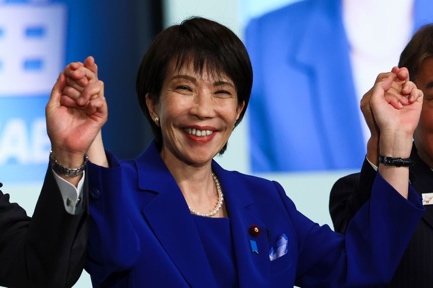
On October 21, Japan broke new ground in its political history as Sanae Takaichi became its first female prime minister.

Her rise to the premiership followed her victory in the Liberal Democratic Party (LDP) presidential election on October 4, which set the stage for a major political realignment. On October 10, political party Komeito ended its 26-year partnership with the LDP, citing disagreements over political funding transparency and unease with Takaichi’s conservative stance. Ten days later, the LDP concluded an extra-cabinet confidence-and-supply agreement with Nippon Ishin no Kai (Japan Innovation Party). The new LDP–Ishin framework marks a shift from the LDP–Komeito era of moderation toward a more security-focused and reform-oriented agenda.

Domestically, the 219th Extraordinary Diet Session, running until mid-December, will serve as the administration’s first major test, with debate centered on the FY2025 supplementary budget, expected to pass by the end of the year. Abroad, at the end of October, Takaichi faces an intense round of summit diplomacy—attending the ASEAN meetings in Malaysia, hosting US President Donald Trump in Tokyo, and participating in the APEC Leaders’ Meeting in South Korea—which will test her ability to balance assertive security priorities with pragmatic alliance management.

For businesses, the policy landscape is shifting toward state-backed innovation and strategic autonomy. Healthcare will benefit from early fiscal support and ongoing reimbursement reform; the AI sector is emerging as a national strategic priority anchored in economic security; and the defense industry is opening to new dual-use and technology partnerships under expanded spending. Companies should position themselves as strategic partners in this policy transformation—aligning innovation and investment with government priorities in security, technology, and social resilience to remain competitive in Japan’s evolving industrial ecosystem. 


The Road to the Takaichi Administration 

LDP Presidential Election 

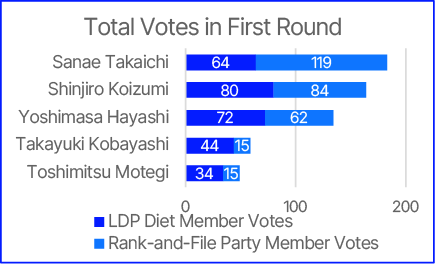
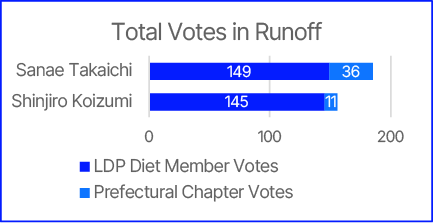
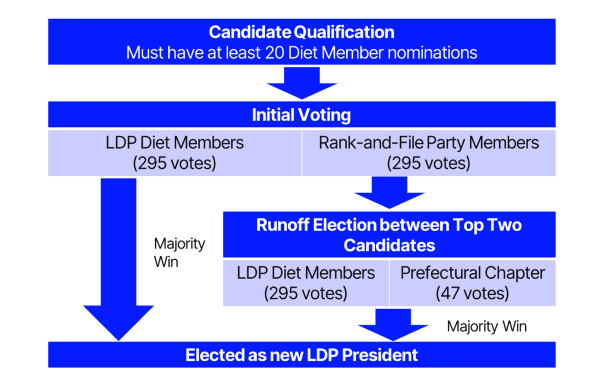
The LDP held its leadership vote on October 4, selecting former Economic Security Minister Sanae Takaichi as the party’s 29th president. In the first round, none of the five candidates secured a majority, leading to a runoff between Takaichi and Agriculture Minister Shinjiro Koizumi. Takaichi won the runoff with 185 votes to Koizumi’s 156, securing 54% and clinching the party presidency. This made Takaichi the first woman to lead the LDP in its 70-year history, a milestone widely recognized in Japan and abroad.

Takaichi presented the victory as the beginning of a “new era” for the LDP, highlighting the need to turn public anxiety into hope, keep promises, and call for an “all-hands” effort—"work, work, and work,” even stating she would “discard work–life balance” for now to rebuild.
 

What drove Takaichi’s win?

Analysts point to her strong base of support among LDP rank-and-file members and the backing of party heavyweight Taro Aso. In the first round, Takaichi commanded roughly 40% of party members’ votes, outperforming rivals among local LDP chapters. Her widespread appeal to the conservative grassroots, amplified by an active social media campaign, helped offset more divided support for moderate candidates.


Meanwhile, former Prime Minister Aso, leading the LDP’s only remaining faction, threw his influence behind Takaichi. Aso’s maneuvering rallied Diet members from the camps of eliminated contenders, such as former Foreign Minister Toshimitsu Motegi and ex-Economic Security Minister Takayuki Kobayashi, to support Takaichi in the runoff. 

Commentators noted that Aso’s endorsement was critical to her victory, underscoring that old-guard factional politics, while diminished, still mattered in the final stretch. 


Post Party Vote and Pre-PM Designation Developments

Breaking a 26-Year Alliance: Komeito’s Coalition Exit

Takaichi’s election immediately triggered high-stakes coalition politics. The LDP had been in a coalition with the Komeito party since 1999, but that partnership was thrown into doubt by Takaichi’s ascent. Komeito, a centrist party supported by the lay Buddhist organization Soka Gakkai, harbored deep reservations about Takaichi’s hardline views. Just days after the LDP vote, on October 10, Komeito leader Tetsuo Saitō informed Takaichi that his party would leave the ruling coalition, ending a 26-year alliance. Komeito cited policy rifts, accusing the LDP of failing to tighten political funding rules after a recent money-for-politics scandal and being “unnerved by Takaichi’s ultraconservative positions,” including her history of hawkish remarks on China and advocacy of controversial visits to the Yasukuni Shrine. While Komeito and Takaichi found common ground on some issues, they ultimately could not agree on political funding―Komeito wanted a ban on corporate and organizational donations, which many in the LDP resisted. This impasse prompted Komeito’s withdrawal, depriving the LDP of its lower house majority and plunging Japanese politics into uncertainty. Sensing an opportunity, the opposition floated the idea of a “rainbow coalition” to block Takaichi. For a brief period, opposition leaders discussed uniting behind a single consensus candidate for prime minister who might peel off enough votes in the hung parliament. However, this effort never solidified as the prospect of disparate parties from left to right forming a government was remote, and time was short before the Diet’s special session.

A Rightward Shift: New LDP–Ishin Cooperation Framework and Its Policy Agenda

Instead, Takaichi turned to a rising potential ally on the right: Nippon Ishin no Kai (Japan Innovation Party, “Ishin”). Ishin is an Osaka-based conservative/libertarian party that has been an opposition force but shares many policy objectives with Takaichi. In a last-minute deal on October 20, LDP President Takaichi and Ishin co-leader Hirofumi Yoshimura reached a confidence and supply agreement, signing a formal accord in front of the press that evening. Under this arrangement—known in Japan as “kakugai kyōryoku” (extra-cabinet cooperation)—Ishin will support the administration on key votes without joining the Cabinet, effectively replacing Komeito as the LDP’s parliamentary partner while retaining some independence.

The new LDP–Ishin cooperation framework represents a significant shift in Japan’s governing alignment and policy priorities. This is the first time the LDP is co-governing with the Japan Innovation Party, after decades of partnership with the centrist Komeito. The confidence and supply agreement between LDP and Ishin contains 12 policy points that outline the joint agenda and reflect compromises made to secure Ishin’s support. Broadly, the deal moves the government’s platform toward Ishin’s reformist and nationalist positions, while accommodating some of Takaichi’s longstanding goals. It also pointedly redefines the ideological voice of the ruling bloc: the agreement’s preamble emphasizes “shared national vision” and building an “independent nation,” language that contrasts with the previous LDP-Komeito charters (notably, words like “human rights” and “rule of law”—staples in Komeito-era statements—were omitted this time). The cooperation framework under Takaichi and Ishin is doubling down on state-centric and security-oriented principles, unconstrained by Komeito’s moderating influence.

Key elements of the LDP–Ishin 12-point agreement include (in this section the term “coalition” will be used to refer collectively to the two parties operating under a confidence-and-supply arrangement):

  • “Secondary Capital” Plan: At Ishin’s urging, the coalition will explore establishing Osaka as a de facto secondary capital to support Tokyo. A joint LDP–Ishin committee will be established during the current Diet session to examine the secondary capital concept, with the goal of passing enabling legislation by the 2026 regular Diet session.
  • Social Security Reforms: The partners agree to pursue reforms to Japan’s pension and social insurance systems, including reducing social insurance premiums to ease burdens on working generations. They also plan to promote administrative efficiencies in the social security system. (Takaichi and Ishin both seek to address public discontent over pension sustainability and high health insurance costs.)
  • Political and Administrative Reforms: The coalition vows to cut the number of Diet members by 10%. They intend to submit a bill in the 2025 extraordinary session to reduce the number of seats and seek its passage. They also agreed to continue discussions on banning corporate and organizational political donations, with a promise to conclude Takaichi's term as LDP president.
  • Tax Relief: In response to cost-of-living pressures, the coalition will consider a temporary suspension of the consumption tax (VAT) on food items for a period of two years. Ishin had called for a zero percent consumption tax on food to ease the burden on households. The agreement does not implement it outright but explicitly lists it as an item for study, signaling a potential targeted tax cut.
  • National Security and Defense: In a striking turn, the coalition platform is filled with hawkish security proposals that had been off-limits under Komeito’s influence. Takaichi and Ishin underscore “re-establishing Japan as a self-reliant nation” in security matters. Among the new initiatives:
    • Enacting a law to criminalize desecration of the national flag, making it an offense to damage or defile the Hinomaru flag.
    • Establishing a foreign intelligence agency or a national information bureau to strengthen Japan’s intelligence-gathering and counter-espionage capabilities.
    • Passing an anti-espionage law at an early date, to punish espionage and leaks of state secrets.
    • Moving up the scheduled revision of Japan’s three key defense documents and initiating debate on acquiring nuclear-powered submarines for the Maritime Self-Defense Force.
    • Removing restrictions on defense equipment exports—eliminating the current “Five Principles” that restrict arms exports and introducing state-owned defense industry facilities (a “national arsenal” concept) to bolster domestic arms production.
    • These security measures highlight the new coalition’s alignment on a more assertive defense policy. Analysts note that with Komeito gone, Takaichi’s administration may take a harder line on historical and territorial issues, potentially straining relations with surrounding countries, including China or South Korea, if not managed carefully.
  • Social and Immigration Policy: The coalition agreement also reflects Takaichi’s traditionalist social views, albeit with nuanced compromises.
    • It explicitly commits to maintaining the principle of “one family, one surname” in the family registry, insinuating that Japan will not legalize separate surnames for married couples, a hot-button social issue. On gender equality and diversity, therefore, the new administration is expected to take a conservative approach.
    • The coalition has agreed on tougher stances in immigration: embracing “quantitative management” of foreign worker inflows and considering numeric caps on immigration, as well as tightening regulations on land acquisition by foreigners and foreign capital. This points to a more restrictive immigration policy consistent with Takaichi’s past skepticism toward significant increases in foreign labor.

Overall, the LDP–Ishin pact represents a realignment of Japan’s ruling power toward the right. After years of moderation under LDP-Komeito rule, policies that Komeito had vetoed, from defense expansion to nationalist symbolism, are now on the table. The 26-year LDP–Komeito partnership has collapsed, and with it the moderating influence Komeito exerted. In its place, Takaichi’s government is adopting many of Ishin’s reformist ideas (on government slimming and deregulation) while doubling down on “autonomous defense and sovereignty” as core themes. This ideological shift could redefine Japan’s policy trajectory in the coming years, assuming the new cooperation framework holds together.


Prime Minister Designation Vote

Takaichi was elected Japan’s 104th prime minister in a prime ministerial vote held during the extraordinary Diet session on October 21, following the resignation of former Prime Minister Shigeru Ishiba. 

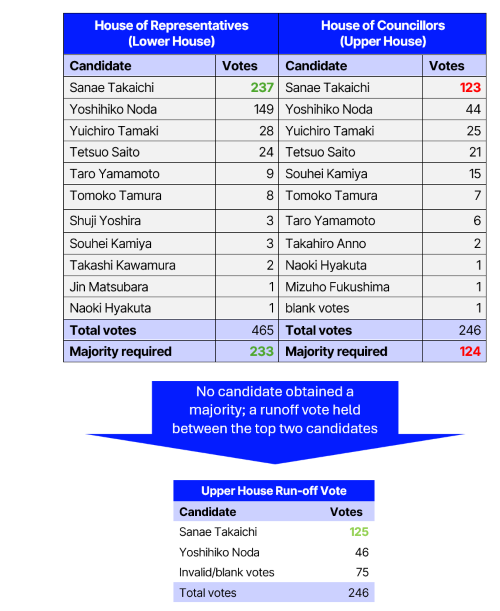
In the House of Representatives, Takaichi secured 237 votes, exceeding the 233 required for a majority. The LDP’s 196 seats, combined with 35 from its partner, the Japan Innovation Party (Ishin), accounted for most of her support, while several independents affiliated with the “Reform Group” also voted in her favor.

In the House of Councillors, Takaichi received 123 votes in the first round—one short of a majority—prompting a runoff. She then won the second round with 125 votes, securing her appointment by both chambers. Opposition parties split their votes, with the Constitutional Democratic Party supporting its leader Yoshihiko Noda, while Komeito, the Democratic Party for the People, and others each backed their own candidates, resulting in a fragmented opposition showing.


Who is Sanae Takaichi?

Born in 1961 in Nara Prefecture, Sanae Takaichi (64) has been a central conservative voice in the Liberal Democratic Party (LDP) for decades. A graduate of Kobe University, she also spent time in the US as a Congressional Fellow in the 1980s. Elected to the House of Representatives in 1993, she has since secured 10 consecutive victories in Nara’s 2nd district.

Takaichi has held multiple cabinet positions, including two terms as Minister for Internal Affairs and Communications. Under the leadership of former Prime Minister Shinzo Abe, she became the first woman to chair the LDP Policy Research Council in 2012. Most recently, she served as Minister of State for Economic Security (2022–2023), overseeing Japan’s technology and supply-chain resilience. A noted security hawk, she advocated for tighter controls on sensitive technologies and foreign land purchases. After previous leadership bids in 2021 and 2024, her victory in 2025 marks the culmination of a long pursuit of party leadership.

Takaichi is a staunch conservative nationalist, closely aligned with Abe’s political legacy. She prioritizes constitutional revision—particularly formalizing the Self-Defense Forces in Article 9—and supports a robust defense posture. Socially, she upholds traditional values, opposing same-sex marriage and female imperial succession.

Economically, she espouses a pragmatic, pro-growth agenda modeled on “Abenomics,” favoring fiscal stimulus and monetary easing under what she calls a “responsible proactive fiscal policy.” She seeks to address demographic decline through family-centered incentives while maintaining fiscal stability.
Takaichi frequently cites Margaret Thatcher as her political role model, aspiring to be Japan’s “Iron Lady.” She emphasizes decisive leadership and national strength, aiming to combine ideological conviction with administrative competence.

Her premiership will test whether a deeply conservative leader can broaden appeal beyond the LDP’s right wing. How she balances assertive nationalism with economic pragmatism and inclusivity will shape both her domestic agenda and Japan’s global posture.


The New Cabinet

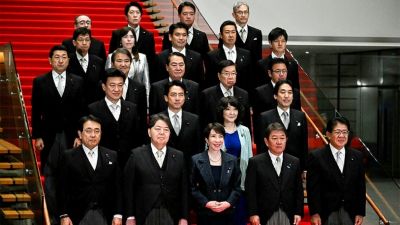
Sanae Takaichi’s new cabinet features a strategic mix of veteran policymakers and younger conservatives in key posts. She tapped Satsuki Katayama (a close ally of the late Shinzo Abe and a fiscal dove) as Finance Minister, making Katayama the first woman ever to hold that position. Veteran lawmaker Toshimitsu Motegi (70) returns as Foreign Minister, and 44-year-old Shinjiro Koizumi (a popular political scion who recently challenged Takaichi for the LDP leadership) becomes Defense Minister. For economic strategy, trade expert Ryosei Akazawa (64) will lead the Ministry of Economy, Trade and Industry (METI). At the same time, Kenichiro Ueno (60) takes charge of Health, Labor and Welfare, and Hisashi Matsumoto (63) heads the Digital Transformation portfolio, tasked with social welfare and digital reform, respectively. In unveiling her team, Takaichi described it as “a cabinet committed to making decisions and progress,” underscoring her pledge to govern boldly and “build a strong Japan.”



Key Positions

Position

Name

Profile

Minister of Finance (MOF)

Satsuki Katayama

Satsuki Katayama (66)

Previously a senior bureaucrat in the finance ministry and veteran LDP lawmaker. She is firmly in the conservative, reform-bureaucratic wing of the LDP.
Minister of Foreign Affairs (MOFA)

Toshimitsu Motegi

Toshimitsu Motegi (70)

Veteran LDP politician, former Minister of METI, former Foreign Minister, former LDP Secretary-General; moderately conservative, with technocratic credentials and strong factional backing.
Minister of Defense (MOD)

Shinjiro Koizumi

Shinjiro Koizumi (44)

Runner-up for LDP President, and son of former Prime Minister Junichirō Koizumi; elected in 2009; prior roles include Environment Minister and, for a short period, Agriculture Minister.
Minister of Economics, Trade and Industry (METI)

Ryosei Akazawa

Ryosei Akazawa (64)

A pragmatic conservative known for his expertise in economic and infrastructure policy, he served under the Ishiba administration as Minister for Economic Revitalization, leading Japan–US tariff negotiations and promoting.
Minister of Health, Labor and Welfare (MHLW)

Kenichiro Ueno

Kenichiro Ueno (60)

Former Deputy Finance Minister from Shiga Prefecture and ex-bureaucrat at the Ministry of Home Affairs. A mainstream LDP conservative focused on sustaining Japan’s welfare and pension systems while promoting traditional family policies and administrative reform.
Minister for Digital Transformation

Hisashi Matsumoto

Hisashi Matsumoto (63)

Former medical doctor/trauma surgeon turned politician; prior experience in defense and foreign affairs. As a former physician, Matsumoto aims to accelerate digital transformation in healthcare.


What's Next?

Parallel tests of leadership will define the opening months of the Takaichi administration, as it implements a complex domestic agenda while launching a high-profile round of diplomacy abroad.

At home

Japan’s 219th Extraordinary Diet Session convened on October 21 for a 58-day term through December 17, marking the first legislative test for the new government. The ruling parties have proposed that Prime Minister Takaichi deliver her policy speech on October 24, followed by party leaders’ questions on November 4 and 5. The debate will center on the FY2025 supplementary budget, designed to fund the government’s new economic stimulus package, and on a bipartisan bill to abolish the provisional gasoline tax rate by year-end.

These deliberations will provide an early indication of how effectively the LDP–Japan Innovation Party cooperation framework can manage fiscal coordination and legislative consensus, particularly amid growing expectations for economic revitalization and social policy reform.

Abroad

Prime Minister Takaichi’s first major diplomatic test will come immediately after the Diet’s opening. From October 26, she will travel to Malaysia to attend the ASEAN-related Summit Meetings.

She will then host US President Donald Trump’s visit to Japan from October 27 to 29. During the visit, Trump will hold an audience with Emperor Naruhito on October 27 and a bilateral summit with Prime Minister Takaichi on October 28, before visiting the US Navy’s Yokosuka Base. The Japan-US Summit Meeting is expected to serve as a pivotal moment in shaping the early tone of the Japan–US alliance, offering both leaders a chance to build personal trust and reaffirm cooperation toward a “Free and Open Indo-Pacific.” Discussions will likely focus on Japan’s evolving defense policy under the Takaichi administration, including its plan to accelerate revisions to the Three Security Documents and advance the JPY 43 trillion (USD 280 billion) defense spending framework ahead of schedule. Takaichi is expected to outline measures to strengthen counterstrike capabilities, expand drone operations, and reinforce cybersecurity, while seeking US understanding for Japan’s more assertive security posture. The two sides are also expected to reaffirm the US–Japan tariff agreement concluded under former Prime Minister Ishiba, signaling continuity in the economic dimension of the alliance.

Following Trump’s visit, Takaichi is expected to travel to South Korea to attend the APEC Leaders’ Meeting.


Policy Implications for Businesses

Market Reaction

The inauguration of Prime Minister Takaichi triggered a broadly positive market response. The Nikkei Stock Average climbed from around 44,000 before the LDP leadership vote to near the 50,000 mark, driven by expectations of expansionary fiscal policy and continued monetary easing—what analysts have called the “Takaichi trade.” Much of this rally reflects symbolic factors: optimism over the new LDP–Japan Innovation Party cooperation framework and enthusiasm surrounding Japan’s first female prime minister. As the initial euphoria fades, investors are turning more cautious, noting that the new administration’s emphasis on fiscal discipline could moderate Takaichi’s more aggressive policy agenda. With limited improvement in real wages or productivity, the market’s strength remains largely nominal, supported by inflation and a weak yen. While the pace of gains may slow, equity valuations are likely to remain high in the near term.

In the bond market, yields have inched higher amid concerns about fiscal expansion. The benchmark 10-year government bond yield rose to around 1.665%, reflecting portfolio adjustments and unease about future debt issuance. Although Prime Minister Takaichi has reaffirmed respect for the Bank of Japan’s independence and ruled out revising the 2013 joint statement, investors are watching for potential divergence within the cooperation framework. The BOJ is expected to maintain its current policy stance at the October meeting, with markets now focused on the upcoming supplementary and FY2025 budgets as key signals of the government’s fiscal direction.

The yen began the new administration’s tenure at around JPY 151 per dollar—a calm continuation of recent depreciation. The currency weakened on expectations that the Takaichi government would pursue reflationary policies and that the BOJ would struggle to secure political backing for near-term rate hikes. Unlike last year’s sharp yen sell-off under the Ishiba administration, this transition has been notably orderly, suggesting market confidence in policy continuity. Some strategists see room for further weakness toward JPY 155 later this year, though risks of reversal remain if US growth slows or dollar weakness resumes.

Overall, the Takaichi administration’s market debut has been marked by high equities, a weak yen, and moderately higher bond yields—a reflection of nominal momentum rather than real economic strength. While investor sentiment remains constructive, the durability of these trends will depend largely on external factors, particularly developments in the US economy and global currency dynamics.

Implications for Key Areas

Healthcare

Prime Minister Takaichi has made healthcare reform an immediate priority, warning that 70% of Japan’s medical institutions are operating at a deficit. The government plans to advance subsidies for hospitals and nursing care facilities ahead of the regular medical service fee revision (shinryo hoshū) to support management and staff compensation. These measures are expected to be incorporated into the FY2025 supplementary budget, which will be deliberated during the extraordinary Diet session through mid-December, with budget approval anticipated by year-end, enabling the early disbursement of funds. With MHLW Minister Ueno focusing on social security sustainability and Digital Minister Matsumoto promoting healthcare digitalization, the policy direction combines short-term stabilization with long-term efficiency and innovation.

For healthcare businesses, early alignment with government priorities will be vital—including participation in reimbursement reform discussions, adopting digital tools that improve operational efficiency, and promoting pharmaceutical innovation.

Artificial Intelligence

Under the Takaichi administration, AI has moved from a technology agenda to a national strategic priority—integral to Japan’s goals of economic revitalization, digital sovereignty, and security resilience. The government is expected to promote domestic AI development and infrastructure, ensuring that critical algorithms, computing capacity, and datasets are produced and governed within Japan. This shift aligns with the administration’s broader focus on economic security and reducing dependency on foreign digital ecosystems.

For the private sector, this creates both opportunity and accountability. Companies across industries—ranging from industrial manufacturing to healthcare and defense—can anticipate expanded public investment and partnership frameworks to scale AI applications that enhance productivity and competitiveness. Yet as AI becomes embedded in public services and critical infrastructure, firms will face stricter transparency, data governance, and ethical-use requirements. Businesses should proactively align their R&D and compliance strategies with national AI policy priorities, positioning themselves as trusted partners in Japan’s pursuit of secure, innovation-led growth.

Defense

Prime Minister Takaichi has placed national defense and economic security at the center of her policy agenda, signaling a rapid acceleration of Japan’s defense buildup. The confidence and supply agreement with the Japan Innovation Party calls for an early revision of the Three Security Documents. It sets the stage for defense spending to rise toward 2% of GDP—a historic shift in Japan’s postwar defense posture. While the debate over fiscal resources will continue, policy direction is clear: greater investment in unmanned systems, missile defense, space and cyber capabilities, and domestic defense production.

For the industry, this marks the expansion of a “national security economy.” Defense and dual-use sectors—including aerospace, shipbuilding, advanced electronics, AI, and semiconductors—can expect new opportunities in procurement, joint R&D, and co-development with allied partners. At the same time, deeper involvement will require stronger compliance, from export control to cybersecurity governance. Companies should align innovation, risk management, and partnership strategies with Japan’s evolving security priorities to remain competitive in this transformed landscape


Materials presented by Edelman’s Public & Government Affairs experts. For additional information, reach out to Yuichi.Kori@edelman.com.

The October 2025 White House meeting between Australian Prime Minister Anthony Albanese and US President Donald Trump produced two primary outcomes: a new US–Australia Framework on critical minerals and rare earths, and a reaffirmation that AUKUS will proceed “full steam ahead.” The framework outlines coordinated financing, streamlined permitting, and pricing measures to secure supply chains essential to both nations’ defense and energy sectors, with at least USD 1 billion in projects planned per country within six months. Together, the announcements signal deeper US–Australia alignment across resources, industry, and defense, positioning Australia for a potential third mining boom and renewed investment in mid-stream processing. For business, the six-month window opens opportunities in minerals, infrastructure, and dual-use technologies, though success will hinge on execution speed, regulatory coordination, and managing geopolitical risks. 


Overview

What Happened, When, and Why it Matters

On October 20, 2025, Australian Prime Minister Anthony Albanese met US President Donald Trump at the White House. Two headline deliverables emerged:

  1. A US–Australia Framework to secure supply in the mining and processing of critical minerals and rare earths; and
  2. An explicit reaffirmation that AUKUS11is proceeding “full steam ahead.”

The minerals framework outlines coordinated financing, permitting streamlining, pricing/anti-dumping measures, and a rapid-response mechanism to shore up supply chains critical to both countries’ commercial and defense industries, which is likely to usher in Mining Boom 3.0. The AUKUS affirmation follows months of uncertainty stemming from a US review; the White House now signals continuity and higher prioritization of submarine and advanced-capability cooperation. 


Key Outcomes

Rare Earths / Critical Minerals

The United States–Australia Framework is a policy playbook rather than a treaty; it sets out how both governments will mobilize finance (loans, guarantees, equity) and regulatory facilitation to accelerate projects across mining, separation, and processing. It specifies an initial financing target “within six months” of at least USD 1 billion to projects located in each country, joint project selection, and a Mining, Minerals and Metals Investment Ministerial within 180 days.

It also commits to streamlined permitting, cooperation on geological mapping, measures to deter national-security-sensitive asset sales, and a Critical Minerals Supply Security Response Group jointly led by the US Energy Secretary and Australia’s Resources Minister. The document also foreshadows standards-based pricing frameworks (including price floors or similar measures) to counter non-market practices.

In a companion White House fact sheet, the administration framed the package as “billion-dollar deals”—citing seven US Export-Import Bank (EXIM) Letters of Interest exceeding USD 2.2 billion, with total investment potential up to USD 5 billion, and more than USD 3 billion in joint projects in the next six months. The fact sheet also references additional industry-defense and technology collaboration pillars that sit adjacent to minerals (e.g., Artificial Intelligence (AI)/quantum, civil space cooperation).

Independent reporting broadly aligns as outlets describe the package as a USD 5 billion pipeline aimed at de-risking dependence on China and catalyzing near-term project financing and permitting. The deal has echoes of investment agreements between Australia and the US in the 1960s, focused on nickel, gold, and zinc that ushered in Mining Boom 1.0

AUKUS

President Trump publicly reaffirmed the US commitment to AUKUS during the meeting, seeking to put to rest doubts stoked by the prior Pentagon review. The president emphasized continuity for the submarine pathway and Australian infrastructure investments to support US/UK visits and sustainment in Western Australia.

In terms of context, through 2025, there have been periodic signals of “review and refine” from Washington about timelines, costs, and industrial-base capacity for AUKUS. Australia has been co-investing in the US submarine industrial base and advancing integrated air/missile defense and munitions co-production. The White House fact sheet highlights those spending commitments and industrial-base linkages as part of the day’s package. 


What It Means—For the Alliance, Economic Development, and Defense  

Alliance and Strategic Signaling

The minerals framework and AUKUS reaffirmation together send a clear signal: US–Australia relations remain structurally aligned, covering supply-chain security and hard-power integration. The framework’s provisions (financing, permitting, pricing standards, asset-sale scrutiny) indicate a move from ad-hoc project support towards system-level market-shaping—a significant shift in bilateral industrial strategy. Pairing this with AUKUS continuity suggests end-to-end integration: from the materials used in advanced systems to the platforms and capabilities themselves.

Economic Development in Australia and the United States

For Australia, the framework accelerates capital formation in mining and mid-stream processing—areas Canberra has already been supporting through domestic financing for refineries and critical-minerals facilities, including the Future Made in Australia initiatives. It should enhance bankability for projects (via EXIM and other instruments), reduce permitting delays, and increase offtake confidence among US buyers—elevating Australia’s role from ore supplier to value-adding processor. For the US, it diversifies inputs for EVs, magnets, defense electronics, and energy technologies while encouraging allied jobs and investment.

Expect short-term activity in financing closure, permitting acceleration, and standards/pricing workstreams. If executed accurately, the six-month pipeline target would provide a deal-making window (through Q1/Q2 2026) for projects to secure support, with additional momentum from the ministerial gathering.

Defense Development (AUKUS and Industrial Base)

AUKUS continuity ensures Australia’s long-term goal of developing nuclear-powered submarines. It enhances interoperability through visiting and maintenance arrangements, including the multi-billion-pound investment in Henderson Naval Base and HMAS Stirling in Perth, the Osborne Naval Shipyards in Adelaide, and Pillar II technological cooperation.

The US is explicitly emphasizing industrial-base co-investment and munition supply-chain resilience, connecting Australian manufacturing to US primes and tier-2/3 suppliers. This has practical implications: multi-state US supply chains supporting Australian programs and vice versa, with export-control easing gradually required to facilitate speed.


Opportunities for Business

Critical Minerals and Processing

Developers and mid-stream processors in Australia can pursue letters of interest or term sheets with US EXIM and utilize Canberra’s instruments, using the framework’s joint-project identification to position as “priority gaps” in US and Australian supply chains. Equipment providers and EPCs (engineering, procurement, and construction management providers) benefit from clearer financing options and faster permitting processes. US off-takers (EV, defense, aerospace) gain diverse supply options to hedge against China exposure.

Downstreaming Manufacturing

Magnet manufacturers, battery component companies, and defense electronics firms should re-map their cost-to-serve under the proposed standards-based pricing mechanisms (including price floors) that the framework envisions. Early adopters can develop indexation or offtake strategies aligned with these standards to stabilize margins in volatile markets.

Defense and Dual-Use Tech

AUKUS-related infrastructure and sustainment in Western Australia, which enables the US to project submarine force deep into the Indian Ocean and South East Asia, alongside munitions programs and integrated air/missile defense, opens Tier-2/3 supplier opportunities in areas such as precision machining, composites, power electronics, and software. Firms with products relevant to Pillar II (EW, AI, autonomy, quantum, cyber, undersea) can utilize the alliance’s innovation channels once detailed export-control pathways are confirmed.

Capital Markets and Superannuation

The White House points to a sharp increase from Australia’s AUD 4T+-deep superannuation (pension) pool to allocations to US assets by 2035. Fund managers and deal sponsors on both sides can structure cross-border vehicles aligned to minerals, energy transition, and defense-adjacent infrastructure.


What It Means—For the Alliance, Economic Development, and Defense  

Execution Risk and Timelines

Mining and mid-stream assets have multi-year development timelines—“within six months” financing targets are ambitious. Permitting acceleration is promised but delivering it demands regulatory agility across federal and state levels.

Pricing Architecture

Implementing standards-based pricing/price floors will invite WTO/anti-dumping scrutiny and could spark retaliatory measures by non-market actors—firms should scenario-plan for tariff/sanctions volatility.

AUKUS Industrial Capacity

The throughput and workforce at US/UK shipyards remain constraints, and Australia’s defense workforce pipeline is also narrow, especially for expanding industrial capacity in Adelaide. Previous US review signals persist; delivery will need ongoing political support and funding from all three capitals.

Geopolitical Blowback

Beijing is likely to respond asymmetrically in trade, investment screening, or informal coercion, especially if pricing standards are framed as exclusionary. Companies with China exposure require mitigation strategies. 


How Public & Government Affairs Can Unlock Value 

Map the framework to your project or portfolio.

Build a one-pager tying your project’s supply-chain gap to the framework’s priorities; identify which financing lane (EXIM LOI, guarantees, equity) applies; and draft a permitting acceleration narrative referencing the framework’s streamlining commitments. Use this in outreach to Canberra/Washington.

Orchestrate a “two-capitals” engagement plan.

Schedule coordinated touchpoints with Resources/Industry/Energy (AUS) and DOE/State/EXIM/ 
Commerce (US), plus relevant state governments (e.g., Western Australia (WA), Northern Territory (NT), Queensland (QLD) for minerals; WA/South Australia (SA) for sustainment). Position your ask within the six-month financing window and the 180-day ministerial runway.

Pre-wire offtake + standards language.

Start commercial offtake term-sheet discussions that address standards-based pricing and traceability requirements. Edelman can organize industry roundtables to align language across buyers and sellers before standards become final—reducing the risk of renegotiation later.

Leverage AUKUS narratives for dual-use positioning.

For tech/advanced-manufacturing firms, craft messages linking your product to Pillar II capability gaps and industrial-base resilience (e.g., munitions components, autonomy stacks). Calibrate talking points to the White House’s emphasis on supplier jobs across multiple US states and Australian regions.

Prepare for regulatory and investment-screening.

The framework calls for tighter scrutiny of asset sales on national-security grounds. Edelman should help clients pre-brief the Foreign Investment Review Board (FIRB)/Committee on Foreign Investment in the United States (CFIUS) issues and structure ownership to withstand scrutiny, particularly where third-country investors are involved.

Develop risk communications around China exposure.

Develop country-risk matrices and stakeholder Q&A anticipating Chinese countermoves (tariffs, licensing, informal barriers). Prepare assurance narratives for employees, local communities, and investors about supply-chain resilience and environmental standards.

Convene workforce and capability coalitions.

For defense-industrial opportunities, convene regional supplier consortia (tooling, machining, composites, power electronics, software) and connect to skills pipelines (Technical and Further Education (TAFE)/university partnerships) to address capacity constraints flagged across the AUKUS enterprise. 


Bottom Line

The White House–announced Framework and AUKUS reaffirmation strengthen the connection between Australian resources and processing strengths and US industrial and defense needs. For companies on both sides of the Pacific—especially those with projects ready to finance or technologies supporting defense and energy supply chains—the next 6–12 months present an ideal opportunity to secure support, offtakes, and regulatory fast-tracks, provided firms plan for pricing structure changes, investment screening protections, and geopolitical resistance. Edelman can offer real value by aligning projects with the framework’s stated mechanisms, coordinating two-capital advocacy, and pre-emptively managing the political and regulatory risks that will determine which deals ultimately succeed. 


Materials presented by Edelman’s Public & Government Affairs experts. For additional information, reach out to Dr Russell Joshua (AUS) at Russell.Joshua@edelman.com or Matt Streit (US) at Matt.Streit@edelman.com

Subscribe to Twitter