Global
(EN)
- Global (EN)
- Africa (EN)
- Australia (EN)
- Belgium (EN)
- Brasil (PT)
- Canada (EN)
- Canada (FR)
- China (CN)
- France (FR)
- Germany (DE)
- Germany (EN)
- Hong Kong, China (EN)
- India (EN)
- Indonesia (EN)
- Ireland (EN)
- Italy (IT)
- Italy (EN)
- Japan (JP)
- Korea (KR)
- Latin America (ES)
- Malaysia (EN)
- Middle East (EN)
- Netherlands (EN)
- Spain (ES)
- UK (EN)
- Global (EN)
- Africa (EN)
- Australia (EN)
- Belgium (EN)
- Brasil (PT)
- Canada (EN)
- Canada (FR)
- China (CN)
- France (FR)
- Germany (DE)
- Germany (EN)
- Hong Kong, China (EN)
- India (EN)
- Indonesia (EN)
- Ireland (EN)
- Italy (IT)
- Italy (EN)
- Japan (JP)
- Korea (KR)
- Latin America (ES)
- Malaysia (EN)
- Middle East (EN)
- Netherlands (EN)
- Spain (ES)
- UK (EN)

Global
Start your journey with Edelman
Looking for work that matters? Explore careers at Edelman and join a global team committed to shaping conversations, building trust, and driving change.
BROWSE CAREERS
Contact
Whether you're looking for strategic guidance or specific expertise, our team is ready to help. Contact us to explore how Edelman can partner with your business.
Contact Us
Sir Anthony O’Reilly was a man of enormous ability and deep passion. I knew him as Chairman and CEO of H.J. Heinz, then an independent food company substantially owned by the founding Heinz family, and a foundational client for Edelman. Tony was recruited to Heinz after a career in sports, where he starred on the Irish national rugby team.
Tony lived a fantasy existence, replete with a castle in Ireland, a CEO role at a Fortune 500 company and private ownership of a collection of prestigious newspapers from the UK to South Africa. He was a larger-than-life character who treated you as a member of his rugby squad, putting his beefy arm around your shoulder and telling you what he expected you to deliver.
Three quick Tony stories will give you a better picture of the man. He wanted Heinz to take a dominant position in Africa. He made a deal with Zimbabwe President Robert Mugabe to buy Olivine Industries, an edible oils business, from the government. We organized a press event in New York to celebrate the deal. Tony insisted on a prop for the photo opportunity. We produced a giant cardboard can of Heinz beans. O’Reilly presented the can to the President and quipped that its contents caused “certain anti-social effects when eaten in quantity.”
O’Reilly acquired Weight Watchers International and rolled out a line of Weight Watchers Frozen Foods. Dissatisfied with the growth rate of the brand, he personally made a deal with the Duchess of York, Sara Ferguson, who had recently split with the Prince of York. Her personal battle with weight made her a perfect spokesperson for the brand. When the brand was brought in front of Congress for false and misleading advertising, he called me to his home in Bermuda. We went for a walk where he made the case for the brand as a public health benefit for America, then told me to be prepared for the inevitable line of attack that would come from congressmen. For Tony, personal intervention was the only way.
StarKist Tuna was attacked by environmental groups in the early 90s because tuna was being caught in drift nets that caused dolphins to asphyxiate. Edelman worked with Earth Island Institute, Hollywood star Ted Danson and a Congressional committee to initiate StarKist Dolphin Safe Tuna, ensuring that nets would be open at the top to enable dolphins to swim free. Heinz was widely praised as an environmental hero and deeply responsible company. Tony corralled me a year later and told me that I had cost his company $50 million because demand for tuna dried up as the inevitable price increase on the end product was felt by the consumer.
After Tony left Heinz, he acquired china and glass manufacturer Waterford Wedgwood as the basis of building a luxury brands empire. This time the O’Reilly magic failed, and the company went bankrupt. His newspapers also fell on hard times, with the decline in advertising and inability to cope with digital transformation. He was forced to sell his beloved Castlemartin and tone down his lifestyle.
I remember him as a lion of a man, who lived on his own terms, with huge ambition and deep commitment to winning. I learned from him the value of risk-taking, of pushing your team to do their best, and of a belief in business as a force for good in the world. Rest in peace, Tony, you will be missed.
Richard Edelman is CEO.



Careers
Find out more
Davos Special Part 3: Chatham House's Bronwen Maddox on Opportunities for Innovation Amid Geopolitical Tension
Federal Budget Wrap 2024-2025
Federal Treasurer Jim Chalmers’ third federal budget delivered the Australian Labor Government’s second consecutive surplus, one that is largely domestically focused against a backdrop of ongoing inflation and cost-of-living pressures.
Chalmers said that the budget aims to balance the need to bring down inflation, while making the Australian economy more productive and dynamic through investment for the future.
The budget delivers tax cuts for all Australian taxpayers, including a significant cost-of-living relief package, provisions to increase wages for aged-care workers and nurses, power bill rebates for all Australians and an expanded parental leave package for households.
While this year’s budget arguably offers some positive news for individual Australians, the picture for business is mixed, with support measures for small business aimed at easing pressures, supporting growth and helping to level the playing field.
However, the budget also points to weak economic growth, a return to a budget deficit in 2025/26 and beyond and a weaker labour market. Concerns remain amongst business leaders about whether measures to tackle inflation are strong enough and they have cautioned that extra spending could contribute to a weakened budget position over the next four years (source: The Australian 15 May 2024).
Key items
Cost-of-living relief
| • Tax cuts for every taxpayer (13.6 million Australians). • Energy bill relief through a $300 rebate for all households from 1 July, with more rebates for one million eligible small businesses. • Wiping $3 billion in student debt for more than three million Australians. • $1.9 billion to boost the maximum rate of Commonwealth rental assistance by 10 per cent |
| A future made in Australia’ Energy transition |
• The budget aims to accelerate the growth of new industries by providing a $1.5 billion extension over seven years to the Australian Renewable Energy Agency’s industry building investments. • $519.1 million for the Future Drought Fund to support farmers and rural communities. |
| Small business | • $290 million to extend the $20,000 instant asset write-off for small businesses with an annual turnover below $10 million (around 4 million businesses). • $10.8 million to support the mental and financial wellbeing of small business owners. |
| Care economy | • $2.2 billion towards aged care, as well as provisions to increase award wages for aged care workers. • Wage increases for childcare and early educators. |
| Health | • Up to $4 billion for cheaper medicines, including freezing the maximum cost of Pharmaceutical Benefits Scheme (PBS) prescriptions for everyone. • Increasing funding for Medicare and some mental health services. |
| Housing | • $6.2 billion in new investments including public transport and infrastructure, with the ambition to build 1.2 million new homes. • $1 billion to states and territories to pay for roads, sewerage, energy, and water connections for new homes. • An additional $16.5 billion for new and existing infrastructure projects across Australia over the next 10 years. |
Initial reactions
Opposition: While the Coalition prepares to present its budget response on Thursday, the initial reaction from Opposition Leader Peter Dutton suggested Labor has made bad economic decisions: “Labor’s budget was a missed opportunity to help you at a time where you need help. You didn’t address our economic challenges or inspire confidence. It’s a budget that breaks promises rather than keeps them. A budget that weakens Australia’s financial position, rather than strengthens it and it’s a budget that adds to rather than alleviates your cost-of living pressures.”
ABC News: Opposition Leader Peter Dutton says Labor’s budget is a ‘missed opportunity’ to help Australians in a time of need, Brett Worthington and Nicholas McElroy.
Shadow Treasurer Angus Taylor suggested that while inflationary, it won’t oppose spending measures. It’s a “Band-Aid on a bullet wound,” saying: “When you have $4 of spending for every dollar of saving, you are not fighting the inflation dragon that so many Australians are suffering with.” … “You should be dealing with the source of the problem when inflation is raging. The government isn’t doing that because this budget is designed for an election and not a cost-of-living crisis.”
ABC 7:30 Report
Business: Bran Black, CEO of the Business Council of Australia (BCA), praised some initiatives to unlock capital for green investments, but cautioned whether the approach to spending would reduce inflation as desired. He said; “Bill relief is always welcome for low-income households struggling with the cost of living…However, we remain concerned about the potential inflationary impact of a catch-all approach.”
His comments included concern that the government had failed to set adequate fiscal guardrails on spending, with $20 billion in extra spending measures frontloaded over the next two years and the bottom line deteriorating – with both increasing the risk of higher inflation. He called for the Future Made in Australia Act to also include “serious reform of our tax system, significant productivity and investment-driving measures, and regulatory and planning reform.” More positively, he also said: “The Government’s commitment to reforming Australia’s skills system is welcomed by business.”
The Australian Financial Review, Power bill relief, tax cuts in a budget ‘for every Australian’: Chalmers Federal Budget 2024: Labor’s budget seeks to ‘buy a rate cut’ ahead of election, says Peter Dutton | The Australian https://www.bca.com.au/budget_takes_positive_steps_on_competitiveness_with_more_to_do
Andrew McKellar, Chief Executive of The Australian Chamber of Commerce and Industry commented that the impact of the budget on inflation is still unclear, but it was “difficult to accept the assertion that it materially reduces underlying cost or price pressures…The projection of a surplus for the current financial year is positive, however, over the next four years, there appears to be little prospect of substantial progress towards further budget repair.”
Federal Budget 2024: Labor’s budget seeks to ‘buy a rate cut’ ahead of election, says Peter Dutton | The Australian
Rob Scott, CEO of Wesfarmers, welcomed the budget’s $7 billion in production tax credits for critical minerals processing, saying the move was; “A smart, targeted use of the tax system to solve big problems, leverage our competitive advantages and enhance Australia’s prosperity”. Scott said the incentives would encourage investment, support job creation and productivity, while pushing for more funding for carbon capture and storage.
The Australian Financial Review, Power bill relief, tax cuts in a budget ‘for every Australian’: Chalmers
Retail: Paul Zahra, CEO of the Australian Retailers Association, welcomed measures to address the cost-of-living, but said more needs to be done to support small business, fund employment pathways for retail and incentivise the transition to a circular economy. He said; “We welcome measures that provide cost-of-living relief…which will have a flow on impact on retail. Australians are desperate for financial relief, and so too are retailers. Business costs remain dangerously high without productivity improvements and discretionary spending is softening significantly in the wake of tightening household budgets.”
‘Retailers welcome cost-of-living relief in Federal Budget, concerns remain around support for small businesses’ – Australian Retailers Association
Health sector: Despite significant funding of initiatives in this year’s budget such as strengthening Medicare and accessibility to health services and making medicine more affordable to ease the cost-of-living pressures, Labor’s carriage of the health portfolio has been met with uproar. Dr Nicole Higgins, the president of the Royal Australian College of General Practitioners (RACGP), has slammed the budget saying; “At a time when we’re trying to strengthen Medicare and support our patients through a cost-of-living crisis … this budget has dropped the ball.” The RACGP says the budget offers “little to no relief” for patients and threatens to undo Medicare improvements. News GP, Federal Budget 2024-25 ‘dropped the ball’: RACGP Professor Steve Robson, Australian Medical Association President, was disappointed by the lack of funding to reform general practice, reduce surgery wait times and improve access and affordability for patients. He said; “More urgent care clinics is not a long-term strategic solution, and the government keeps looking to fund more of them without proper evaluation of their impact. What we need is reform that enables general practice to deliver the primary care that our patients need.”
‘Budget a missed opportunity to tackle health system issues’- Australian Medical Association
In its formal response to the budget, Mental Health Australia CEO Carolyn Nikoloski said the organisation is disappointed that the national outcry for more mental health support has not been fully funded in the 2024- 2025 Federal Budget. She said: “Australia needs urgent mental health reform to address the crisis we’re facing…Why haven’t we seen investment that matches the level of need in the 2024-2025 Federal Budget?”
‘Funding for mental health falls short in Federal Budget’ – Mental Health Australia
Energy sector: John Grimes, Smart Energy Council gave the budget an ‘A,’ saying it was a “red letter day” for the energy sector with the substantial investment in clean energy initiatives. He claimed the budget will change the future of Australia, adding Australia will become an ‘exporter of climate solutions.” The Guardian, Jim Chalmers budget speech – as it happened
Housing sector: Denita Wawn, CEO of the Master Builders Association, commended the additional $6.2 billion in new housing measures. She said; “The federal budget has finally recognised the importance of a holistic, cross-portfolio approach to solving the housing crisis and made some inroads.”
The Australian Financial Review, Power bill relief, tax cuts in a budget ‘for every Australian’: Chalmers
Crossbench: Senator Jacqui Lambie: Senator Jackie Lambie’s initial response on ABC News last night included criticism of the Australian Government, suggesting it was “too lazy to do means testing” in reference to the $300 bill rebate for all Australian households. She called out the absence of any investment in youth crime, fueled by drug and alcohol issues. Senator Lambie was also critical on the subject of the structural return to a budget deficit in the coming years, calling out a lack of detail regarding exactly where funding is going or further details on what she called the indigenous jobs program.
ABC News TV
Senator David Pocock: Appearing on ABC’s coverage of the budget, Senator David Pocock echoed Senator Lambie’s comments on the $300 power bill rebate, saying to not means test it is “frankly ridiculous”. He said that with three million Australians living in poverty, giving those with six-figure salaries $300 “doesn’t make sense”. Senator Pocock supported investments in critical minerals but said the budget missed the opportunity to better support the manufacturing of things like solar cells here in Australia. He said he was also disappointed that the budget omitted household electrification – citing the “huge opportunity” to spur investment and support local companies in that space and boost exports.
ABC News TV
Winners and losers
The government's second budget in less than a year has been announced, revealing winners and losers and highlighting the need for prioritising vulnerable Australians to balance the books. The budget is expected to bring a small surplus of around $4bn this year, ending a 15-year-long deficit. However, deficits are predicted for the next four years with many Australians facing financial struggles.
Winners | Losers |
Green innovation One of the integral components of this year’s budget is the Australian Government’s ambition to turn Australia into a renewable energy superpower. The Australian Government has allocated $6.7 billion in production tax incentives to produce renewable hydrogen over the next decade and is investing $8.8 billion to add more value to Australia’s resources and strengthen critical minerals supply chains over the next ten years. It is looking to encourage more Australians to take up jobs in the sector with $1.1 billion to reform higher education and deliver the skilled work force needed to accelerate this transition. | Universities and International Students Placements for international students will now be capped. Universities will only be able to take a certain number of students, and any they wish to take above this will be decided based on a formula accounting for how much additional student housing the institution has built. |
| Superannuation:From July 2026, employers will pay super at payday rather than quarterly, improving retirement incomes for young workers. | Pharmacists:Pharmacies will incur an additional cost of around $170,000 per year as patients can now buy 60 days' worth of common medicines for chronic conditions instead of 30 days. |
| Medicare and health:A $3.5 billion, five-year package will encourage doctors to bulk-bill. Money will also be used for modernising My Health Record, lung cancer screening, and cheaper common medicines. | Smokers and vapers:Smokers will have a 5 per cent annual tax increase for three years, while vapers will have limited flavor choices, generating $3.3 billion extra revenue with the government also allocating $63 million towards prevention and imposing new regulations on vape purchases. |
| Small business:A tax discount of up to $20,000 will be offered to small businesses with an annual turnover under $50 million to incentivise more energy-efficient practices, expecting to benefit up to 3.8 million businesses. | Immigrants:Visa fees for temporary and permanent residency will go up by 6 per cent, generating $660 million to reduce immigration backlogs, with short-stay visa applicants facing a 21 per cent fee increase, while migration is predicted to return to normal levels in 2 years. |
| Defence:Australia's defence spending overall is increasing with an additional $11+ billion over the next four years for naval programs and improving our cyber and sovereign capabilities. | Truckers:The government plans to increase the heavy vehicle road user charge to 32.4 cents per liter of diesel by 2025-26 saving $1.1 billion over four years which will go towards road maintenance and repairs. |
| Indigenous Australians:$1.9 billion will be spent over five years to enhance Indigenous people's lives and economic prospects, and $360 million will be allocated for the Indigenous Voice to Parliament referendum. | Scammers:The government will spend $86.5 million over four years to fight scams and online fraud, including $58 million for a National Anti-Scam Centre and $17.6 million to dismantle phishing websites. |
| Pacific region:A $1.4 billion boost will improve law enforcement and security infrastructure in the Pacific region, with $370 million to expand the Pacific Australia Labour Mobility scheme. | Multinationals:The government’s implementation of pillar two of the OECD/G20 multilateral agreement on global tax is part of a worldwide shake-up of company tax involving more than 135 countries. The “Pillar Two” taxation reforms will bring in $370 million over the five years from 1 January 2024. |
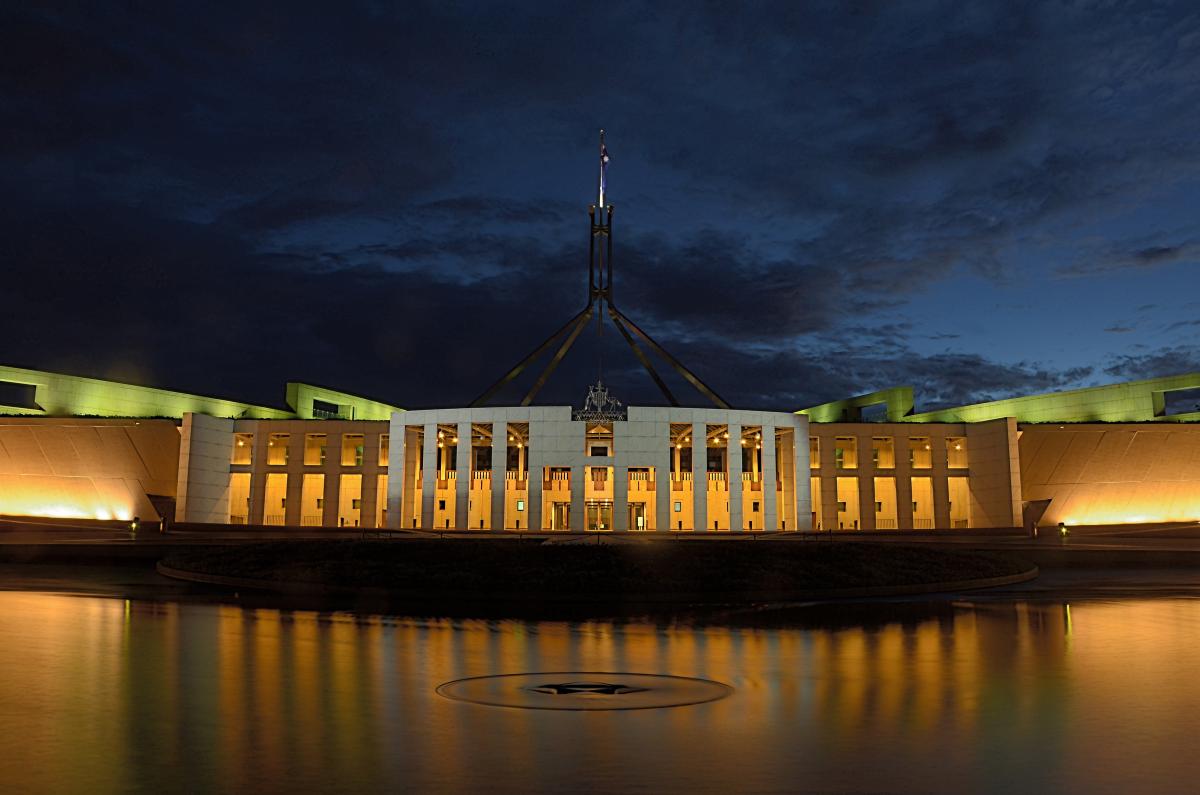
Image Source: Aditya Joshi on Unsplash

Sideload
Sideload by Edelman UK is a technology-focused platform delivering insights, trends, and creative storytelling at the intersection of tech, culture, and communications.
Find out more
Business Insider ran a story last week titled "Woke No More,” asserting that companies have backtracked on ESG as part of a “great un-wokening.” The journalist, Emily Stewart, acknowledges that companies backing down on sustainability and diversity efforts “could prove short-sighted.” But she concludes that “maybe corporate America was never truly committed to the idea in the first place.”
The article reflects a broader narrative in the public discourse that contends that companies and CEOs became too activist on societal issues. But C-Suite leaders beware. The need for business to act – to go beyond words – has intensified, not receded. Those tempted to think the work is over are mistaken. Edelman Trust Barometer data consistently shows demand for action.
Business is by far the most trusted institution. The 2024 Edelman Trust Barometer shows the leadership vacuum created by a lack of trust in government and puts responsibility firmly on business to solve important problems. Globally, business is seen as 52 points more competent and 32 points more ethical than government.
Corporate activism really gained pace in the mid-2010s, related to support for the Paris Agreement on climate and corporate opposition to the bathroom bill in North Carolina in 2016. In 2019, the Business Roundtable released a redefined Statement on the Purpose of a Corporation signed by 181 CEOs emphasizing how business must serve all stakeholders, customers, employees, suppliers, communities and shareholders. In parallel, sustainable investing continued to grow, leading companies to try to qualify for new funds. The murder of George Floyd in 2020 prompted many companies to confront racial injustice and establish or overhaul Diversity, Equity, and Inclusion (DEI) programs to achieve a more diverse workforce that better reflects the world.
Leadership character is in question and will be scrutinized intensely in the year ahead. Some would have it that business can and should revert to unfettered shareholder maximization and forget that leaders ever realized there’s more to leadership than turning a profit. They are kidding themselves. The operating reality for CEOs has changed profoundly and it’s not going back.
Demographic, geopolitical, and environmental shocks are our norm. People will argue about how to go about the work most effectively, but we must have more diverse workforces and inclusive workplaces to compete. We must have more resilient supply chains to grow. We must tackle labor issues and we must do our part as environmental stewards.
None of this is radical. It is about doing business, better. It is about strengthening capitalism. For anyone in the C-Suite or counseling business leaders, a few points to consider:
- Communicators and executives need to avoid the language trap. The misuse and weaponization of the word “woke” and the deliberate conflation of the terms Woke, ESG (Environmental, Social, and Governance), and DEI dilute the substance of each. Smart leaders will focus on action and follow through. Keep it simple. Center on the clear objective of building a healthy, value-generating, inclusive and sustainable business. And always explain why what you sell matters.
- Don’t allow others to conflate principles you know to be valuable to the health of your company. Corporate purpose is not ESG. Corporate purpose is one of the most important ingredients for long-term growth. If you don’t know what you are growing for, trouble lies ahead. Related but not identical, some consumer brands have skillfully embraced purpose to appeal to specific customers. For the right brands, this can still be hugely effective. But it must always be authentic.
- Despite the contention in the U.S., ESG is primarily intended to provide a level playing field of information to capital markets on how non-financial metrics are connected to risk and opportunity. It is a way to send better quality information to analysts and investors about the long-term risks for a business. People should have the choice to invest in whatever company they want to. Quality information is central to that process. Acronyms like these are technical and not effective in talking with employees and customers. Keep language simple and easy to understand and relate to.
- On DEI, I want to be very clear that Bill Ackman is plain wrong in stating that DEI is inherently a racist and illegal movement. John Hope Bryant was correct at the Milken Conference when he said that DEI “is about expanding the table and adding a chair.” Research shows that diversity helps drive innovation and business success. While some steps have been taken on DEI, the work must continue. The representation of Black directors of Fortune 500 companies has expanded to 17 percent. But only 1.6 percent of Fortune 500 CEOs are Black. The number of Latino directors is far lower at 7 percent and Asian Americans at 9 percent. Additionally, many corporate DEI commitments made in 2020 remain unmet.
- If you want to employ the best people, Impact matters. The 2023 Edelman Trust Barometer Special Report: Trust at Work shows that Societal impact (71 percent) is nearly as important as career advancement (83 percent) and personal empowerment (80 percent) in the selection of an employer. And 61 percent of job seekers globally expect the CEO to speak out on issues they care about. There is a difference in the U.S., however, with a 10-point drop to 51 percent in 2023. Most Republicans and Independents do not want CEOs to speak out on political issues.
- Sustainability must be about follow through. Trust at Work revealed that employees are 14.5 times more likely to work for a company that publicly supports and demonstrates a commitment to human rights. They are also 8 times more likely to work for a company that acts on climate change. However, a later Trust study showed that two-thirds say businesses are not doing well in keeping their climate promises. When companies focus on delivering Net Zero emissions, controlling plastics pollution, enabling regenerative agriculture, or addressing other critical issues, they assure their future success.
At the PRovoke conference earlier this month, I made a plea to the communicators in the audience. Stand up for purpose-driven, sustainable, inclusive business. Don’t retreat because it is politically expedient. Advise your clients and stay the course. But get more sophisticated with your “how” because better business takes real work.
Richard Edelman is CEO.

Gender Pay Gap Report
Edelman is committed to a diverse and inclusive workforce where everyone is valued equally, and all employees feel respected.
Find out more
Picture this. The boardroom of the regional Asian headquarters of a major multinational in Singapore, Hong Kong, Shanghai or Tokyo. Two sets of executives are locked in fierce debate. On one side of the conversation, the local leadership and their communications team. On the other side, sits global leadership, legal counsel and global corporate communications teams. They are debating a public statement about a reputational issue embroiling their firm. For stakeholders sitting outside the region, any language that hints at a direct apology may trigger handwringing and teeth grinding. For those in-market however, the often, terse legalese drafted from head office has the same effect. The crux of the issue, legal culpability and liability.
Litigation or Redemption?
For stakeholders in highly litigious markets like the U.S, any public expression of apology sets off sirens of alarm with concerns of class-action lawsuits and litigation obstacles to follow.
For Executives in Japan, for example, the stakes are equally as high. They know that unless they express some form of apology, their key stakeholders in Japan—from national government to customers —may censure them for not sincerely acknowledging the disruption they have caused. They instinctively know that to conform to Japanese business culture, issuing a public apology in is a key part of the process in getting past a serious issue.
The Sound of Silence
There is no substitute for good corporate responsibility and doing the right thing to address issues that arise. However, the absence of an apology can also lead to further escalation and reduce room for the company to effectively work with relevant parties to resolve the issue. Thus, both sides share the common understanding that the company’s reputation hangs on how it handles and communicates its response to the issue.
Equally global and local leaders agree there is a short window of opportunity to engage when public opinion is being formed. Yet, because of these different points of view on saying “sorry” there is often internal stand-off and impasse. Instead of speaking up to share the Company’s side of the story, multinationals under fire in Asia are often deadlocked and silent.
Not the Hardest Word
There are ways to navigate this impasse. And they do involve an apology. But a special kind of apology which expresses regret for the concern or disquiet caused to key stakeholders, rather than addressing the specifics of the issue. Japan's unique approach to apologies allows companies to express remorse without automatically admitting fault or liability. This is embodied in the Japanese concept of 'shazai', where an apology aims to restore harmony and express sincerity without the direct implications of wrongdoing. Hong Kong has also adopted a similar stance through its Apology Ordinance. This legislation allows individuals and companies to make apologies that cannot be used as an admission of fault or liability in civil proceedings. The ordinance encourages parties to communicate openly and to de-escalate the emotional elements of the issue.
China, India
In markets such as mainland China and India, there isn't a clear legal framework which distinguishes an apology from an admission of guilt. In mainland China, traditional culture values the act of apologising to maintain harmony across stakeholder groups. While there are no specific legal considerations, it is generally understood an apology made in the right way does not constitute an admission of fault. Furthermore, authorities and regulators under these environments often play the role of mediators and may encourage companies to make an apology to preserve stability. In these instances, a different approach will need to be taken that carefully balances the need for de-escalation with legal risk and wider global stakeholder expectations.
One Size Does Not Fit All
In many cases, after intense internal negotiation and with the advice of risk and communications professionals, multinational companies will eventually agree to this nuanced approach. However, the long delay between an issue coming into the public domain and an apologetic statement being issued often leads to greater reputational damage.
For multinational companies, the takeaway is that a ‘one size fits all’ approach cannot be taken in Asia. That is why we at Edelman advise our clients to build these conversations into routine risk mitigation planning and adopt a culture of reputation management within the business. Touchpoints might be an annual update of the crisis communications playbook or scenario planning.
Establishing a common understanding will empower your teams to act with confidence to protect your most valuable assets in this diverse and vibrant market – trust.
This story first appeared in The Business Times.
For more information, please contact Simon Chan, SVP, Technology Lead for APAC at Edelman.
Edelman has today announced the promotion of Nick Hope to the role of Managing Director, Crisis & Risk for the EMEA region.
In his role as Managing Director, Crisis & Risk, EMEA Nick will be responsible for leading and evolving Edelman’s Crisis & Risk Practice across 9 key regional markets, providing strategic counsel to clients navigating today’s increasingly complex world of reputational risk. In his new role, Nick will report to Julian Payne, Global Chair of Crisis & Risk and Chair of Corporate Affairs, EMEA.
Nick has been at Edelman for six years, most recently as Managing Director of the UK Corporate Affairs team. Prior to this he was Chief of Staff across the EMEA region, acting as a trusted advisor to large scale clients providing c-suite counsel and crisis management. Prior to this Nick was a Labour Party political advisor.
On his appointment Julian Payne, said, “With more than a decade of experience working at the intersection between business, politics, and culture, Nick has a unique understanding of the rapidly changing challenges clients are facing across the vast channels and audiences’ in today’s world. I am delighted to have the opportunity to bring that skillset to more of our clients across the region.”
“It is always especially rewarding to see talent rise through the business, Nick has played a key role in advancing our advisory approach to strategic Corporate communications and I know that he will add tremendous value to our clients and our team in his new role” said Ruth Warder, CEO UK & Ireland & Brand Chair EMEA.
Nick Hope commented, “Amidst geo-political tensions, accelerating technological advancements, societal instability, and political polarization, the terrain that businesses must navigate has become increasingly complex. At Edelman, we excel at partnering with our clients to help them get ahead of crises, respond effectively when they do hit, and emerge stronger and rebuild on the other side. Leading an exceptionally talented and growing team across the EMEA region, I’m committed to further enhancing our spatial awareness and discipline sharpness to maintain our competitive edge.”
Nick will continue to lead Edelman UK’s Corporate Affairs team on an interim basis whilst a replacement is recruited. The search for a successor to head up this team, working across the full spectrum of corporate communications and reputation management, is now underway.