I am just completing a two-week vacation. My greatest joy is finding a quiet place and devouring a book. Here’s a list of my favorite books that I read this summer.

The Demon of Unrest: A Saga of Hubris, Heartbreak, and Heroism at the Dawn of the Civil War by Erik Larson. This is a superb retelling of the months before the U.S. Civil War. Nobody wanted a war, but the resupply of Fort Sumter in South Carolina provided the spark.

White Rural Rage: The Threat to American Democracy by Tom Schaller and Paul Waldman. An unpacking of resentment from downward economic trajectory and loss of political power.

Age of Revolutions: Progress and Backlash from 1600 to the Present by Fareed Zakaria. For followers of the Edelman Trust Barometer there will be familiar themes of impact of technology, loss of belief in information and impact of globalization. A must read.

The Talented Mrs. Mandelbaum: The Rise and Fall of an American Organized-Crime Boss by Margalit Fox. The story of New York City's leading fence, who bought stolen goods including jewels and silks from local thieves. A portrait of 1880s Lower East Side New York.

The Incorruptibles: A True Story of Kingpins, Crime Busters, and the Birth of the American Underworld by Dan Slater. A crime busting Mayor of New York City in 1910 assembled a group of honest police who clean up the Jewish part of the Lower East Side. Prohibition follows and crime returns.

Waging a Good War: A Military History of the Civil Rights Movement, 1954-1968 by Thomas E. Ricks. This is a very different take on the Civil rights movement the use of military training to prepare for non-violent opposition to segregation.

Porfirio Diaz by Paul Garner. A biography of Mexico's longest serving president. He went from radical reformer to ultra establishment in creating modern Mexico via foreign investment.

The World: A Family History of Humanity by Simon Sebag Montefiore. This epic work catalogues the world's leaders from 700 BC to the present. The family strife makes Succession seem like child's play.

Into the Bright Sunshine: Young Hubert Humphrey and the Fight for Civil Rights by Samuel G. Freedman, describes the evolution of the Democratic party's stance on civil rights post-World War II, led by Minneapolis Mayor Hubert Humphrey, later a presidential candidate in 1968.

Brave Companions: Portraits In History by David McCullough. This is a series of essays on important but lesser-known figures in history such as Alexander von Humboldt, who explored South America's flora and fauna in the early 1800s; or Harriet Beecher Stowe author of Uncle Tom's Cabin, which was the fountainhead of anti-slavery thinking.

Yankee Stepfather: General O. O. Howard and the Freedmen by William S. McFeely. This is a biography of Oliver Otis Howard, Civil War general and director of the Freedmen’s Bureau after the Civil War. I knew McFeely, a professor at Mount Holyoke College, because he was the father of my Exeter roommate Drake McFeely. Howard was an unsuccessful general but hugely important figure in post War policy on newly freed blacks.

The Last Campaign: Sherman, Geronimo and the War for America by H.W. Brands. This is a superb tale of the last great Indian war with Civil War hero William Sherman tasked with pacifying the West and Geronimo the Apache chief determined to fight back the white settlers.

I have loved every minute of my reading blitz. I have felt like an undergraduate again. Maybe it took turning 70 to go so hard at it.

Richard Edelman is CEO.
 

August 7, 2024 - Edelman has today announced the appointment of Suzy Socker to the role of UK Managing Director, Brand.   

In her role as Managing Director, Brand, Suzy will be responsible for leading Edelman UK’s brand portfolio and proposition, building on Edelman’s expertise of building earned-first, trusted brands to create influence and growth. 

This appointment follows Edelman UK’s most successful year yet at Cannes Lions, taking home nine Lions and winning Independent Agency of the Year in the Good Track, placing second globally for Independent Agency of the Year and ranking as the most awarded PR agency in the UK. 

Recognised work came in the form of ‘The Social Swap’ by Heineken which won a Bronze Lion in Social & Influencer, Dove’s ‘Code My Crown’ which won one Gold, three Silver and one Bronze Lion and DP World’s ‘Move to -15’ which won the coveted Titanium Lion. Marking the first time a legacy PR firm has won a Titanium Lion. 

Suzy has been at Edelman for four years, most recently as Head of Operations, Brand. Prior to this she worked at M&C Saatchi, Ketchum, and Iris. She will report to Ruth Warder, UK CEO and Brand Chair, EMEA.   

On the appointment, Ruth Warder said, “Building brands differently is at the heart of what we do. Suzy brings a deep expertise in leading integrated teams and a passion for the power of earned. She inspires her clients and her teams to reach for creative excellence. I am excited to see Suzy take on this new role and know she will continue to be a trusted partner and advisor to our clients and a dynamic leader for the Brand team.” 

Suzy Socker commented, “I am thrilled to take on the role of UK MD of Brand. I truly believe in the expertise of our teams and our unique ability to build trust and shape culture. With an enviable roster of clients including Heineken, HARIBO, IKEA, Samsung and Starbucks, the opportunities are endless.” 

Suzy replaces Matt Brown who held the role of Vice Chair, Brand, EMEA who leaves Edelman after six years for new ventures.

I have just returned from a week in Paris. I was a bit manic, seeing eight different sports, loving every moment. Here are a few observations from the week:

  1. Paris a Revelation—The subway system is superb. The French people were incredibly friendly and helpful. The city was clean and heartbreakingly beautiful. The big question is why more businesses did not relocate to Paris after Brexit…a truly missed opportunity.
  2. My Favorite New Sport—I had never been to a handball match. It is a combination of basketball, soccer, and the World Wrestling Federation. My favorite match was a 31-31 tie between the women’s teams of Hungary and Angola, with a last-minute comeback led by the massive center who was unstoppable at the top of the key.
  3. Tennis Match for the Ages—I went to Roland Garros to see Rafael Nadal against Novak Djokovic. Rafa gave it his all, coming back from 4-0 to 4 games all in the second set. The crowd was going berserk, especially my Latina wife. In the end, the masterful Joker took control. But as a one last time, it is forever in my memory.
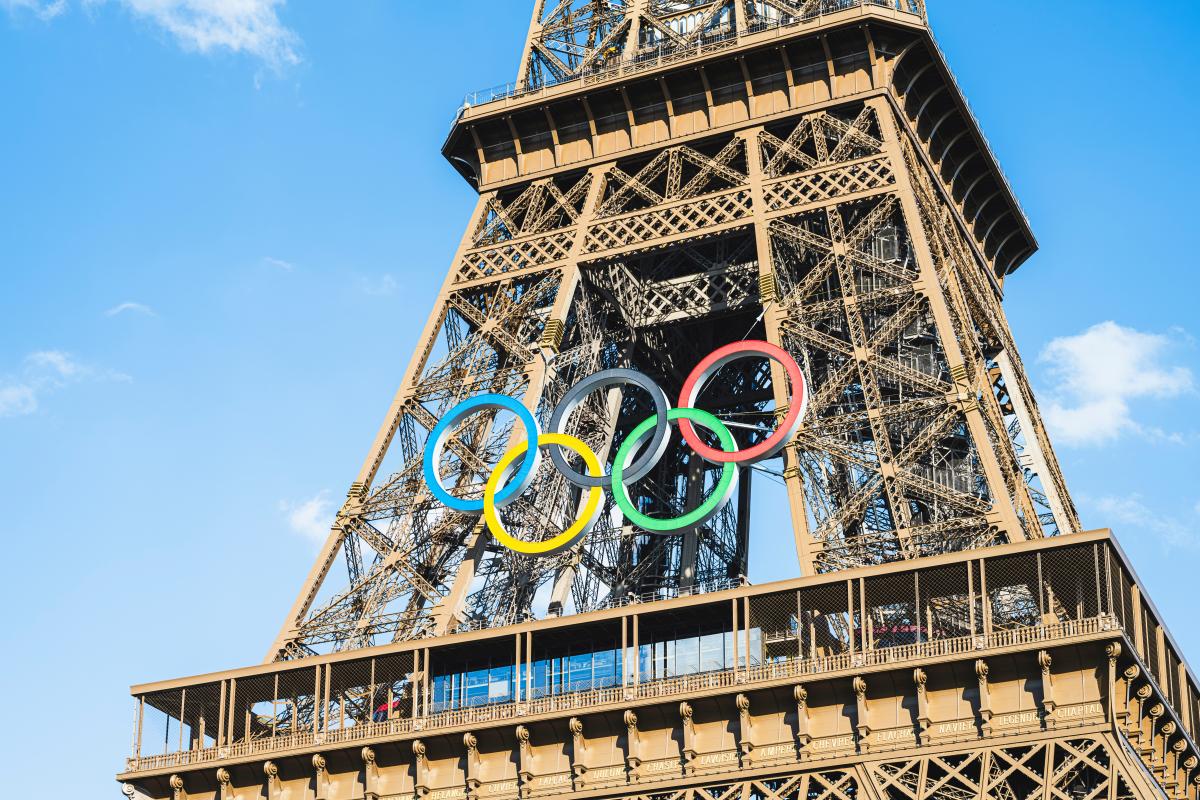
  4. The Monuments Used to Advantage—To see beach volleyball under the Eiffel Tower and 3x3 basketball in the Place de la Concorde was surreal. Pop-up stands were installed for the crowd, utilizing the natural beauty of the venue.
  5. Most Frequently Observed Hat—Was a New York Yankees hat. It did not have anything to do with loyalty to the team. It was simply to say that people attending the Games had been to New York City. When asked, they said they loved New York much more than the U.S.
  6. Very Little Politics—The only time that politics intruded on the Games was during the Israel vs. Paraguay soccer contest. A sign was unveiled in the second tier that was very aggressive, removed immediately by the local authorities. There were also chants about genocide, countered by chants calling for the hostages to be returned.
  7. The Most Compelling Day—Track and Field is the most traditional part of the games. I saw the Decathlon participants run the hurdles, throw the discus, and do the pole vault. An American runner had torn his knee cartilage but was determined to complete the 1500 meters, limping around the track four times, finishing last but showing true grit. The fastest men in the world, the 100-meter dash competitors, were simply stunning, running at over 25 miles per hour.

This was the family trip of a lifetime. It was the best 70th birthday present that I could ever have imagined. Now I have to get ready for LA 2028.

Richard Edelman is CEO.

In today’s dynamic business landscape, Gen Z is redefining the rules of brand engagement. Recently, during the third edition of PRologue, the Public Relations Consultants of India (PRCAI) hosted a panel discussion titled ‘Cracking the Gen Z Code’. Based on Edelman’s proprietary research, the discussion delved into understanding this transformative generation. The panel featured influential Gen Z content creator and author of The Money Guide, Anushka Rathod; industry veteran Sushant Dash, CEO of Tata Starbucks; alongside myself. It was moderated by Arun Sudhaman, CEO and Editor-in-Chief of PRovoke Media. With Gen Z wielding significant purchasing power and influencing global buying decisions, brands face a critical challenge: engaging this demographic effectively while avoiding backlash. In India, home to the largest Gen Z population, earning trust from this dynamic group is non-negotiable for brand success.

Here are 7 key takeaways from that panel conversation:

  1. Trust:  the cornerstone for modern-day brand marketing and communications

    One of the most common themes was the importance of trust for Gen Z and the fact that it has to be earned. According to Edelman’s Trust Barometer Report (The Collapse of the Purchase Funnel), a staggering 79% of Gen Z emphasize the need for trust in the brands they choose—a figure that surpasses all other generations, highlighting a fundamental shift in consumer expectations. And this generation holds immense influence and gravitational pull over others. This applies across the industry – whether consumer brand, corporate brand or employer brand. Sushant Dash of Tata Starbucks (where 72% of loyalty members are Gen Z) highlighted that trust is earned through consistent and authentic actions. He emphasized that earning trust involves not just walking the talk, but also continuously learning from feedback. He pointed out that the foundation of external trust starts internally. When employees are genuinely aligned with the brand’s values, this trust is more likely to be reflected in their interactions with customers. The good news – Gen Z trusts business more than they do other institutions like media, government, and NGOs. Brands should invest in building and leveraging this trust.

  2. Action earns trust. Trust earns action 

    Brands cannot simply put out communication and expect to be trusted. This generation – known for being vocal, opinionated, and driven – requires real, ongoing engagement. They look to brands beyond a transactional purchase and feel attached to those that represent their reality, that help them express themselves and create a like-minded community. Content is no longer king and should be treated as an open door to a conversation, not a final destination that can easily be skipped. Investing  in meaningful and authentic interactions is a trust-building action that will earn you their attention, purchase, and evangelism, among other tangible benefits that will have a true business impact. 

  3. Authenticity over appearances – get real or die trying

    Edelman’s Power of Gen Z report reveals that 70% of Gen Z globally are actively involved in social or political causes. Society, environment, animal rights, and war are certainly higher up than politics when it comes to Gen Z in India. The panel agreed that brands must weave social causes into their culture authentically rather than using them as marketing ploys. Anushka Rathod warned brands against purpose-washing, and superficial alignment with social issues – which would surely be called out. Apologies to The Tremeloes, but silence is no longer golden. It is clear that Gen Z expects brands to take a stand on social issues, but it goes without saying that this expectation must be approached with authenticity, bravery, and strategic intent. Brands should actively listen to their audience, select causes that resonate with their core values, and engage in initiatives that align with their business objectives. 

  4. Understanding Gen Z’s Diversity

    A recurring theme in the discussion was the need for marketers to grasp the diversity within Gen Z. Sushant pointed out that Gen Z in India is not a monolithic group; their preferences and behaviours vary widely depending on a great many factors. I would add that it is crucial for brands to move beyond consumer insights and adopt a more holistic human-centric approach. Understand their dreams and ambitions, and what they truly care about, and integrate these insights into brand strategy. This is why Edelman started our Gen Z Lab, which brings this generation directly to the table with brand decision-makers. Brands that successfully do this will not only earn their attention but also secure a lasting place in the minds and hearts of consumers.

  5. Brands as Culture Creators

    Sir John Hegarty described a brand as the most valuable real estate in the world – a corner of someone’s mind. To earn your way into the minds of this unique and restless generation requires marketers to put culture at the heart of their strategy and creativity. You might opine that this is not new, but it is even more crucial for this generation, perhaps more than others. It’s not enough to be ‘always on’. Rather, you have to be ‘always interesting’. By creating and contributing to cultural narratives, brands can establish a deeper, more impactful presence in the lives of their audience.

  6. Trust at Work

    Gen Z is shaking things up. Even in the workplace. The 2023 Edelman Trust Barometer Special Report: Trust and the Workplace shows that 80% of Gen Z expect to shape the future through their work, impacting modern work dynamics significantly. Sushant Dash noted that with an average employee age of 23 at Starbucks India, meeting Gen Z’s expectations for flexibility, creative freedom, and equal opportunities is vital. He also acknowledged a broader challenge: while addressing Gen Z’s needs is crucial, brands must also manage the diverse expectations of all employee cohorts. One-size-fits-all solutions are inadequate; instead, brands must navigate these varying needs to maintain a strong, cohesive presence and consider new, interesting ways for impactful employee engagement and internal communications.

  7. Digital natives, but expertise is trusted

    As digital natives, Gen Z primarily turn to their peers and social media for information, favouring sources that offer unfiltered, authentic insights. Anushka Rathod highlighted that platforms like YouTube and Amazon reviews are particularly influential, as they provide raw and unbiased information. You could argue that reviews can be faked, and that’s where brands must build partnerships with experts who are highly trusted – like scientists, nutritionists, beauty experts, environment experts and the like. With the average Indian spending about four hours a day on social media, brands must establish a strong presence where their audience is most active. 

In conclusion, to resonate with Gen Z at a time when polarization and cultural tensions are at an all-time high, brands and corporations must prioritize trust, act authentically while putting culture at the heart of marketing, and engage meaningfully both externally and internally. I will end this with a quote from a CMO of a global pharma company who said, “If I don’t factor Gen Z into my business now, I don’t have a business for tomorrow”.

Edelman M edia C enter

Find out more

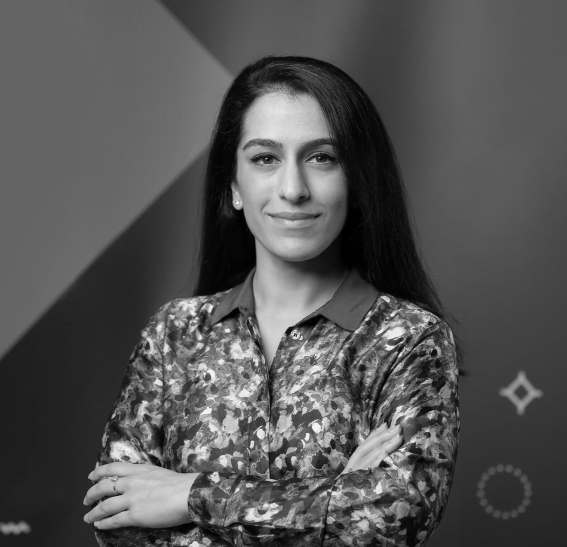
Edelman, the global communications firm, has announced the hire of Nidaa Lone, as Head of Abu Dhabi to manage its regional headquarters. 

In her role, Nidaa will lead and grow the agency’s biggest mandates, providing strategic counsel to clients with quality execution of communications programmes. She will also lead operational charge and drive an inclusive and high-performing culture within the business. 

Nidaa joins from Haleon, where she was Global Head of External Communications. Prior to Haleon, Nidaa spent 10 years with a global communications consultancy as Managing Director in London, providing communications counsel for some of the world’s largest businesses across a range of sectors including financial services, pharma and healthcare, natural resources, and consumer industries. 

On her new role, Nidaa said “I’m so excited to be joining Edelman, a communications powerhouse with a stellar client roster and truly collaborative culture. I am honored to lead our team in Abu Dhabi, where the ambitious growth agenda of the Emirate opens up huge opportunities for impactful communications.” 

Edelman remains the only international communications firm with its regional headquarters in Abu Dhabi, and Nidaa’s appointment is a sign of Edelman’s continued commitment to the Emirate since the agency opened its first office in the UAE in 2008. The firm has long-standing relationships with major clients in Abu Dhabi and has trebled the size of the team in the last three years. 

On the appointment, Omar Qirem, CEO, Edelman Middle East said, “I am delighted Nidaa has decided to join the firm at such an exciting time of growth for the region. She brings a wealth of experience in corporate positioning, global media engagement and strategic communications council, which will prove invaluable to our teams and clients in Abu Dhabi and the wider region.” 

Edelman is expected to announce further senior appointments shortly.

I’m strange. 

Seems like an odd thing to declare, but it’s true. With recent data citing four years as the average length of service at a company, my 10-year anniversary at Edelman certainly makes for strange reading. 

I joined Edelman 10 years ago on Monday 28 July 2014. It seems like it was yesterday - I remember what I was wearing and how I lost my way from the elevator to my assigned desk and had to ask for directions - my sense of direction has not improved since then, much to my husband’s frustration. 

A decade is a long time. I’ve married (the most handsome and lovely man I’ve ever met), got and trained a dog (Percy-Manolo, our one-of-a-kind Welsh Terrier who has us wrapped around his little paw), have been made an uncle (to my two nephews, Reginald and Ralph), travelled to endless destinations (Uzbekistan is a must if you are into adventure), read piles of spectacular books (don’t ask me my favourite – it’s too hard to decide), met the most incredible people and continued to enjoy life with those I know and love. 

I often get asked by candidates during interviews why I have stayed so long and to be completely honest I never really gave it any deep thought beyond that I continue to progress in my career, feel happy and professionally fulfilled but this milestone got me thinking and as such, I wanted to take a moment to share my top three reasons: 

The people. To borrow a phrase from Her Late Majesty Queen Elizabeth II: “I often draw strength from meeting ordinary people doing extraordinary things.” This is a perfect reflection of my colleagues at Edelman. Whilst team members change, one thing remains constant - the feeling of being incredibly privileged to work with, learn from and be supported by the best. Edelman is a big company but it’s the individual relationships across specialisms and geographies that make it the powerhouse that it is. There’s nothing more rewarding than seeing a team member progress through their career - those are the ‘a-ha’ moments that light up even the most challenging of days. 

The clients. I’ve had some of my most memorable career moments with clients and client relations is and always has been my favourite part of the job - whether it’s sharing a new idea that will unlock value for their business or having a heated (healthy) debate around strategy, this is what keeps me excited and engaged. I’m not known for being a ‘yes man’ (even when I started as an Account Executive - what must have the clients thought of me…) but I’ve been lucky to work with many really inspiring clients who love this quality and I’ve learnt a lot from them all. 

The opportunities. When I first joined Edelman, I kept hearing the same line: “Edelman is such an entrepreneurial place” and to totally honest I had no idea what anyone was talking about. It only took a few weeks to work out and now it’s a line I find myself using. An easier way to articulate can be that if you want something, go for it. Simple as that. This is a mantra I have lived by - from working in New York to meeting colleagues and clients in person or Madrid to practise my Spanish or enrolling on professional development trainings like a mini-MBA these are just a tiny number of the opportunities I’ve taken. 

These three things might seem a little obvious - but the magic lies in the length of time and consistency. When experienced together over a 10-year period, that’s when the fireworks happen

It would be amiss of me not to mention how I’ve been able to combine passion with career. For the past eight years I’ve been able to support the wonderful Chris Lynch and Paola Barbarino at Alzheimer's Disease International in a pro bono capacity. Alzheimer’s for me is personal, having grandparents who lived with it. I love that I work for a company that allows me to dedicate time to this important cause and look forward to continuing my collaboration with the team at ADI. 

So, to use another quote from Her Late Majesty, “as I look to the future, I have no doubt at all that the one certainty is change”, and I cannot wait. Here’s to the next 10 years at Edelman as the one constant around which many changes will no doubt happen.


Shaun Beedle is a Director at Edelman UK, Health Sector.

The Edelman Trust Barometer turns 25 this year, a quarter century of measuring trust in Business, Government, Media, and NGOs. Our work has been cited in global media, annual shareholder letters, scholarly journals and in the political arena. There are five macro trends we have discovered over those 25 years —​ ​the rise of Business as the most trusted institution; the growing Mass-Class divide on trust of institutions; the battle for truth as media is no longer seen as a source of reliable facts; the move of trust to local entities leading to high trust in My Employer; and the rise of Polarization as ideology has become identity.

Earlier this week we held the Edelman Trust Institute Trust Summit at Columbia University’s Journalism School. We convened academics, business leaders, journalists, NGO heads and government officials for a discussion of critical topics ranging from AI to the future of media. Here are ten provocations from the day-long discussion that stood out to me:

  1. Affective Polarization—The utter contempt we feel for those on the other side of the political spectrum to the extent we are not willing to work with or live near a person who disagrees with your political views.
  2. Web 4.0 and Web 5.0—We are rapidly approaching a personalized internet via Web 4.0, unfortunately well ahead of the development of a mechanism for trust, which provides the provenance of information (Web 5.0).
  3. Faith Versus Cynicism—Trust depends on optimism. How can we utilize different authority figures such as pastors to provide wisdom, hope and perspective.
  4. Distrust Is Profitable— Government and Media are locked in a death embrace, with sensationalistic claims from extreme politicians amplified by ideologically-driven media amassing clicks and donations.
  5. Value of Vulnerability—Is radical transparency, including admitting weaknesses, shortcomings and areas of doubt the basis of trust? Does this apply to leaders as well as institutions?
  6. Rush to Righteousness—We are now observing oppositional tribalism, which is spilling over into violence, based on feelings of moral superiority. How do we create a more robust dialogue with constructive engagement?
  7. Competence and Benevolence—There is a place beyond ethical behavior, which encompasses a pro-societal disposition to do good that pairs with competence as trust builders.
  8. Geo-Political Divides—This is evident in East versus West (China versus U.S., Global North versus South; greater optimism in developing world but deep sense of grievance due to Covid vaccine allocation), even within nations (Midwestern U.S. has become the least trusting region).
  9. À la carte reality—The deleterious media business model engenders and supports people accepting as fact only that which they want to believe is true.
  10. Cognitive versus Emotional—Institutions are relying excessively on rational arguments and overlooking the heightened level of fear that blocks absorption of data-centric arguments. How do we balance fact with emotion?

Working alongside many of the world’s most prominent thinkers on trust was my ultimate sports fantasy (ok, I would love to have been Michael Jordan). We will incorporate these ten themes into the development of our 2025 Edelman Trust Barometer and our next 25 years of Trust research. Thank you to all the members of the Edelman Trust Institute team, especially Justin Blake, Tonia Ries, David Bersoff, Caitlin Semo, Ellie Smith and Susannah Ferris the soul of the Trust Summit machine.

Richard Edelman is CEO.

The world is in the middle of its most important political year in decades, with more than 60 elections involving half of the citizens on the earth. There are counter-vailing signals from the populace, with the far Right gaining seats in the European Parliament, while the Left won in both France and the UK.

Anti-corporate rhetoric is rising on both sides of the political divide, with business being blamed by populists for food price inflation, loss of high-paid jobs to globalization, and the geopolitical perils of free trade. The new activism is now nationalistic and muscular in its opposition to immigration and regulation.

What should business do in this context? The strategy must be Policy Not Politics. Business has legitimate interests to defend. It has a unique ability to deliver on its commitments, while also serving as an influential and diplomatic voice in bridging the divide created by the rise in vitriolic hyper-partisan rhetoric. It also has stakeholders with elevated expectations, whether employees or consumers. In short, this is not the time to put your head down and wait for the storm to pass. Here are issues that are core to business and therefore safe to advocate:

  • On trade, make the case for jobs from exports. Recognize the mutual benefit in competitive advantage, with lower wage nations able to give consumers a better product at a fair price. Support the in-sourcing of supply chain when a matter of economic and national security.
  • On inflation, explain the disruption of supply chain during COVID and the ensuing geo-political forces that have changed trade flows. Fight back populist notions, such as price controls (five percent maximum rise in apartment rental prices proposed last week in the U.S.).
  • On sustainability, assure stakeholders that initiatives are based on both smart business - rising temperatures and more frequent climate events (floods, hurricanes) have cost and revenue implications – and a responsibility to the communities which house your operations.
  • On diversity, equity, and inclusion, stay true to your commitments and the goal of a representative workforce able to serve its future customer base with excellence. Listen to critics and consider modifying programs but stick to your values.
  • On the workplace, reassure employees by committing to upskilling and accelerating tech transfer, so that job loss from artificial intelligence is not the number one fear. Continue the progress on pay, closing the gap between blue- and white-collar workers.

How can business manage these issues in the coming months?

  • Be a citizen of your community. Encourage your employees to vote by giving them time off to go to the polls. Take an interest in local education, security, and health care.
  • Be a safe space - At a time of heightened polarization and political violence, be a unifier – the workplace is where employees trust that they can bring different perspectives and opinions without trepidation.
  • Be a source of truth - The state of misinformation will continue to intensify in the coming months. Employers must use their internal channels, and their position as the most trusted source of information, to share the facts.
  • Be a beacon of hope - CEOs need to show people the possibility of the future, so that they are willing to trust innovation and embrace change. Given that trust is local, highest in my CEO and my Employer, companies have a special responsibility to engender optimism.

Business is the most trusted institution because it is the most effective, delivering performance through a combination of competence and ethics. In this period of political instability, Business can do much to calm the waters. It has to address these issues directly and transparently with stakeholders, not just lobby in Washington. And Business must show that it’s acting in the interest of the public and for the betterment of society. As Shakespeare wrote in Henry V, “Once more unto the breach, dear friends…The Game’s afoot, follow your spirit.”

Richard Edelman is CEO.

2024 Edelman Trust Barometer

The future is not in good hands, according to the 2024 Edelman Trust Barometer: Innovation in Peril.

Find out more
Subscribe to 2024