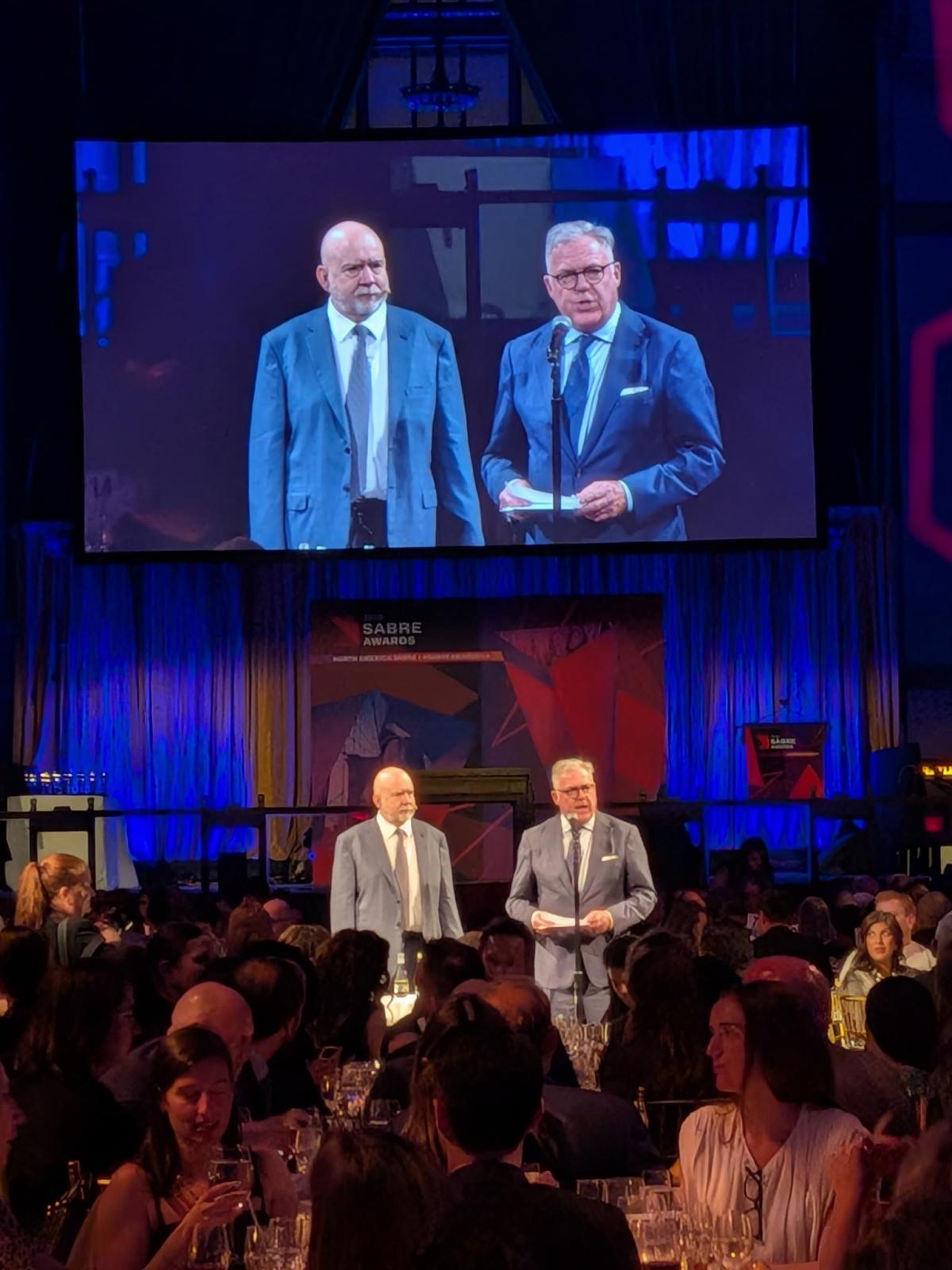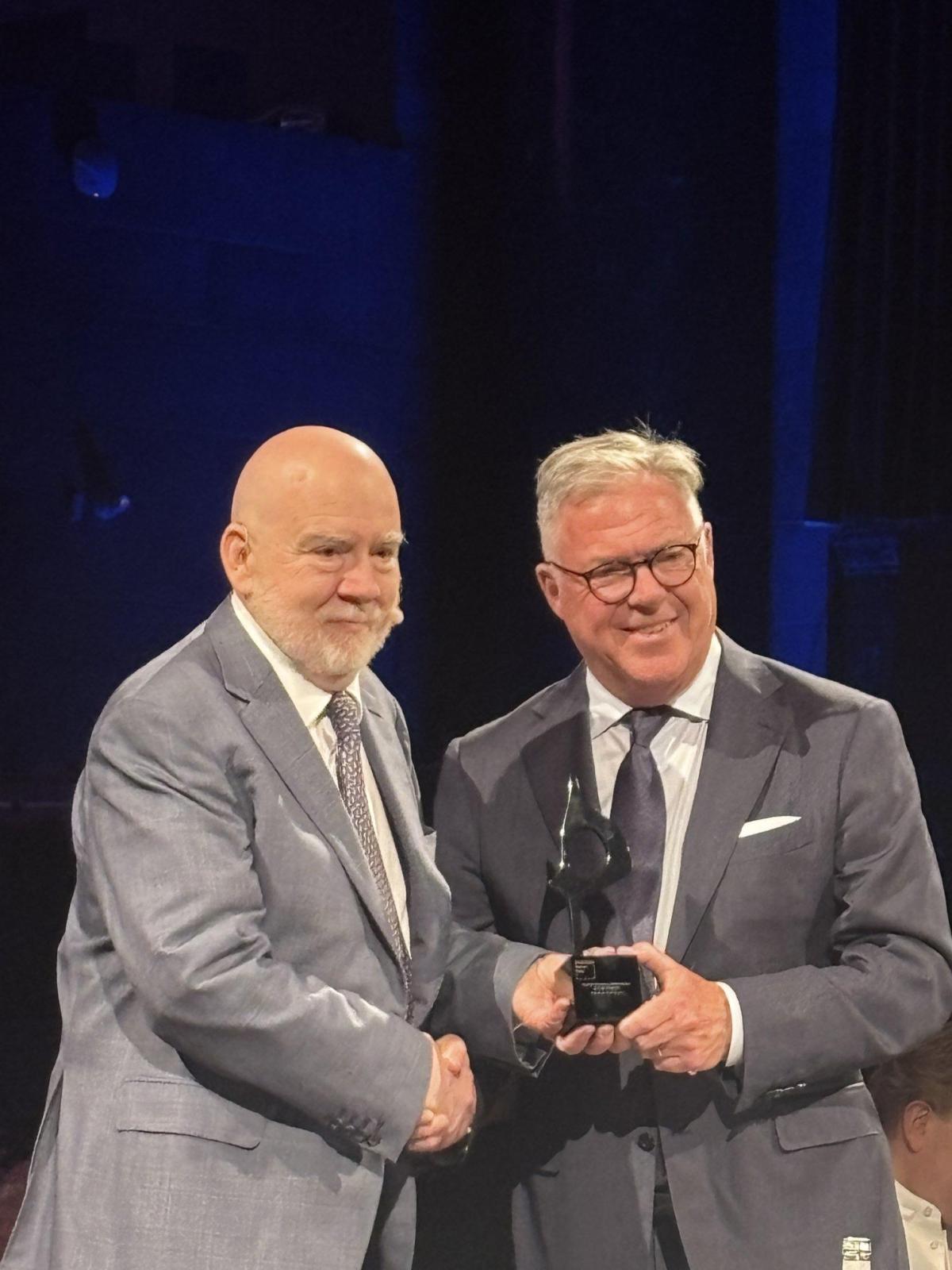

The WPP announcement this morning that places Burson into WPP Creative is a significant change in strategy that makes PR a support element for the larger creative agencies of Ogilvy, VML and AKQA. It is a further elaboration of a strategy initiated a decade ago by John Seifert, former CEO of Ogilvy, when he placed Ogilvy PR into a package of services instead of its previously independent status.

The WPP approach is one of three used by holding companies for PR units. The Publicis concept is multi-local, with MSL reporting to country managers, so that MSL is in fact a collective of local firms. The OMC concept is PR as a combination of brands in smaller markets under the OPR flag, with Golin, Weber and Fleishman as stand-alone in large markets. The WPP idea is PR as a key part of bespoke holding company teams such as WPP Open X which services Coca-Cola, while also servicing its own clients. These structures will orient PR firms within holding companies towards brand PR in support of advertising creative.

This leaves the reputation management and corporate segment of the business wide open for Edelman and advisory firms such as Brunswick and FGS. It also misses the opportunity in Earned First communications where an earned idea becomes the driving force in marketing, like Edelman’s Endless Runway for eBay which has exploded the high end second use clothing category. We are investing behind our Earned Flywheel, which will benefit both corporate and brand clients with a process that utilizes synthetic customer profiles to speed the creative process and deliver tangible sales or reputation results. This approach sets us apart from holding companies that continue to invest primarily in paid-first models.

We are not interested in playing second fiddle in an orchestra. We believe our role is to lead in the communications world, with trust as our guiding light. We operate at the speed of culture, partnering with creators as news makers not as channels for paid content delivery. We work with clients taking action like Women For Change, whose Unburied Casket campaign drew attention to South Africa’s femicide crisis.

We want our clients to operate as poly-nationals, with local identity, connectivity to community and commitment to local supply chain while reaching all stakeholders including employees, shareholders and communities, not just consumers. We work across brand and reputation for clients needing public affairs sensibility in evaluating marketing initiatives. The smart client will reevaluate marketing spend in the coming years to commit a higher portion of investment to earned media as the main driver of LLM search. If you want to join the revolution instead of watching industry consolidation, contact me.

Richard Edelman is the CEO.

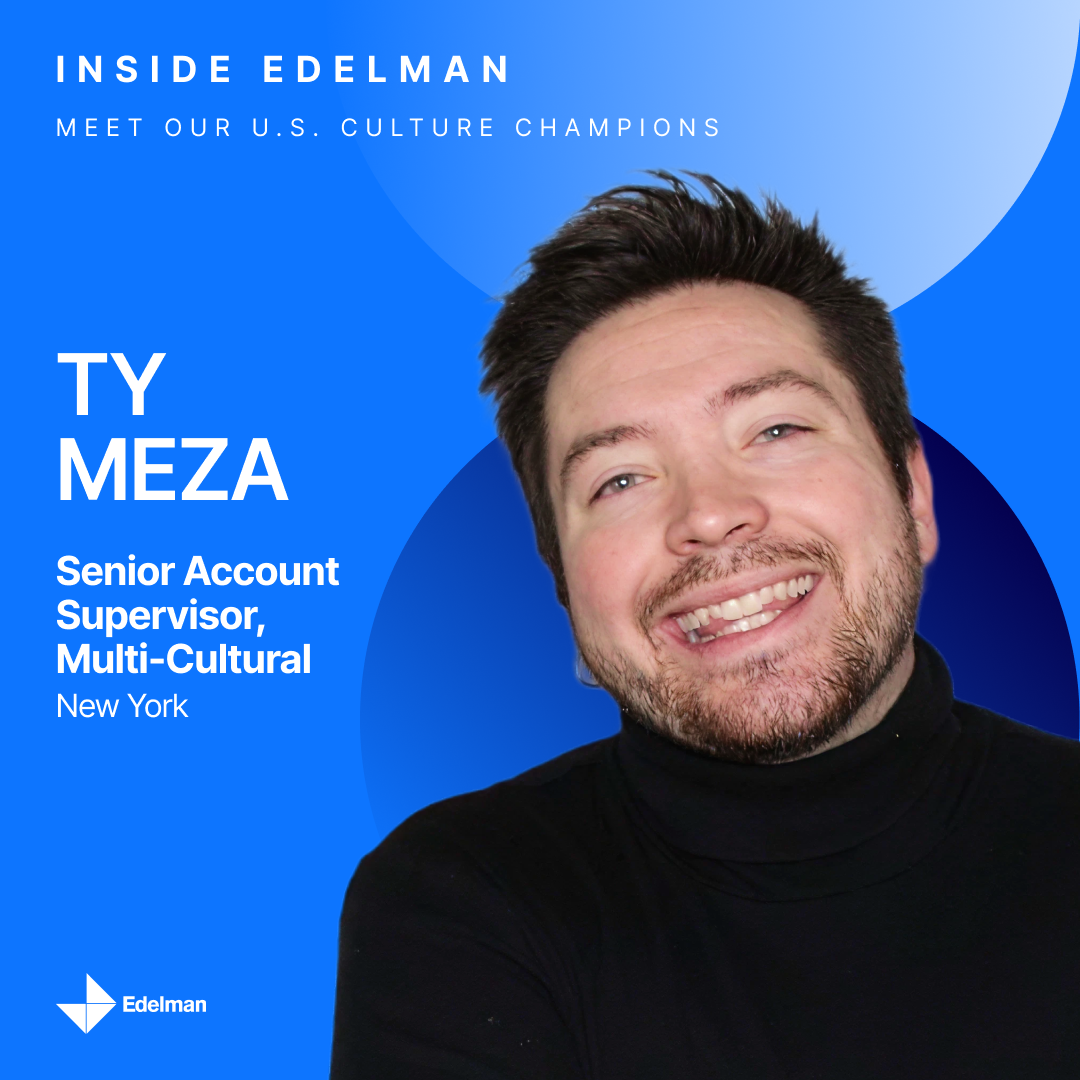
We’re spotlighting our Edelman Culture Champions, individuals recognized by their peers for exceptional dedication, positivity, and contributions to fostering a supportive workplace environment. These champions play a pivotal role in cultivating a culture where every voice is heard and valued. This edition of Inside Edelman features profiles of these outstanding colleagues from our U.S. offices, showcasing their efforts to uphold Edelman’s values of Diversity, Equity, Inclusion, and Belonging (DEIB).


Tell us about your Edelman journey.

I still remember a LinkedIn message from Liz Barenholtz almost 7 years ago. Something like, “At Edelman, you might write a CEO speech, create an economic development plan for a city, launch an integrated marketing campaign for a startup.” A broader set of solutions than you typically see at an agency. And her message has proven true. My strategy team has led over 100 projects over the years – across non-profits, tech, food and beverage, financial services. And in my mind, I have a trophy case of campaigns and narratives.


You were nominated for Culture Champion by your colleagues – how do you foster a collaborative and respectful culture within your team?

Ask for help. I read a study that “asking for help” rather than “offering to help” drives more collaboration. You’d think the opposite to be true. But people who have immense expertise are often happy, delighted even, to share their gift with others.


How does your personal background play a role in your professional life?

Even as a kid, I’ve always loved ads, brands, magazines, pop culture. As a parent, it’s motivating to point out to my 7 year-old son how we impact culture – my company worked on this Super Bowl spot, my office launched this new sports drink, my coworker produced this event.


When you think about the future of Edelman, what does it look like for you?

I feel like there is a sense of optimism, with new wins and momentum at Edelman. As for me personally, I don’t make career plans. If at every day, project, team, I’m having fun and learning something new, I’ll see where it takes me.


How do you stay engaged with colleagues who work on a different team or in a different part of the business? Why is it important to make these outside connections?

With the limited time I have on earth, I want to have a good time. I want to make friends, have inside jokes, help make someone’s day.

As for how to engage with colleagues, I think it takes a bit of boldness. I once read better conversations start from making a bold statement rather than asking a general question. Someone who leaves a movie theater and declares to the group, “That’s the worst movie I’ve ever seen, and I’ll fight anyone who disagrees!” is more likely to start a robust conversation than someone who benignly asks, “What’d everyone think of the movie?”

Takes a bit of putting oneself out there to make connections ;)

Tara Hagan is a Senior Vice President on the Social Strategy team based in New York.


The Edelman Family lost a true friend today. Reverend Jesse Jackson passed away this morning in Chicago, ending a fifty-year relationship with our family. He was omnipresent, giving the eulogy at my father’s funeral, presiding at my marriage to Claudia, coming to our new office in Chicago for the 70th anniversary of the founding of the company. Edelman was the PR advisor and marketing arm for Operation Rainbow PUSH for a generation, helping him to broaden his appeal to corporate America.

It all began with a visit by Rev. Jackson to my father’s office in the early 70s. Rev. Jackson was upset about Edelman’s representation of a company that was resisting his efforts to diversify its supply chain to include black-owned businesses. The meeting got quite heated, with Rev. Jackson suggesting that he might even encourage action against Edelman. By the end of the session, these two big personalities found a way forward and began a lifetime friendship. Whenever Operation Rainbow PUSH needed a publicity campaign, a new brochure or support for events, Edelman provided pro-bono services. My mother forged an independent relationship with Rev. Jackson on issues such as mental health in the African American community.

My father passed the torch to me in his final years so that I became a constant recipient of Rev. Jackson’s ideas and desires. There were frequent visits to his office. We disagreed on issues like the proper role of Government in capitalism, but we found an equilibrium, which was mostly him talking, me listening and gently giving guidance.

Here are my favorite memories of our fifteen years together.

  1. Lead from the Front – He volunteered for the hardest assignments, including a mission to Serbia to free an American pilot who had been captured in the Bosnian war. He marched with striking teachers and grape pickers to generate publicity for the cause.
  2. The Matchmaker – He came to the Cannes Festival of Creativity with a message; you are missing the opportunity of a diverse work force. He organized a sit-down on the lawn in Cannes for me and three other Edelman executives with a group of 20 African American marketers. This accelerated our push for diversity and inclusion.
  3. Not a Moment to Waste – His middle name was discipline. He preached it in his Sunday morning sermons from the pulpit. He lived it by exercising every morning and working on every flight while the rest of us were taking a nap. He believed in effort and excellence. There is always someone to help and a cause to be endorsed.
  4. The Performer – He was blessed with a magical ability as an orator. His speech at the 1988 Democratic Convention united a divided party, while providing a historical narrative of struggle. He lit up every room he entered. His eulogy of my father in 2013 at Temple Sinai in Chicago relied on the Old Testament, a reference to Moses taking his people to the Promised Land but leaving it to the next generation to carry on…looking straight at me.
  5. A Fair Share – He knew that the key to African American advancement was getting the black community into board rooms, bond offerings, and supply chains. He held an annual convening on Wall Street, featuring black bankers and money managers including John Rogers and Jim Reynolds who showed the way. He worked with major foreign companies with important investments in the U.S. such as Toyota to endow college scholarships for promising high school students.
  6. Political Force – His presidential campaigns in 1984 and 1988 helped pave the way for Barack Obama to become the first Black president of the United States. His office in Chicago was a mecca for ambitious politicians seeking his endorsement. He pushed the candidates on higher minimum wage; more support for unions and national healthcare.
  7. Family Man – Rev. Jackson was devoted to his family, which included the long-time employees of Operation Rainbow PUSH. His son Yusef, a successful businessman, will take responsibility for the NGO, which still has an important voice in the fight for equal opportunity. His son Jonathan has served as the U.S. representative for Illinois's 1st congressional district since 2023. And his oldest son Jesse still has a bright political future, having served two terms in the U.S. House of Representatives.

Two years ago, I went for a brainstorm on fundraising at Rev. Jackson’s office. His mind was active, his verbal skills were diminished, and he was confined to a wheelchair by the demon of Parkinson’s disease. He wanted events in Silicon Valley, in Los Angeles and New York City to inspire the next generation of change-makers. He accompanied me to the exit in his wheelchair, then insisted on a photo. He pushed himself up and stood on his own, his arm around me, a force of will triumphing over age and illness. This vignette captures the spirit of the indomitable Jesse Jackson. The world will miss him profoundly. I will miss him even more. I join my wife Claudia, brother John and sister Renée in sending our condolences to his family.

Richard Edelman is the CEO.

The announcement by Omnicom PR Group of the consolidation of Golin with Ketchum and FleishmanHillard with Porter Novelli is further confirmation of the fundamental reshaping of the PR industry. There will be five global, full-service firms: Edelman, Weber Shandwick, Burson, FleishmanHillard and Golin. Only five years ago, there were five others: Hill & Knowlton, MSL, Ogilvy, Porter Novelli and Ketchum.

What’s happened to the PR industry?

  1. Reaction to the Downturn of the Last Three Years — The recovery from COVID-19 was dramatic, led by spending in health and technology. The downturn has been a slow escape of air from the balloon. The holding companies insisted that their agencies maintain 25 percent to 30 percent margins while revenue dropped in some cases by 40 percent. The only way to achieve that was to close or combine international offices while reducing staff in core markets. Edelman, as a private company, maintained its global footprint and its breadth of services.
  2. The Growth of the Advisory Firms — Hill & Knowlton and Burson had the best financial and public affairs practices in the industry 20 years ago. Much of that high margin work has moved to Teneo, FGS Global and Brunswick. The only global firm that competes vigorously in both of those important segments is Edelman.
  3. The Combination with Ad Agency — Both Ogilvy and MSL have suffered from becoming line extensions of the agency. MSL lost its global network in the Publicis One structure, which gives priority to the geographic/regional entity in management. Edelman works with ad agencies as an equal, offering our own ideas for earned-first strategy, not as an add-on.
  4. Inability to Invest in Growth Areas — Influencer firms were acquired by the holding companies and given to the powerful media buying units instead of partnering with the PR operations. By contrast Edelman makes the most of its influencer business by combining Creator with earned media and digital.
  5. AI Investment — The orientation of the holding companies is the PESO model (Paid, Earned, Social) which allows custom content to be served up to the highest potential consumers targeted through data. We are putting our bets on the ESO model of Earned, Social and Owned media, which is winning the race for LLM search outcomes. PR should lead, not follow, in this game, particularly in a world of rising nationalism requiring the melding of brand and reputation skills.

I want to pay tribute to industry leaders from Ketchum, including Paul Alvarez, Mike Doyle, David Drobis, Rob Flaherty, and Barri Rafferty, plus the leaders of Porter Novelli, including Bob Druckenmiller and Bill Novelli. They did so much to build our industry. We intend to fight for PR in its broadest construct, believing that Trust Drives Growth and Action Earns Trust.

Richard Edelman is the CEO.

This week, I had dinner with the CEO of Axel Springer plus senior journalists from The Wall Street Journal, Semafor, Bloomberg, Fortune and TIME. I had lunch with the editor-in-chief of the Chicago Tribune. I spoke with the editor of Die Zeit Digital, a very important media outlet in Germany. And I absorbed the stunning announcement from The Washington Post which is terminating one third of its journalists, effectively wiping out its international, sports and weekend cultural coverage. Here are a few observations on the witching hour for media:

  1. Subscription Model is the Way To Go — Publications that relied on clicks from “buzzy stories” which could then be monetized in advertising have fallen on hard times. Editors are being asked to offer real value for readers in deeply reported stories that are truly breaking news or important feature coverage.
  2. Short form or Long Form — The Axios style of headline and four paragraphs, in newsletter style, is a breakthrough concept. So is the long form podcast, a deep exploration of a topic or long discussion with a guest whose personality shines through. The seven-hundred-word story seems an endangered species.
  3. The Bears Rule — The number one attraction for Chicago Tribune readers is stories about the Chicago Bears (YEAH….I am one of those people). The Bears are much more of a draw than the other teams in town. Especially when they have a good season!
  4. Offering MSM Platform to Creators — To broaden the appeal of basic news content, Die Zeit is giving creators of all ages and political bents access to its platform. It is the Bloomingdale’s strategy in retailing of 40 years ago, inviting Ralph Lauren and Donna Karan to have their own boutiques within the store.
  5. The Power of Events — Semafor has signed up 400 CEOs for its April conference in Washington, D.C. It will last five days. The media companies believe that in person convening and relationships forged by attendees make this an attractive proposition, competitive with the World Economic Forum or G100.
  6. Truth and Trust — Journalists believe that there will be a premium placed on accuracy and proper sourcing. They would rather be right than first on a story. They are recognizing that LLM search results are premised most importantly on stories from the most elite media.
  7. The Social Dilemma — Posting stories on social channels such as TikTok or X does relatively little to boost circulation or traffic to the mainstream media.

The PR industry has allowed its media relations skills to atrophy in favor of content creation for social media. The reality of LLM search and the importance of truth behoove each of us to develop strong relationships with reporters and their editors. What’s old is new again.

Richard Edelman is the CEO.


This was a World Economic Forum meeting dominated by government leaders while CEOs tried to make sense of a fundamental realignment of the world order. President Donald Trump delivered an America First speech that touted the free market strategy of his Administration while recalibrating American foreign policy including the launch of a Board of Peace. Canadian Prime Minister Mark Carney dropped the gloves in his address that contended the changes in U.S. policy are a “rupture” which give middle powers a choice between submission and aggressive alternative alliance building. President Emmanuel Macron of France posited that “we are shifting towards a world without rules, where imperial ambitions are resurfacing (citing Russia/Ukraine), towards a world without effective collective governance.” In real time, NATO leader Mark Rutte and President Trump agreed to a framework of an agreement over the future of Greenland. While this contention among governments provided a dramatic reinforcement of the central role played by the WEF, it left participants departing the mountain with a sense of vertigo and instability.

Here are ten findings from my week:

  1. AI - David Sacks, the U.S. Government top advisor on AI, said that the administration is considering legislation that would regulate both AI and social media on a federal level. He told journalists that AI is not a replacement for the writer because it can give you the mean but not the best creative outcome based on human insight. He noted that AI generated one half of U.S. GDP growth in 2025 with the massive investment in data centers and power. The U.S. has a global market share advantage over China, but the Chinese have 500,000 AI developers hard at work, writing on top of ever evolving semiconductors. Omar Abbosh, CEO of Pearson*, spoke about automation or augmentation, giving employees the opportunity for continuous upskilling instead of redundancy.
  2. AI Promise in Health - AI is being used to fight cancer through drug discovery acceleration, with open sourcing of AlphaFold involving three million MDs promising to take research, drug discovery and development from ten years to one year. AI also promises more equal health outcomes by spreading knowledge to all MDs treating cancer. The Manhattan Project model, multiple teams working in parallel, is being applied to cancer research.
  3. Critical Minerals - Demand is exceeding supply by 30 percent as electrification, digitalization and de-carbonization are simultaneously at work. We will see a tripling of data centers by 2035, we need 600 million kilometers of electric lines, while there is significant growth of EVs in Europe and China. China dominates high-performance materials, including magnets and lithium batteries. Mining remains slow and reputationally challenged, it can take 10–20 years to open a copper mine, but countries like Chile are working to modernize the sector. There are new markets coming on stream, notably Saudi Arabia, which has declared minerals to be its third pillar of growth after oil and petrochemicals.
  4. Improving Government Performance - The UAE is in the business of nation building, working with 45 countries in Africa and the former Soviet Union. The goals of the program are zero bureaucracy, creation of performance dashboards, and most of all leadership capabilities. The Dubai School of Government partnered with the Harvard Kennedy School 20 years ago to initiate the program. There is a World Government Summit next week in Dubai with awards for participants including Most Reformed Government and Best Minister of the Year, in partnership with PWC for objectivity. Citizens in the UAE grade the government on bureaucracy.
  5. U.S. Economy to Out-Perform - Howard Lutnick, U.S. Secretary of Commerce, confidently predicted that the U.S. GNP will grow 5 percent in 2026. He cited AI investment, inward foreign investment, and growth of exports as key factors. Jamie Dimon of JPMorgan Chase said that the U.S. will benefit from quantitative easing (lower interest rates) and fiscal stimulus early in 2026. Stephen Schwarzman of Blackstone cited deregulation as a key factor in putting the U.S. “on a tear.” Semiconductor production is being insourced, with investment from TSMC (Taiwan Semiconductor Manufacturing Company) and Samsung. Meanwhile, key European economies such as France and Germany are struggling to generate any growth, with Chinese car imports soaring and trans-Atlantic trade diminished by tariffs.
  6. Rise of Local Brands - Consumer preference is shifting decisively toward domestic brands. In Egypt, local detergent brands now outsell global competitors. China has produced 100 new cosmetics brands sold entirely via e-commerce. Multinationals face distrust and disinformation online. As one CPG executive put it: “we are not connecting differently with consumers. Creators are the key source of growth.”
  7. The Future of Europe - The EU must take more responsibility for its own security and recognize the necessity of deeper economic integration. Europe must also do a better job of keeping its capital on the continent instead of the outflow to the U.S., with a focus on AI, clean tech, manufacturing and defense. At present most investors focus on bonds or U.S. equities; Europe should have a capital markets union. There is too much regulation; one CEO of a mid-sized company said that he must comply with 35,000 rules. Europe will salvage the remnants of the trans-Atlantic relationship by focusing on areas of agreement, such as critical minerals, icebreaking in the Arctic and NATO. But George Osborne, former Chancellor of the Exchequer of the UK, warned, “The U.S. economy has pulled away from Europe in the past two decades. The market cap of OpenAI exceeds the total value of the top 10 UK publicly listed companies.” Europe will practice values-based realism, recognizing Greenland as a sign of a permanent rift with the U.S.
  8. Ukraine - I visited the Ukraine House for an hour. It was a shattering experience that gave me a sense of life in a war zone. A film is playing in the lobby which shakes the entire building. It shows Russian military action in the future against Brussels, Munich, and even Davos. Drones descend on vehicles. Bombers fly above, dropping their deadly payloads. The truth of the Ukraine conflict is seen in the dreadful death toll of one million Russians and 500,000 Ukrainians. President Volodymyr Zelenskyy spoke bluntly in Davos, “We should not accept that Europe is just a salad of small and middle powers; when united we are truly invincible…we are ready to be part of a Europe that truly matters, a Europe of real power.”
  9. India - India has moved closer to the U.S. over the past decade, imposing duties on Chinese goods and removing Chinese IT infrastructure, only to be shaken by U.S. tariffs in 2025. Now the Indians are in a confused state, moving to reestablish relations with China and Russia but hoping to be in a better place with the U.S. Indian IT companies are moving quickly on AI, especially on process change that delivers tangible benefit (health as example). Indian companies were everywhere in Davos, from The Mahindra Group to Tata, in sharp contrast to Chinese companies which were not so prominent. (a stark contrast to CES in Las Vegas where Chinese companies were omnipresent).
  10. President Trump - This was a declaration of distinction from other nations in the world. “The U.S. is the economic engine of the globe. Follow what we are doing. Europe is going the wrong way with imports, mass immigration, government spending, and the green sustainability scam.” He talked about lower taxes enabled by tariffs, using Switzerland as an example, with a $40 billion trade surplus with the U.S., now equalized through 30 percent tariffs. He spoke about lower energy costs through reduced regulation on natural gas exploration and a goal of $2 per gallon gasoline now possible with the action in Venezuela, in sharp contrast to the price of electricity in Germany that is 65 percent higher than in the U.S. He said Europe must agree to double the price of pharmaceuticals so that Americans pay the same as other nations. He noted several pro-consumer actions, including a 10 percent cap on credit card interest and a ban on private equity firms buying homes. He concluded, “The U.S. has a special culture, about to celebrate its 250th year. Europe shares that culture but needs to rediscover its spirit.”

The World Economic Forum was an invaluable meeting place for these global leaders, but there was also a diversity of views that was very healthy. It led me to examine my own situation, which is that I have become more insular since the October 7 attack in Israel and subsequent rise in antisemitism. My commitment is to be more open this year, meeting more people with views different from my own, to learn more about their concerns and to understand them. I will broaden my circle of acquaintances and my sources of information. I believe this is a moment for leaders more broadly to examine their own insularity and commit to becoming more open.

*Denotes an Edelman client

The English poet John Donne wrote in the 17th century the immortal line, “No man is an island entire of itself.” This memorable declaration of our need for one another is now replaced by insularity, a psychological state shaped by fears and crises. The 2026 Edelman Trust Barometer finds that seventy percent of our 33,938 respondents across 28 nations now are hesitant or unwilling to trust someone who has different values, information sources, approaches to societal problems, or backgrounds than them. This majority holds across income levels, gender, age groups, developing and developed markets.

We are choosing a closed ecosystem of trust that mandates a limited worldview, a narrowing of opinion, intellectual stasis, and cultural rigidity. Distrust is the default instinct; only one-third of respondents tell us that most people can be trusted. Insular respondents say they would have profoundly lower trust in institutions if led by anyone different from them (-28 pts or more, compared to people with open trust mindsets). We are withdrawing from dialogue and compromise. We opt for the safety of the familiar over the perceived risk of innovation. We prefer nationalism to global connection. We choose individual benefit over common advancement, the Me over the We.

How did we get here? In its quarter century, the Trust Barometer has captured an inexorable erosion of belief in institutions and their leaders. Trust is now local in My Employer, my CEO and my social circle. We find a 15-point trust gap between high and low earners worldwide, with the U.S. leading the pack with a 29-point mass-class divide. Concerns about downward economic mobility and job losses due to globalization have increased political polarization. Covid-19 bred doubt about government edicts and skepticism about science, provoking an existential battle for truth. Geopolitical tensions have led to nationalism, hostility to global agreements, and a reorientation of trade flows. Last year, the Edelman Trust Barometer documented a descent into grievance, with 6 in 10 of our respondents telling us that they feel business and government actions harmed them, served the interests of only some, and that the system unfairly favors the rich. Today, our mindset has pulled back from alarm and anger into the hard shell of insularity.

Now we are confronted by its consequences. The first is resistance to change. Our November flash poll, Trust and Artificial Intelligence at a Crossroads, found that by over a two-to-one margin, the U.S., UK and Germany reject the growing use of AI. Seventy percent in the U.S. believe that CEOs are not telling them the truth about job losses due to AI. Second, we see pervasive nationalism, with deep preference for domestic over multinational brands (31 points in Canada and 29 points in Germany). Third, societies are losing the capacity to act, with climate action stalled in favor of short-term economic interest and urgent local projects such as affordable housing blocked. Fourth, and most troubling, is a global loss of optimism. On average, only 15% of people in developed markets believe that the next generation will be better off, while the APAC powerhouses of Singapore, Thailand, India, and China all show double-digit declines in this optimism since last year.

There is a way to counter insularity, through a novel concept called Trust Brokering. A Trust Broker helps to create a path for progress and cooperation despite insularity by surfacing common interests and translating realities. The primary Trust Broker must be My Employer — proximate and reliable. While each institution is expected to broker trust, the employer is the only one seen as doing it well by a majority, at 58 percent. The office is now considered the safest space for discussion of difficult topics because there are rules for behavior. It is My Employer that translates macro challenges such as AI, globalization and affordability into practical applications. And crucially, you can see tangible change in your day-to-day life when leaders commit to new decisions.

Why should My Employer do this? Insularity is a bottom-line issue, undermining productivity, causing churn, and threatening the basic ability to lead. There must be frank discussions in the workplace led by the CEO or other leaders. Visible members of the community such as doctors or pastors should be trusted partners in furthering dialogue. Countering insularity will require companies to become poly-national as well as multi-national, giving subsidiaries more freedom of action.

John Donne was right to conclude his poem with an admonition: “Therefore send not to know for whom the bell tolls, it tolls for thee.” We are becoming inflexible, intolerant, and incoherent in our cocoons. The risks to society from manic swings in popular sentiment and rejection of innovation are real. Self-righteous certainty must give way to belief in the future, guided by My Employer as the leading trust broker.

Richard Edelman is CEO.

 

A version of this essay originally appeared on TIME.


I worked on the 2026 Edelman Trust Barometer over the break. You will see my trust essay next Monday along with the very profound data. But I took advantage of the holidays to read three important books. Here is a summary of what I learned.


The Projects: A New History of Public Housing by Howard A. Husock

This is a tale of good intentions that turned sour. The massive public housing projects erected in U.S. cities from the time of the Great Depression through the early 60s were based on a European model for upgrading of slums and improving the lives of the poor. The Karl Marx project in Vienna in the 20s showed the possibility of using verticality, with only 20 percent of the ground floor space used for apartments, the balance for open air activities such as a playground or walking paths. Eleanor Roosevelt was a major proponent of this effort, working with Robert Moses, New York City’s master builder, in pioneering this concept in the U.S. The author describes the purpose of the projects as a launch pad for the lower middle class, with residents to stay for five years, then move into better housing. In fact, residents remained 40 years. The projects were to be self-financing, with rents to fund repairs or improvements. In fact, rents were fixed in the 60s at 25 percent of income, leading to shortfalls in revenue. The construction of the projects destroyed long-standing communities, which were mixtures of ethnicities and races. The projects became single race and heavily single parent families. I lived a mile from one of the much-touted projects, Cabrini-Green in Chicago. It has been demolished, along with Pruitt-Igoe in St. Louis and so many others because they deteriorated into unsafe, unsanitary environments marked by crime and neglect. The number of people living in public housing in the U.S. has decreased by one third over the past two decades, as residents use housing vouchers which subsidize their rentals in other neighborhoods.

Mexico: A 500-Year History by Paul Gillingham

This is a stunning journey from the conquest of Mexico by Hernán Cortés to the present world power, 13th ranked among global economies. As I am married to Claudia, a proud Mexican, I have read other books on the history of the country, but this one gave me new insights. Did you know that Mexico had by far more millionaires as of 1800 than the U.S. (18 versus 2), based on mining and agriculture. Did you know that Mexico City was the New York City of the 1700s, with a diverse population, rapid economic growth and a bustling cultural scene, all driven by trade and immigration? Did you know that Mexico was the first nation to recover from the Great Depression because it was willing to do deficit spending and public works? Did you know that one half of the world’s money supply in the 1700s came from the silver mines of Mexico and Peru, with Mexican silver circulating in China and India as a primary coinage given the massive trade route between Acapulco and Manila? Did you know that the first nationalization of mineral resources was done by Mexican President Lázaro Cárdenas in the 1930s, declaring that oil was a national asset? I learned that Mexican power radiates from the center, Mexico City, and that the states furthest from the center have always been more independent and self-governing. I gained even more respect for Benito Juárez, the first indigenous president of the country, who led his country twice, the second time ousting the French-imposed Emperor Maximilian in 1867. I am now friends with Prof. Gillingham; I wrote him a cold letter praising the book, which led to a dinner with my wife, Bret Stephens (who grew up in Mexico) and the Professor at a local taqueria.

Humboldt's Cosmos by Gerard Helferich

Humboldt's Cosmos is the biography of Alexander von Humboldt, naturalist and adventurer. Born in Prussia, Humboldt undertook a legendary journey over five years through Latin America. He began his travels in Cumana, Venezuela, founded in 1523, the oldest continuous Spanish settlement in the Americas (Venezuela is called Little Venice because of local inhabitants’ homes around Lake Maracaibo). Humboldt and his companion Aimé Bonpland, aimed to prove that the Orinoco River connected to the Amazon River through its tributaries. Before his departure, Humboldt witnessed the slave auction in Cumana (eight million Africans were brought to South America in the period 1525-1870 when slavery was abolished, the majority to non-Spanish nations in the Caribbean and Brazil), his first experience of slavery, revolting him thoroughly. During his travels, he recognized the domineering role played by missionaries. “By subjecting to invariable rules even the slightest actions of their domestic lives…their subsistence is more certain, but they show by their gloomy looks that they have not sacrificed their liberty without regret.” Humboldt made a critical discovery on his first ascent of the many mountains he would climb in the New World. Similar plants grow where the average temperature is comparable, so that latitude and height above sea level are key to finding similar species, yielding the key to climatology, isotherms. His journey in the Amazon rain forest provided an important paradox; although there is “unparalleled diversity of species, there is extremely low density of any particular species because there is not enough food to support identical individuals, so members of each species must fan out to survive.” A second leg of the journey was a trek from Cartegena, Colombia to Lima, Peru, tracing the spine of the Andes Mountains. Among his feats were scaling the active volcano Pichincha, rising nearly 16,000 feet in the air, with this unforgettable line from his memoir, “We saw bluish flames flicker in the depths and felt violent tremors every two or three minutes, shaking the rim of the crater.” His final segment was a trip through Mexico, from Acapulco to Mexico City then to mining town Guanajuato, which prompted him to write an important paper advocating the development of agriculture to replace mining. It is in that mining town where I first met Humboldt, whose statue graces the town square outside of the main cathedral.

I intend to keep up my reading habits in 2026. It is my source of greatest joy after my family and my work.

Richard Edelman is CEO.

 

We’re spotlighting our Edelman Culture Champions, individuals recognized by their peers for exceptional dedication, positivity, and contributions to fostering a supportive workplace environment. These champions play a pivotal role in cultivating a culture where every voice is heard and valued. This edition of Inside Edelman features profiles of these outstanding colleagues from our U.S. offices, showcasing their efforts to uphold Edelman’s values of Diversity, Equity, Inclusion, and Belonging (DEIB).


Tell us about your Edelman journey.

My time at Edelman has been shaped by growth, community, and a deep appreciation for the people I get to support every day. I joined the firm in March 2019 with extensive experience in the administrative field and quickly felt connected to the people and the culture. Over time, my role expanded from supporting our amazing leaders to helping strengthen how our offices function and how our teams connect. Today, as the U.S. Lead Administrative Manager for DC and San Francisco, I have the opportunity to support Executive Assistants at different stages of their careers while also making sure our offices feel like places people want to be.


You were nominated for Culture Champion by your colleagues – how do you foster a collaborative and respectful culture within your team?

I try to foster a collaborative and respectful culture by leading with care and appreciation for the people I work with. I have deep admiration for my colleagues and am truly thankful to work alongside such caring, creative, and compassionate individuals. I genuinely enjoy the work I do and find fulfillment in supporting my colleagues and helping create positive experiences. Being able to support my team in meaningful ways is energizing and motivates me to show up with intention every day.

I focus on listening, being consistent, and learning from those around me. I aim to create an environment where people feel valued, supported, and comfortable sharing ideas or asking questions. When trust is present and people feel respected, collaboration grows naturally, and I am grateful to play a part in that process.


How does your personal background play a role in your professional life?

With more than twenty years of experience in administrative roles, I have learned the importance of being adaptable, thoughtful, and people focused. I have also learned how meaningful it is to create spaces where individuals feel supported and included, and those experiences continue to shape my leadership style today.

Equally influential have been the mentors and leaders who encouraged me to think bigger, take thoughtful risks, and let go of what I cannot control. During my time at Edelman, mentors have been instrumental in my growth by advocating for me, bringing my name into spaces I was not yet in, and making room for me at the table. They exemplify the power of meaningful leadership and empathy, and their support has reinforced my commitment to lead with care, attention to detail, and a deep understanding that everyone’s experience at work truly matters.


When you think about the future of Edelman, what does it look like for you?

When I think about the future of Edelman, I see continued growth grounded in connection, purpose, and people. For me, that includes continuing to be a trusted administrative partner to the executives I support, helping create space for them to focus on the important client work that drives our business forward.

I also see myself continuing to support strong administrative teams, learning alongside my colleagues, and contributing to office experiences that bring people together while supporting flexibility and balance. Being part of a firm that values both collaboration and excellence is meaningful to me, and I look forward to growing alongside Edelman in the years ahead.


Can you tell us about a favorite Edelman office event you’ve organized? What made it so memorable?

It is difficult to name just one event, as each have played a meaningful role in my Edelman experience and in the connections I have been fortunate to build. If I had to choose, this year’s Week of Belonging event stands out. It was planned with a vision to connect people in ways I had not explored before.

At the heart of the experience was intentionally assigned seating, designed to bring together colleagues across teams, tenures, and backgrounds who might not otherwise connect. To support that sense of belonging, I set each table with centerpieces, place settings, and table talk questions to encourage conversation and connection. It was incredibly moving to see colleagues form new relationships, share a warm meal together, and leave the event with a renewed sense of pride in being part of Edelman. The feedback was overwhelmingly positive, and it meant a great deal to me to help create an experience that resonated so deeply with my colleagues.

Janae Holloway is a Lead Administrative Manager for our Washington DC and San Francisco offices.


2025 will be remembered as a difficult year for the communications sector. The IPG Omnicom merger created the largest firm in the world but will require between 10-15,000 redundancies. Dentsu is selling its international holdings. WPP share price has plummeted by 50 percent, leaving the company valuation at one-third of annual revenue.

As part of the industry consolidation, several of the large legacy ad agencies were eliminated by the holding companies. The death knell was sounded for Leo Burnett (merged with Publicis into LEO), FCB (merged with BBDO), DDB (merged into TBWA) and Mullen Lowe (merged into TBWA). This is on top of the WPP consolidation of Y&R into VML, JWT into Wunderman, then Wunderman into VML. How did this happen?

First, the holding companies separated media buying from creative agencies starting forty years ago in Europe and 25 years ago in the U.S. The net effect of this change was to take the strategic function out of the agencies.

Second, holding companies organize agencies by function. This started with media, which operates as a single P&L and maintains brands such as OMD or Mindshare for conflict management. Omnicom Advertising now manages all the group’s ad agencies, and it is rumored that WPP will follow suit. This allows reduction of senior people who are key to client relationships.

Third, WPP introduced horizontality, which meant that client teams were constructed with best talent from across the holding company. In prior periods, the key relationships were held at the agency level (JWT with Ford for 100 years). With the client leaders now reporting into the holding company, the agency’s position was diminished to smaller, regional client management or providing talent to Team Coca Cola, eliminating the critical role of creative and strategic partner to clients.

Fourth, the holding companies took away key growth areas from the agencies such as healthcare or influencer. The FCB office in Chicago, for example, was a thriving, multi-sector agency but then the health unit was aggregated into a global operation, FCB Health, then into IPG Health, a holding company global collective. The acquisitions of influencer agencies by WPP and Publicis could have been important boosts to either the advertising or PR agencies but were put into the media buying units as part of a flywheel distribution method for content.

Contrary to the proclamation on BBC Radio by one of the authors of the consolidation strategy in communications, PR is alive and well. In fact, we are very well placed to thrive in a world where media is culture and culture is media. We are uniquely able to operate across brand and reputation, with a deep knowledge of public affairs necessary in the present politicized environment. We have the keys to the castle in LLM search given that earned media results are the top driver of outcomes. We can be the agency that gets the first call now that so many of the long-standing partners have been put out of business by their holding company owners in the pursuit of efficiency. Let’s win all the jump balls and get our industry back on its growth path, serving our clients with brilliance, passion and integrity.

Richard Edelman is CEO.
Subscribe to Posts