- Global (EN)
- Africa (EN)
- Australia (EN)
- Belgium (EN)
- Brasil (PT)
- Canada (EN)
- Canada (FR)
- China (CN)
- France (FR)
- Germany (DE)
- Germany (EN)
- Hong Kong, China (EN)
- India (EN)
- Indonesia (EN)
- Ireland (EN)
- Italy (IT)
- Italy (EN)
- Japan (JP)
- Korea (KR)
- Latin America (ES)
- Malaysia (EN)
- Middle East (EN)
- Netherlands (EN)
- Spain (ES)
- UK (EN)
- Global (EN)
- Africa (EN)
- Australia (EN)
- Belgium (EN)
- Brasil (PT)
- Canada (EN)
- Canada (FR)
- China (CN)
- France (FR)
- Germany (DE)
- Germany (EN)
- Hong Kong, China (EN)
- India (EN)
- Indonesia (EN)
- Ireland (EN)
- Italy (IT)
- Italy (EN)
- Japan (JP)
- Korea (KR)
- Latin America (ES)
- Malaysia (EN)
- Middle East (EN)
- Netherlands (EN)
- Spain (ES)
- UK (EN)

Start your journey with Edelman Middle East
Looking for work that matters? Explore careers at Edelman Middle East and join a global team committed to shaping conversations, building trust, and driving change.
BROWSE CAREERS
Whether you're looking for strategic guidance or specific expertise, our team is ready to help. Contact us to explore how Edelman Middle East can partner with your business.
Contact UsStart your journey with Edelman
Looking for work that matters? Explore careers at Edelman and join a global team committed to shaping conversations, building trust, and driving change.
BROWSE CAREERS
Whether you're looking for strategic guidance or specific expertise, our team is ready to help. Contact us to explore how Edelman can partner with your business.
Contact Us

.
From a crisis of grievance to a crisis of insularity
The 2026 Edelman Trust Barometer reveals a world retreating towards insularity. As economic anxiety, geopolitical tension, and technological disruption intensify, people are narrowing their world to smaller, familiar circles that reflect their views, and this hinders economic and societal progress.
Read the 2026 report to understand a path forward to restoring trust and rebuilding connection and collaboration across society.
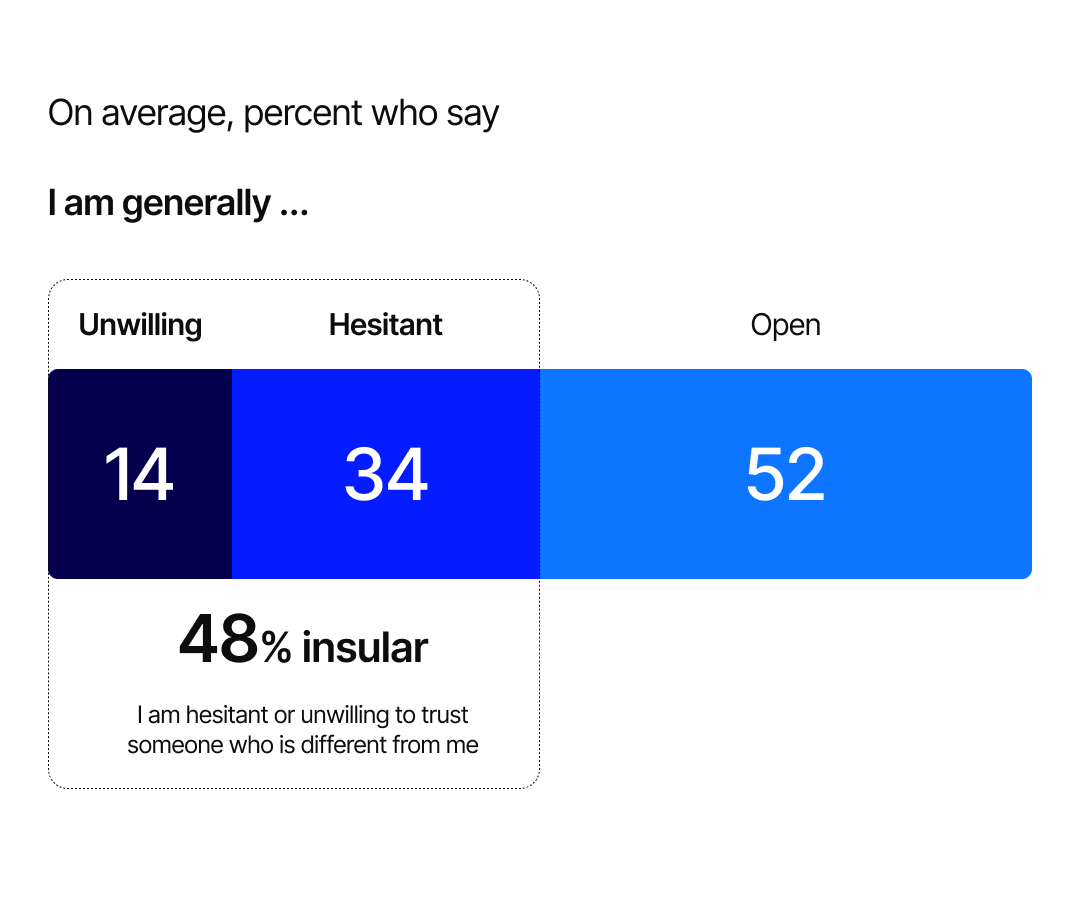
Insularity is lower in the UAE than globally
Forty-eight percent are unwilling or hesitant to trust someone who has different values, facts, problem-solving approaches, or cultural background, compared with 70 percent worldwide.
There is consensus that insularity must be addressed
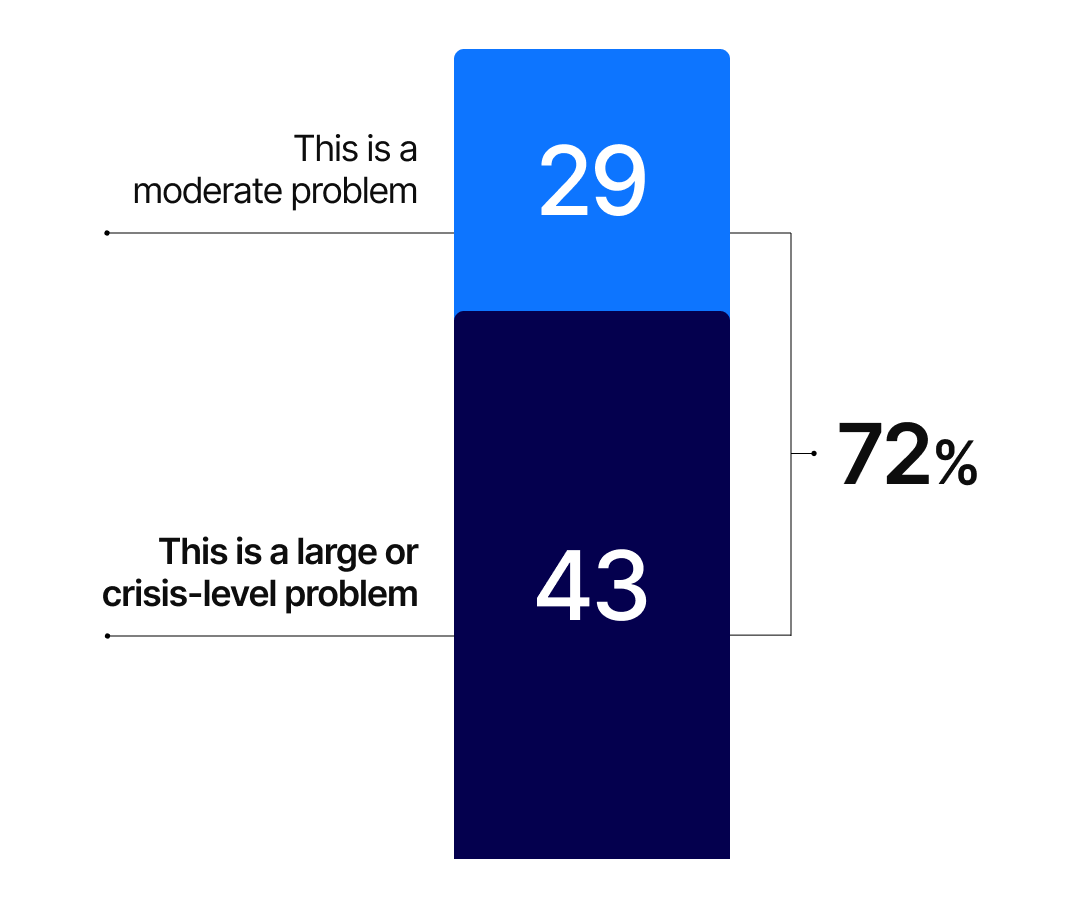
The majority in the UAE believe it is a problem that people distrust those with differences so much that they actively try to make things worse for one another, though less than the global average of 76%.
Trust brokering can help bridge divides
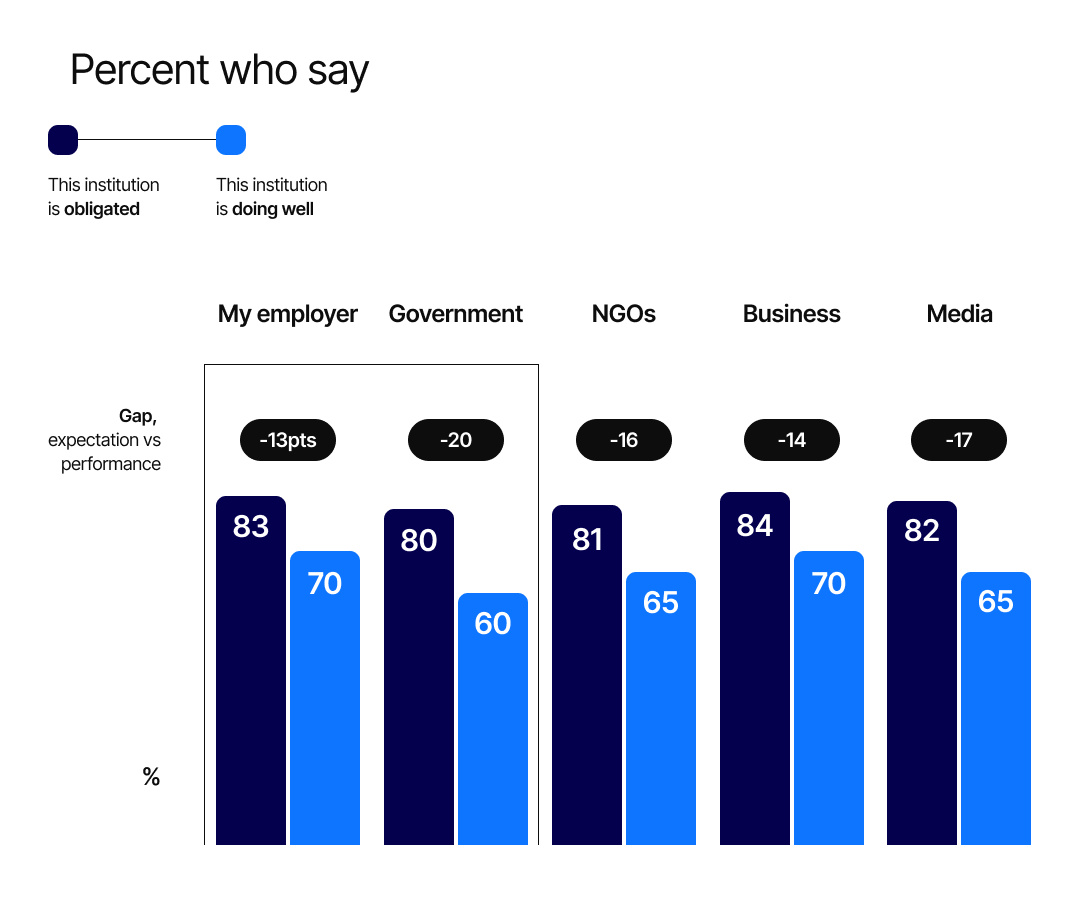
Employers and Government are best positioned to broker trust, as they are the top-rated institutions when it comes to performance on bridging divides and facilitating trust building.
Discover the Trust insights shaping 2026
A full look at this year’s findings — and what they mean for businesses, leaders, and society.


Brokering trust in the age of insularity
1. Pervasive insularity stalls progressEconomic uncertainty, unmitigated fears, and pessimism have fueled a turn inward to safety and certainty. An insular trust mindset now prevails globally: 7 in 10 are unwilling or hesitant to trust someone who is different from them. In this context, perfect alignment becomes an unachievable prerequisite for trust. |
2. Business must address insularityIf left unaddressed, unmitigated differences will stall workplace productivity, undermine CEO leadership, and harden resistance to innovation. To counter geopolitical insularity, multinationals need to evolve to a polynational model, centered on investing in long-term local relationships. |
3. Trust brokering is a strategy and skillsetTrust brokering can be executed by institutions and individuals. As a strategy, it focuses on engaging people where they are rather than trying to change them. Listening without judgement and translating realities are two key skillsets of a trust broker. Done effectively, it will bridge divides. |
4. Employers positioned to scale trust brokeringEmployers have the smallest expectation-performance gap when it comes to trust brokering and a high degree of trust with their employees. This makes them well-positioned to scale trust brokering through conflict-resolution trainings and opportunities to work and interact with people who have different values. |
Explore the findings
.
Top Findings
01
Insularity undermines trust.
⟲
Nearly 1 in 2 people (48%) in the UAE are either unwilling or hesitant to trust someone whose values, facts, problem-solving approaches, or cultural background differ from theirs, with only a slight majority (52%) open to trusting across divides.
02
Mass class divide deepens.
⟲
Since 2012, the gap in trust between high- and low-income groups has more than tripled, with trust rising at a much faster pace among high earners than among low-income groups. The UAE is among the top seven largest income-based trust gaps at 20 points.
03
Nationalism is widespread.
⟲
Trust favors domestic over foreign companies. There are many countries with double-digit domestic trust advantages, including Canada (31 pts), Germany (29 pts), Japan (29 pts), and the UK (25 pts), signaling stronger net nationalist trust than in markets such as China (17 pts), the U.S. (16 pts), Mexico (11 pts), and Brazil (7 pts) where the domestic advantage is narrower.
Methodology: The 2026 Edelman Trust Barometer is the firm’s 26th annual Trust survey. The research was produced by the Edelman Trust Institute and consists of 30-minute online interviews conducted between October 25 and November 16, 2025. Learn more >
33,938 | 28 | ±1,200 |
.
Business has a role to play in fixing the crisis of insularity
Learn how we can help your company bridge the gap.