
In today’s hyper-connected world, customers expect seamless, personalised experiences across multiple touchpoints. Whether they are patients seeking healthcare guidance, providers looking for medical insights, or consumers engaging with health-related content, their journey is no longer linear. If your strategy isn’t omnichannel, it’s failing to meet their expectations, and ultimately, it’s not truly customer-centric.

What Does It Mean to Be Customer-Centric?

A customer-centric strategy is one that prioritises the needs, behaviors, and preferences of your audience at every stage of their journey. This means understanding how they interact with different channels, whether it’s email, social media, SMS, chatbots, telehealth platforms, or in-person visits, and ensuring a frictionless experience across them all.

A multichannel approach, which simply means being present on multiple platforms, is no longer enough. True customer centricity demands an omnichannel strategy, where each interaction informs the next, creating a cohesive and personalised journey. For example, a patient researching symptoms on your website should receive relevant follow-ups via email or SMS, and a provider engaging with educational content on a professional network should see related insights in their next touchpoint, whether through a webinar invitation or an interactive chatbot.

Why Omnichannel Matters in Healthcare

The healthcare industry is complex, with diverse stakeholders including patients, healthcare professionals (HCPs), payers, and caregivers. Each group has unique needs, and their engagement preferences vary widely. Here’s how an omnichannel approach improves their experience:

  1. Patients Expect Seamless Care Journeys: Patients today move between AI research, telehealth consultations, in-person visits, and digital health apps. They expect their data and experience to follow them seamlessly across these touchpoints. An omnichannel strategy ensures that when a patient engages with a chatbot about medication side effects, their physician is notified and can follow up proactively.
  2. HCPs Demand Relevant, Convenient Engagement: Healthcare professionals are overwhelmed with information and prefer tailored, on-demand content. Some prefer webinars, others engage with peer-reviewed articles, and many rely on social media for industry updates. A well-designed omnichannel strategy ensures that HCPs receive the right content at the right time through their preferred channels, enhancing engagement and education.
  3. Caregivers and Family Members Need Integrated Support: Family caregivers often manage appointments, prescriptions, and patient education on behalf of their loved ones. Providing them with integrated access to patient information via a unified experience across apps, portals, and SMS reminders enhances their ability to provide care.

Key Elements of an Effective Omnichannel Strategy

To build a successful omnichannel strategy in healthcare, consider these essential elements:

  1. Data-Driven Personalisation: Use AI and analytics to understand customer behaviors and preferences. Leverage these insights to deliver tailored messaging and content that meets individual needs.
  2. Channel Orchestration: Ensure all touchpoints are connected and synchronised. A patient shouldn’t receive a generic email after a telehealth visit; instead, they should get a follow-up message tailored to their specific condition.
  3. Compliance and Privacy: In healthcare, compliance with regulations like HIPAA and GDPR is crucial. Ensure all interactions respect patient privacy and data security standards while still delivering value.
  4. Seamless Integration of Digital and Human Touchpoints: While digital engagement is critical, human interaction remains essential in healthcare. Integrate AI-driven support with human touchpoints like physician follow-ups and live chat with healthcare professionals.
  5. Continuous Optimisation: Regularly analyse engagement data, feedback, and outcomes to refine and optimize your omnichannel strategy over time.

The Future of Customer-Centric Healthcare Engagement

As technology advances and customer expectations evolve, the need for an omnichannel approach will only grow. Organisations that invest in seamless, personalized, and data-driven engagement will build stronger relationships with patients and HCPs, improve health outcomes, and drive better business results.

If your strategy isn’t omnichannel, it’s time to rethink what customer-centricity truly means. The future of healthcare engagement is connected, continuous, and customer-first.


Have questions? Get in touch here.

To truly understand Gen Z, you must understand this: we operate from a scarcity mindset - shaped by fear, frustration and fractured trust.    

We were raised in an emotional pressure cooker - school shootings, the climate crisis, a pandemic that disrupted milestones, and persistent economic instability. Today, personal safety and security top the list of Gen Z  priorities. That same fear is driving how we think about power, money, law and order, and the systems that surround us, including the system of brand communications.     

The good news? Communicators can tap into Gen Z’s deep emotional investment in progress. A recent Edelman Brand Trust  report  suggests that for Gen Z, brand trust is increasingly personal, not institutional. We’re not looking to brands to fix society, we're looking to them to show up in our lives with optimism, clarity and care. We value emotional connection as much as ethical alignment, and we notice when brands make our world feel more stable, even in small, personal ways.    

Our passion isn’t performative; it’s personal. It’s born from lived experience, systemic frustration and the belief that something better is possible. And while it’s natural for brands to hesitate, fearful of saying the wrong thing or stepping into polarized debates, Gen Z’s passion can be a permission space, not a pressure cooker. When brands act with clarity and care, they won’t just avoid backlash; they’ll gain advocates.     

Let’s take a closer look:    

  • More than half (51%) of highly aggrieved Gen Z believe that helping people with different beliefs comes at a cost to themselves. That’s textbook zero-sum thinking​. In other words: if you’re winning, we’re probably losing.   
  • Confidence in government, media and business is near all-time lows. Many young people believe that these institutions serve the elite and wealthy, leaving others behind. Even the pastimes and entertainment that once brought us joy feel complicated; performative stories of nepotism in Hollywood, influencers-turned-villains, and even hobbies have become a feeding ground for political turmoil (they said what at the run club!?). What used to be casual interests now act as litmus tests for someone’s politics or values.    
  • We believe in driving real change, even if it’s sometimes perceived by other generations as confrontational. Edelman’s Gen Z and Grievance research shows that 53% of Gen Z expresses approval of what’s often labeled “hostile activism,” a broad category that can include everything from online pressure campaigns to direct action. That support reflects frustration and urgency, not an endorsement of unethical behavior – it's a response to collective trauma. For many, it’s not just about protest; but rejecting the idea that traditional reform is enough.       

As a Gen Z comms professional, I’ve seen our role evolve from simply executing tasks to harnessing our unique lived experiences and cultural fluency as strategic assets.    

I remember the gut punch I felt reading about the evolving landscape of DEI programs across major companies. As a communicator, it raised questions about how progress is sustained over time and I recognized that my role as an advisor was entering a new chapter. As a Gen Zer, it stirred a familiar tension: the sense that momentum can stall when urgency fades. But rather than discouragement, what I felt most was determination. A quiet but steady reminder: we’re still here, and we’re still paying attention. For brands, this moment isn’t about taking a side, it’s about honoring your values with consistency, even as the world around you becomes more complex.     

Gen Z doesn’t expect perfection, but we do expect progress, consistency and proof. We want brands to show up as the company that you say they are, not just when the spotlight is on, but when no one is looking. We want actions, not just awareness. Proof looks like:  

  • Enforcing workplace policies and commitments 
  • Engagement on social issues that support your people and customers 
  • Tangible progress in local communities and our world    

When we see real effort, we show up as advocates, amplifiers and even employees. But that trust must be earned, not assumed.    

So, for communications teams, this means:  

  • Pressure-test your values.  Ask: “Would we still do this if no one were watching?” If not, it may lean toward being performative.  Brands have been publicly called out in media for making bold public statements during moments of reckoning, like posting solidarity during racial justice protests, only for internal policies or business decisions to quietly contradict them. Analysts and commentators have flagged this disconnect as a key driver of reputational risk. Gen Z doesn’t just notice the gap between values, words and behavior; we log it as a red flag, and that disconnect undermines trust at its core. 
  • Gauge issue salience. Ask: “Would silence here cause backlash or disengagement?” Coverage in major outlets has highlighted instances where brands have tried to sidestep cultural moments, like quietly opting out of Pride after facing political backlash, only to be called out by LGBTQ+ consumers and allies for what felt like a retreat. Gen Z isn’t asking for constant commentary, but we do notice when brands are selectively visible. In key moments, silence can speak louder than a statement and often signals disengagement, indifference, or worse, fear. 
  • Make your receipts visible. Help Gen Z assess your brand by making your track record easy to find and hard to fake. When brands lean on words like “sustainable” or “ethical” without offering data, methodology, or third-party proof, it sets off alarms. We've seen fashion and beauty brands face backlash when those claims didn't hold up under scrutiny, especially when product lines or supply chain practices told a different story. We’re not asking for perfection, but if the receipts are vague or hard to find, we assume there’s something to hide.    

The takeaway is clear: Gen Z’s fear isn’t going anywhere. Whether you’re launching a product, navigating layoffs or shifting your sustainability strategy, we’re watching. Not with passive interest, but with the belief that what benefits you might come at our expense. If that fear is confirmed, you don’t just lose our trust – you lose our loyalty, our voices, and our dollars.     

To stop being seen as part of the problem, brands must show up like allies - with values and with verifiable action.      

Olivia Tompkins is a senior account executive of corporate reputation and the global knowledge manager of the Gen Z Lab at Edelman.   


Allstate CEO Tom Wilson on Creating Trust Through Community

In an age of rapid change and skepticism, trust in health is fragile, yet more vital than ever. The 2025 Edelman Trust Barometer Special Report: Trust and Health makes this clear: no institution – government, business, NGOs, or media – is trusted to address people’s health needs. Trust has decentralized, representing both risk and opportunity for leaders across the health ecosystem.

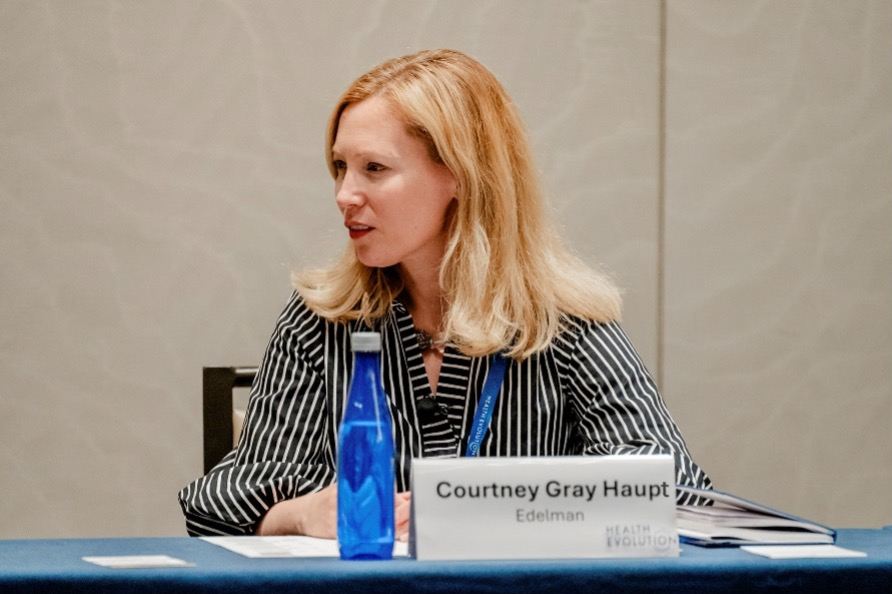
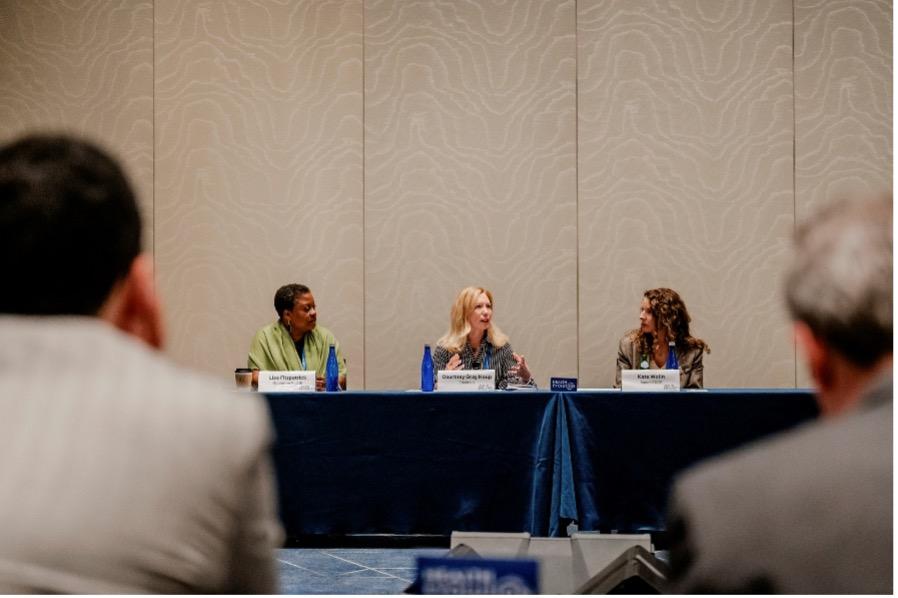
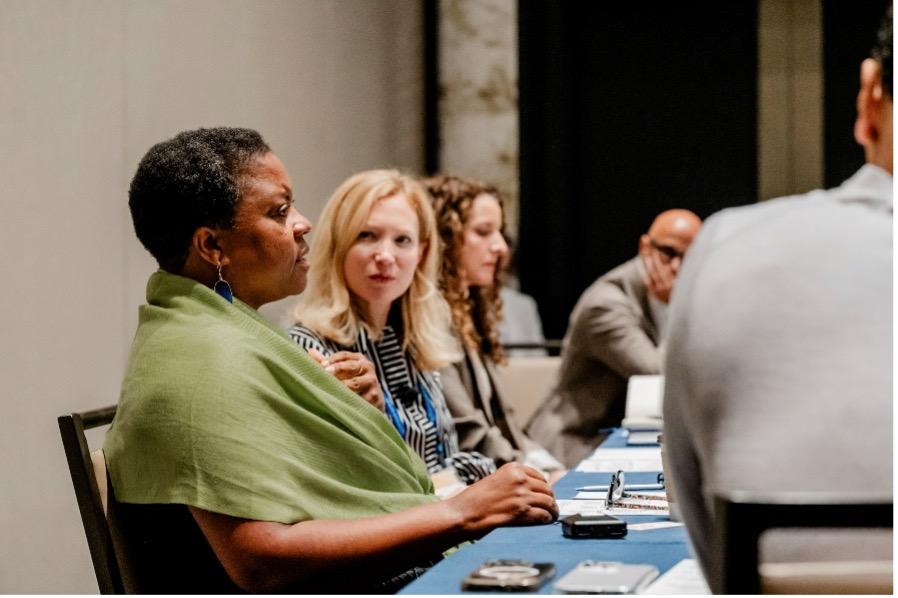
Last month, I met with leaders at Health Evolution Connect 2025 in Nashville, where CEOs, payors, providers, startups, and investors gathered to confront these challenges. In an Edelman-hosted session, “Restoring Trust in Health: Action Over Intention,” I was joined by a behavioral epidemiologist and an infectious disease physician who is also a health literacy expert to engage the group in sharing perspectives. One theme was unmistakable: trust is no longer a given. It must be earned, sustained, and demonstrated through measurable action.

Insights from the Health Evolution Community

Conversations reinforced a simple truth: restoring trust requires humility, courage, and collaboration. Panelists noted that doctors and experts must show more humility – admitting when they don’t have all the answers but committing to finding them. This humanizes expertise and helps patients feel respected. Our data echoes this: two-thirds (64%) of people say someone whose advice helped in the past is an important consideration in determining who is a legitimate health authority, nearly as important of a consideration as someone with formal credentials (72%). As one voice reminded us, we need to shift from asking patients, “What’s the matter?” to “What matters?”

Technology and artificial intelligence were (as expected) another major theme. Far from dehumanizing care, AI was increasingly positioned as a teammate, as well as a strategy to reduce physician burnout. With tools like ambient listening, physicians are rediscovering the joy of practice – able to look patients in the eye rather than type notes. This prompted a provocative question: can more technology actually make healthcare more human? Still, leaders urged caution. With the Centers for Medicare & Medicaid Services (CMS) preparing to launch a Health Tech Ecosystem and AI app library by 2026, the question of which tools can be trusted remains open. Our research confirms the tension: while 76% of people feel confident finding trustworthy health information, younger adults are twice as likely as older ones to believe the average person who has “done their own research” is just as knowledgeable as a doctor.

Generational divides were also front and center. Nearly half (45%) of 18- to 34-year-olds say in the past year they have disregarded provider guidance in favor of advice from friends or family, while 38% have done so in favor of social media. These younger voices are not rejecting expertise – they are redefining it. Trust for them is about empathy, proximity, and communication style. Health leaders must learn to engage this participatory ecosystem with humility, frequency, and authenticity.

And while people continue to diversify their health information sources, our research also found “my provider” is highly-trusted to tell the truth about health issues (82% globally) – confirming what multiple leaders at Health Evolution underscored: health trust is local. Engaging and collaborating with local health voices will be critical to ensure health information resonates and is effectively disseminated. When sharing how they effectively built lasting trust, leaders recounted a community-first approach.

Several CEOs spoke candidly about the velocity of change and the courage required to lead through risk. They spotlighted how resilient relationships grow by listening harder, showing vulnerability, and taking bold but fact-based risks with a community-first approach. Leaders agreed meaningful systemic change won’t be possible if the current healthcare ecosystem continues to operate in silos – stakeholders must share collective responsibility to realize the potential AI and other advancements can bring.

Action Over Intention

Our Special Report: Trust and Health makes clear that anecdote is not the enemy of science – it is the bridge to it. Undermining science or allowing misinformation to flourish has consequences beyond reputation. To earn back influence, leaders must blend rigor with relatability, showing they understand people’s lived realities. We must:

Elevate proximity: Empower local voices (community leaders, providers, peers) to carry trusted messages.

Redefine communication: Translate science into language people can understand and act upon.

Demonstrate action over intention: Move from promises to visible, measurable commitments that improve access, equity, and experience.

Reignite collaboration: Channel the urgency and unity of our pandemic response, so innovation serves and includes society.

Trust is the most valuable currency in health today. At Health Evolution Connect, it was clear those willing to act boldly – to listen, adapt, and communicate with empathy – will not only strengthen their organizations but also restore confidence in the systems meant to care for us all.

Courtney Gray Haupt is Global and U.S. Health Chair.


My good friend Lally Weymouth, editorial writer for The Washington Post, died yesterday of pancreatic cancer. I have known her for the past 20 years as a notable journalist and fixture in the New York City social scene. To me she was an older sister, a guardian angel and fellow traveler in a family business.

Lally pursued stories with zeal, chasing heads of state across time zones and geographies. Her stories were revealing, often deep conversations in which leaders allowed their true nature to be unveiled.

She was a true friend. When I got prostate cancer, she was tireless in her networking, connecting me ultimately with a large donor who facilitated an introduction to Dr. Peter Scardino, the eminent surgeon.

Her salon lunch in Davos and birthday dinner in Southampton were the stuff of legend. Her guest lists included prime ministers, CEOs, top journalists, and heads of charities. She moderated brilliantly, providing a full picture of the world.

She ran a tight ship at her house. I was chastised for eating a toasted bagel outside of the dining room. I was also told to dress appropriately when coming for a visit to her home, with jacket and slacks required.

She was kind to my children. She took special interest in my eldest, Margot, encouraging her to progress in the family business.

She was deeply conservative, especially on foreign policy. I was, in her eyes, her "far left" friend. She abhorred high taxes and government regulation. She respected strength and courage in all policy matters.

She was always elegant in her Oscar de la Renta dresses and heels. Her hair was always well coiffed, her jewelry immaculate.

She was a unique character who grew up in a family of power and embraced all who were keeping our world charging ahead.

Richard Edelman is CEO.

Today marks the final day of UNGA week, when the United Nations General Assembly reconvenes in New York City. Foreign dignitaries descend on the city, traffic grinds to a standstill and participants are left staggering but standing at the end of a long week of social gatherings and intellectual convenings (Clinton Global Initiative, Goalkeepers, Bloomberg).

Here are my major takeaways from the week:

  1. The Work Goes On, But Under a Different Name—Edelman has just completed a study with NYU Stern School on sustainability and its impact of sustainable claims on brand sales. This work now is best described as Social Sustainability. This includes A for Access, B for Basic Needs, C for Crisis Response, D for Disability/Veterans affairs and E for Economic Status. Note that three of the elements are economic, reinforcing what we found in our June Edelman Trust Barometer Special Report on brands for Cannes: the world has moved from We to Me. It is now about what brands can do to make me feel safe and optimistic.
  2. Patriotism and Nationalism Are Different—President Emmanuel Macron of France delivered a stirring speech at the Atlantic Council on Wednesday night. He said that he is the most patriotic Frenchman, but he draws the line at nationalism, which he believes is contrary to effective governance. He argued for joint efforts on such fast-developing areas as artificial intelligence and misinformation.
  3. The Massive Opportunity in Food Waste Reduction—Paul Polman, former CEO of Unilever, convened a group of companies at breakfast on Wednesday. Hamdi Ulukaya, founder and CEO of Chobani told a compelling tale of change in his supply chain that has significantly reduced waste in the harvesting of strawberries. He said that farm workers are instructed to select only the most perfect fruit, dropping the other pieces to the ground to rot. He now takes the imperfect fruit, chops and processes it at the farm before putting it into his strawberry yogurt. This California grown product substitutes for strawberries being flown in from Serbia, resulting in lower cost and better taste.
  4. The Digital Divide in Brazil—The COP30 Deputy Director spoke at my apartment on Sunday evening about the necessity of connectivity for the residents of the Amazon. The Foundation for the Amazon is working with residents to establish fisheries and small plot agricultural production. This is to offset the temptation to work for illegal loggers and cattle or soybean farmers. Deforestation of the Amazon has gone down by over 50 percent in the past three years.
  5. Global Urbanization—Fifty five percent of the eight billion global citizens now live in cities, up from 33 percent in 1960. This number is expected to rise to 70 percent by 2050, with the number of slum dwellers expected to rise from one to two billion in that period. Much of that urbanization will occur in the Southern Hemisphere. That is why the Indonesian Government is attempting to create a Southern Hemisphere Davos in February.
  6. The Shock Waves from President Trump—The President issued a fundamental critique of the UN, calling out its failed peace-keeping efforts, its bloated bureaucracy and ineffective stewardship of its broader mandate of health and security. He did agree to bring America current on its back-dated bills. Meanwhile, President Javier Milei celebrated Argentina’s receipt of a $20 billion lifeline from the U.S. Treasury that will ward off speculators in the Argentine peso. At the Atlantic Council, Milei blasted left-wing woke critics who are interfering with his efforts to restore entrepreneurial vigor to the local economy.
  7. The Parallel Universe—At the Clinton Global Initiative, former President Bill Clinton and California Governor Gavin Newsom provided an alternative theory of the world, from healthcare to immigration. There was a similar talking past each other moment around Israel and Gaza in the wake of recognition of the Palestinian state by the UK, France and Germany without clarity on the leader of that entity.

Kirsty Graham, our U.S. CEO, received an award from the Foreign Policy Association on Monday night. She gave an impassioned speech that catalogued all the global challenges from economic volatility to political polarization to loneliness to a compromised information eco-system. All of these, she said, are borderless issues. She asserted, “Leadership matters in this moment…. you must do what you say…you must listen.” But most important of all is the ability of leaders to connect, to establish personal relationships. She concluded on an optimistic note, citing the basic goodness of people who want the simple things of family, quality of life and happiness. This is our homework assignment from UNGA week.

Kenya

Our communications professionals at Edelman Kenya, strategically located in Nairobi, have a breadth of expertise across the agriculture, fintech, healthcare, telecommunications, energy, technology, professional services and fast-moving consumer goods sectors.

Find out more

South Africa

With offices perfectly located in the heart of Johannesburg, Edelman South Africa advises the country’s most prominent brands on everything from exciting brand campaigns and corporate reputation management to creative studio work and crisis communications.

Find out more

Serving Our Clients

Find out more

Our History

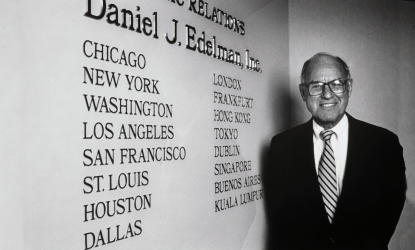
Explore Edelman’s journey from its founding in 1952 through decades of innovation in public relations, communications, research, digital, and global expansion. Discover how our heritage shapes the future of trust

Find out more
Subscribe to 2025