- Global (EN)
- Africa (EN)
- Australia (EN)
- Belgium (EN)
- Brasil (PT)
- Canada (EN)
- Canada (FR)
- China (CN)
- France (FR)
- Germany (DE)
- Germany (EN)
- Hong Kong, China (EN)
- India (EN)
- Indonesia (EN)
- Ireland (EN)
- Italy (IT)
- Italy (EN)
- Japan (JP)
- Korea (KR)
- Latin America (ES)
- Malaysia (EN)
- Middle East (EN)
- Netherlands (EN)
- Spain (ES)
- UK (EN)
- Global (EN)
- Africa (EN)
- Australia (EN)
- Belgium (EN)
- Brasil (PT)
- Canada (EN)
- Canada (FR)
- China (CN)
- France (FR)
- Germany (DE)
- Germany (EN)
- Hong Kong, China (EN)
- India (EN)
- Indonesia (EN)
- Ireland (EN)
- Italy (IT)
- Italy (EN)
- Japan (JP)
- Korea (KR)
- Latin America (ES)
- Malaysia (EN)
- Middle East (EN)
- Netherlands (EN)
- Spain (ES)
- UK (EN)

Start your journey with Edelman
Looking for work that matters? Explore careers at Edelman and join a global team committed to shaping conversations, building trust, and driving change.
BROWSE CAREERS
Whether you're looking for strategic guidance or specific expertise, our team is ready to help. Contact us to explore how Edelman can partner with your business.
Contact Us
Special Report: Brand Growth in an Insular World
.
Trust + Relevance: A New Equation for Brand Growth
The 2026 Edelman Trust Barometer Special Report: Brand Growth in an Insular World finds that consumer fragmentation is reshaping conditions for brand growth. Today, brands serve as markers of identity and belonging, and consumers are becoming less willing to engage with people, communities, and brands that feel different from them. Relevance has evolved beyond pop culture to encompass utility, identity, community, and emotional connection, yet brands are falling short across all of these dimensions.
In this environment, trust and relevance together are a force multiplier for sustainable growth. Relevance creates fit. Trust creates confidence. Earned media gives both momentum by making belief credible through the people, communities, experts, reviewers, and experiences audiences actually trust.
Relevance is Multi-Faceted
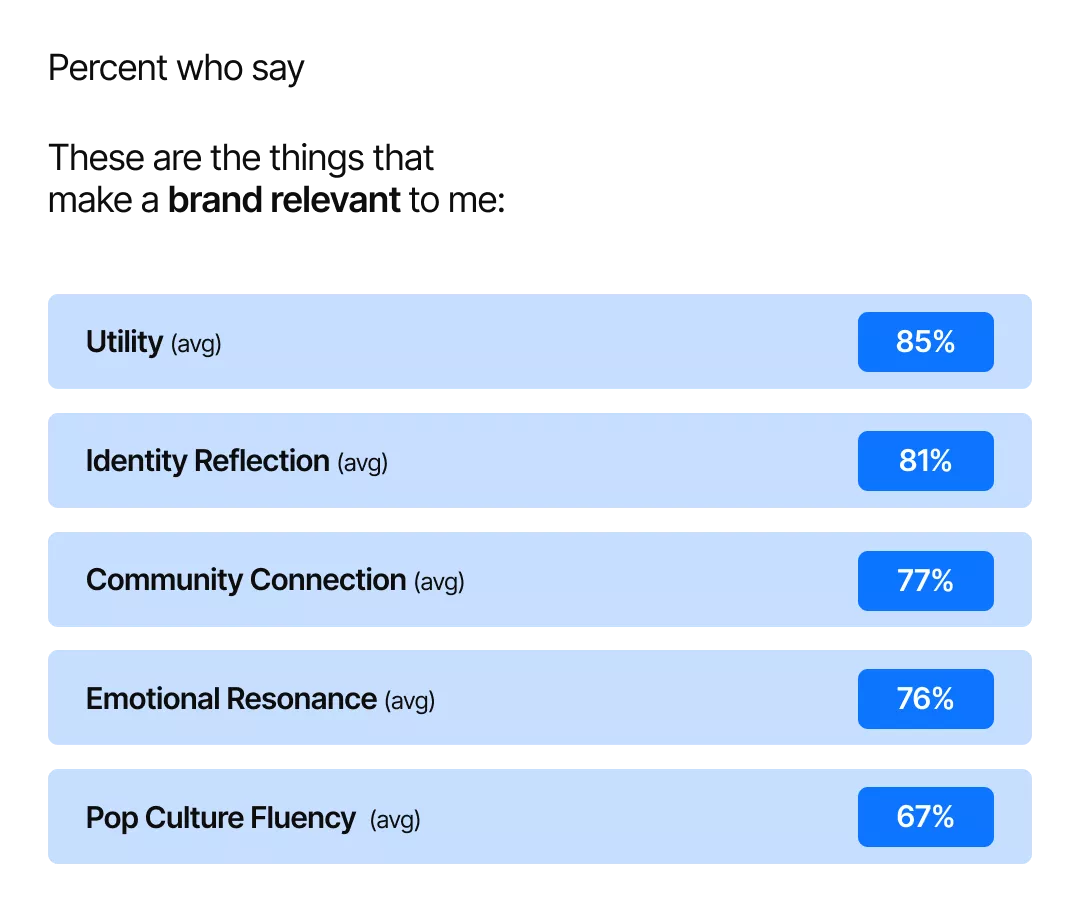
Brands earn relevance through multiple dimensions. While, on average, utility is the most effective way to make a brand relevant to me globally, consumers also look for brands that reflect who they are, foster connection, create emotional resonance, and shape pop culture.
Earned is the Most Powerful Way to Build Trust
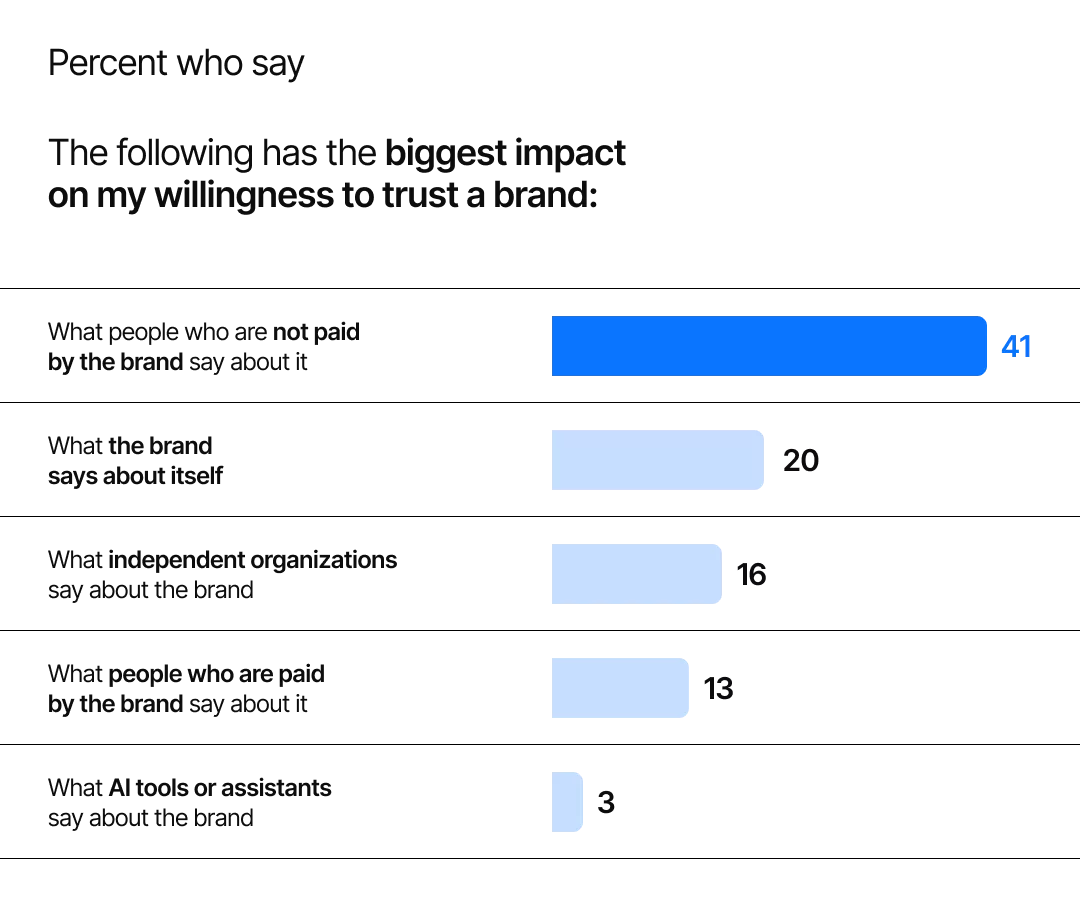
Globally, when it comes to building trust, what others who are not paid by the brand say about it matters far more than what the brand says about itself. Consumers place the greatest weight on the voices of unpaid advocates, customers, and peers.
Trust and Relevance Create Permission to Grow
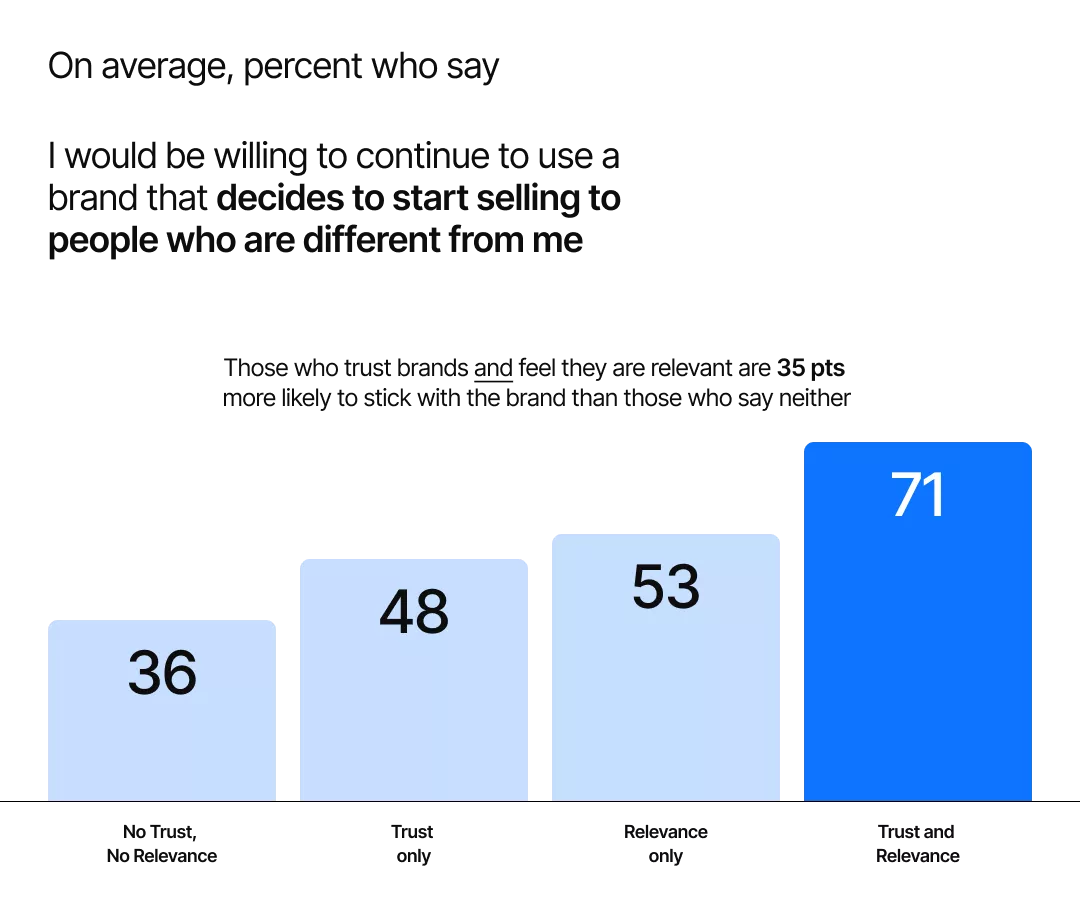
Globally, consumers are almost 2x more willing to support a brand as it expands to serve new and different audiences when that brand has earned both trust and relevance.
Brand Playbook for Growth in an Insular World
1. Integrate trust and relevance into a growth strategy
Relevance creates fit, but being relevant at scale means you inherently risk alienating some. Pair every relevance move with trust proof, so the brand has permission to stretch without losing confidence.
2. Use trust as a leading growth indicator
Do not wait for trust to show up as a reputation issue. Track where trust is creating or constraining premium, loyalty, adoption, advocacy, forgiveness, and permission to stretch across audiences.
3. Choose the right relevance levers
Relevance isn’t only culture or fame. Diagnose the growth problem, then activate the right dimension of fit: utility, identity,community, emotion, or pop culture fluency.
4. Lead with earned, scale with paid
Start with ideas credible enough for others to validate, translate, share, review, and carry forward. Make those proof points discoverable in LLM-driven search. Use owned and paid to substantiate and amplify what earned makes it believable.
.
Top Findings
01
Insularity is widespread, with two-thirds of consumers reluctant to trust someone different from them
⟲
66% say they are hesitant or unwilling to trust someone who is different from them, including people with different core values, facts and sources, approaches to societal problems, or backgrounds. Of those people, 30% are unwilling to use brands used by people who differ from them.
02
Consumers prioritize domestic brands when making purchasing decisions
⟲
Over two-thirds say it is important or a critical purchase deal breaker that the brands they buy are headquartered in their country, up 5 points since 2023.
03
Trust drives purchases as much as quality and value
⟲
88% say trusting the brand is an important or critical purchase criterion, on par with quality (89%) and value (88%).
Featured Insight

Trust and Relevance Together Unlock Brand Growth in an Insular World
How can brands grow in an increasingly divided world? Discover 2026 Edelman Trust Barometer insights on trust, relevance, consumer behavior, and brand growth.
Methodology: The 2026 Edelman Trust Barometer Special Report: Brand Growth in an Insular World is the firm’s 8th annual Trust and Brands survey. The research was produced by the Edelman Trust Institute and consists of 25-minute online interviews conducted between April 23 and May 11, 2026. Learn More >
.
What does this mean for your brand?
Please reach out to learn more about the 2026 Edelman Trust Barometer Special Report: Brand Growth in an Insular World.