- Global (EN)
- Africa (EN)
- Australia (EN)
- Belgium (EN)
- Brasil (PT)
- Canada (EN)
- Canada (FR)
- China (CN)
- France (FR)
- Germany (DE)
- Germany (EN)
- Hong Kong, China (EN)
- India (EN)
- Indonesia (EN)
- Ireland (EN)
- Italy (IT)
- Italy (EN)
- Japan (JP)
- Korea (KR)
- Latin America (ES)
- Malaysia (EN)
- Middle East (EN)
- Netherlands (EN)
- Spain (ES)
- UK (EN)
- Global (EN)
- Africa (EN)
- Australia (EN)
- Belgium (EN)
- Brasil (PT)
- Canada (EN)
- Canada (FR)
- China (CN)
- France (FR)
- Germany (DE)
- Germany (EN)
- Hong Kong, China (EN)
- India (EN)
- Indonesia (EN)
- Ireland (EN)
- Italy (IT)
- Italy (EN)
- Japan (JP)
- Korea (KR)
- Latin America (ES)
- Malaysia (EN)
- Middle East (EN)
- Netherlands (EN)
- Spain (ES)
- UK (EN)

Start your journey with Edelman India
Looking for work that matters? Explore careers at Edelman India and join a global team committed to shaping conversations, building trust, and driving change.
BROWSE CAREERS
Whether you're looking for strategic guidance or specific expertise, our team is ready to help. Contact us to explore how Edelman India can partner with your business.
Contact UsStart your journey with Edelman
Looking for work that matters? Explore careers at Edelman and join a global team committed to shaping conversations, building trust, and driving change.
BROWSE CAREERS
Whether you're looking for strategic guidance or specific expertise, our team is ready to help. Contact us to explore how Edelman can partner with your business.
Contact Us

.
From a crisis of grievance to a crisis of insularity
The 2026 Edelman Trust Barometer reveals a world retreating towards insularity. As economic anxiety, geopolitical tension, and technological disruption intensify, people are narrowing their world to smaller, familiar circles that reflect their views, and this hinders economic and societal progress.
Read the 2026 report to understand a path forward to restoring trust and rebuilding connection and collaboration across society.
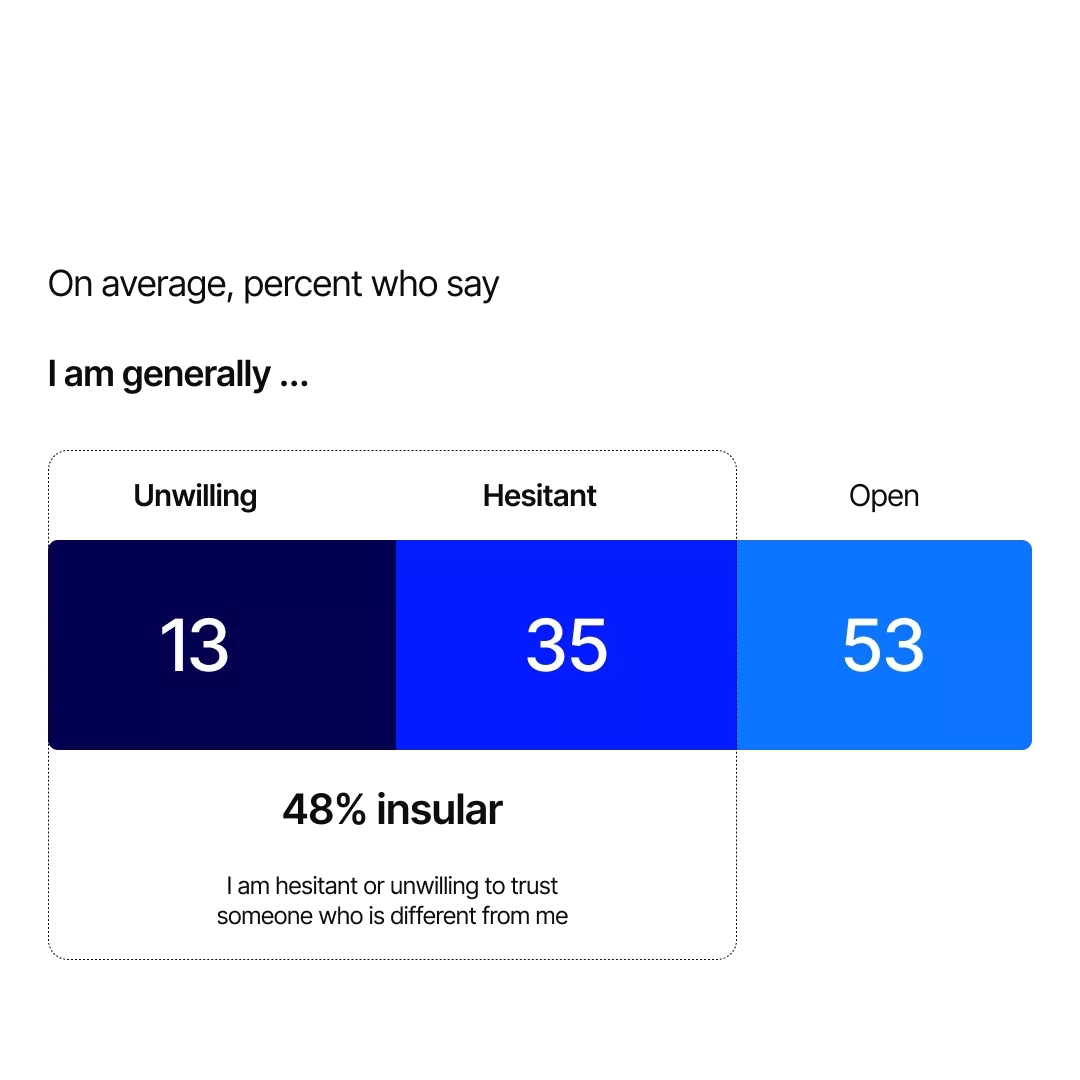
In India, Nearly 1 in 2 Have an Insular Mindset
Nearly half the population shows a preference to trust those who think like them, read the same media, or share similar values.
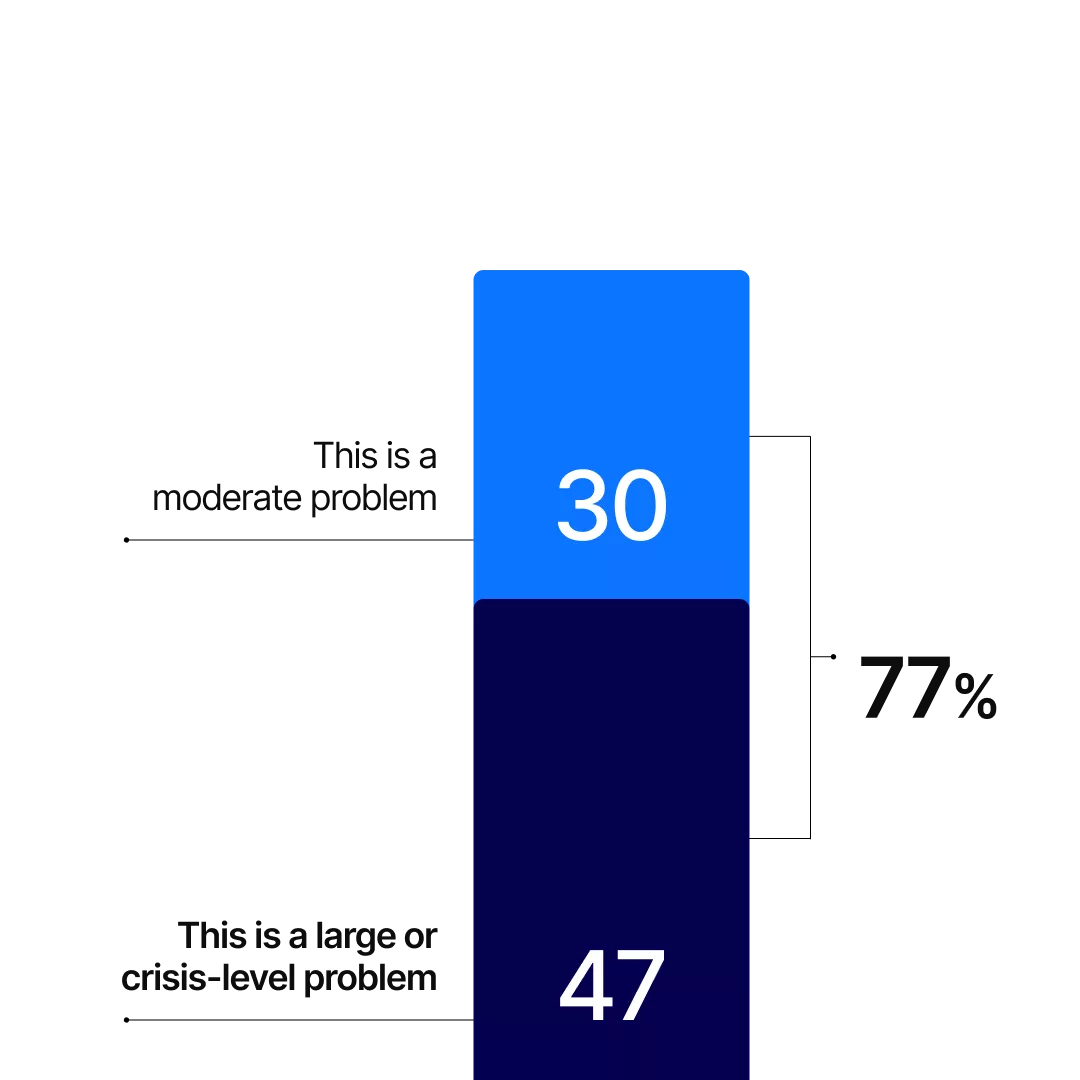
There is global consensus that insularity must be addressed
In India, there is broad expectation for institutions to actively bridge divides and facilitate trust-building between groups who distrust each other.
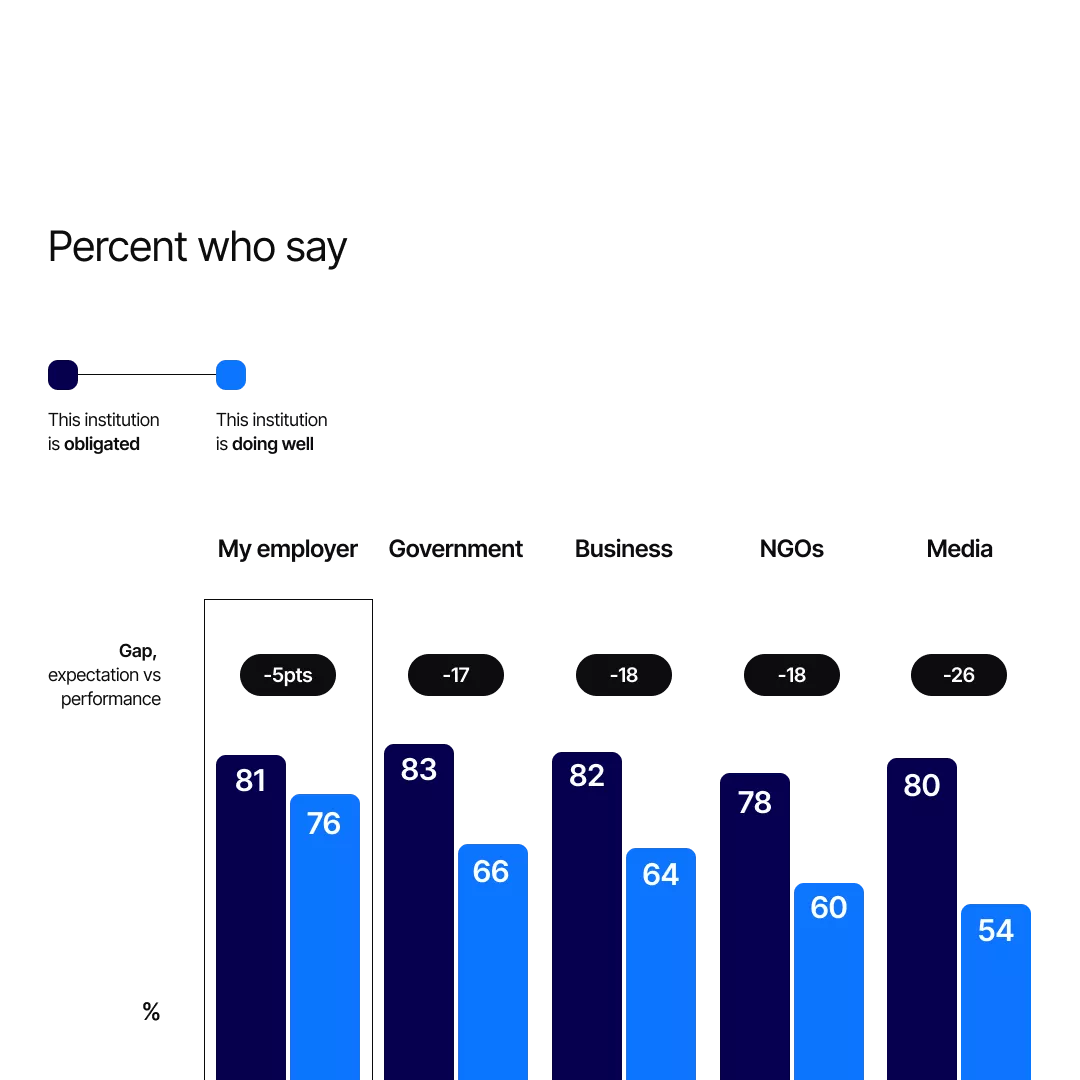
In India, Mandate for All Institutions to Bridge Trust; Employers Best Positioned
Employers have the smallest gap between expectations and performance in bridging divides, compared with government, business, NGOs, and media.
Discover the Trust insights shaping 2026
A full look at this year’s findings — and what they mean for businesses, leaders, and society.
Brokering trust in the age of insularity
1. India’s Trust is Rising Yet its World is ShrinkingWhile India remains a relatively high-trust country, there are signs of insularity. Nearly half the population shows a preference to trust those who think like them, read the same media, or share similar values. Trust is becoming narrower even when overall trust remains strong. |
2. Mass Class Divide DeepensOne of the most important signals in India this year is trust inequality. Since 2012, the gap in trust between high- and low- income groups has been widening globally, with trust rising among high earners while lagging among low-income groups. In India there is a 16-point gap in trust levels between higher-income and lower-income groups. |
3. Nationalism is WidespreadTrust favors domestic over foreign companies, signaling stronger net nationalist trust. It is the tendency for people to trust companies from their own country more than companies from abroad. |
4. Optimism for the Future WanesGlobally, just 32% believe the next generation will be better off, with the biggest declines in India (-13 pts), and China (-13 pts) over the past year. |
Explore the findings
.
Top Findings
01
India’s Trust is Rising Yet its World is Shrinking
⟲
While India remains a relatively high-trust country, there are signs of insularity. Nearly half the population shows a preference to trust those who think like them, read the same media, or share similar values. Trust is becoming narrower even when overall trust remains strong.
02
Mass Class Divide Deepens
⟲
One of the most important signals in India this year is trust inequality. Since 2012, the gap in trust between high- and low- income groups has been widening globally, with trust rising among high earners while lagging among low-income groups. In India there is a 16-point gap in trust levels between higher-income and lower-income groups.
03
Nationalism is Widespread
⟲
Trust favors domestic over foreign companies, signaling stronger net nationalist trust. It is the tendency for people to trust companies from their own country more than companies from abroad.
.
Methodology: The 2026 Edelman Trust Barometer is the firm’s 26th annual Trust survey. The research was produced by the Edelman Trust Institute and consists of 30-minute online interviews conducted between October 25 and November 16, 2025. Learn more >
33,938 | 28 | ±1,200 |