June 2, 2026 – NEW YORK – Edelman has appointed Kenny Gold as Global Chief Creator Officer, reinforcing the firm’s continued investment in creator as a key driver of marketing, communications and brand relevance. Gold will report to Tristan Roy, President, Integrated Solutions & Delivery.

In this role, Gold will lead Edelman Creator globally, advancing the firm’s creator capabilities and further integrating creator with social, paid and performance. He will partner with teams across the network to deliver culturally relevant, creator-led programs that drive measurable business impact for clients. As audiences increasingly turn to creators as trusted sources of news, information and influence, Edelman continues to expand its investment in creator as an essential component of modern communications and marketing. With approximately 200 creator specialists globally, the firm is helping clients navigate a landscape where creators are no longer an emerging channel, but a core part of how people consume information and engage with brands.

“Creator has become one of the most important drivers of growth, relevance, opinion and business impact for brands today, and clients are increasingly looking for creator-led ideas and solutions across creative, social, paid and performance,” said Roy. “Kenny brings a rare combination of strategic vision, operational expertise and deep understanding of culture and platforms. He has built and scaled creator businesses at the highest level, and he is exactly the right leader to help accelerate Edelman’s global creator offering and deliver even greater value for our clients.”

Gold joins Edelman from Deloitte Digital, where he served as Managing Director and Head of Social and Creator, building the practice from the ground up. He developed a differentiated offering that combined consulting, creativity and creator-led marketing, leading work for brands including P&G, MGM Resorts, General Mills and Dave & Buster’s.

Earlier in his career, Gold led social at Grey Group, where he developed P&G’s #DistanceDance campaign with TikTok creator Charli D’Amelio, one of the platform’s most successful creator-led campaigns. He also co-authored Deloitte’s Creator Economy in 3D research and is a frequent speaker at major industry events including Cannes Lions, SXSW and CES.

“Edelman sits at the intersection of culture, communications, marketing and trust in a way very few firms can,” said Gold. “In an era where AI and creator are reshaping the industry, trust sits at the center of both. For 26 years, Edelman has helped businesses understand how trust shapes behavior, influence and decision-making globally. That foundation, combined with the firm’s creative ambition, global scale and integrated capabilities, creates an incredible opportunity to build creator programs that are culturally relevant, business-driving and built for the future.”

Gold’s appointment reflects Edelman’s continued focus on strengthening its creator capabilities within Integrated Solutions and more closely aligning them with social and performance to deliver a more connected and differentiated offering for clients. This year, Edelman was ranked the No. 2 Influencer Agency globally by Influencer Strategists, and over the past three years the firm has earned three Cannes Lions for influencer work.


 

Unilever announced on Thursday its intention to develop a new Global Innovation Center in New Haven, CT. This nearly $300 million investment is confirmation of the company’s focus on the U.S. as a growth market.

The investment builds on the nearly $15 billion that has been put into the U.S. market over the past decade, including acquisitions and capital investment. It is also a recognition of the company’s commitment to reshape product categories in consumer products, incorporating bioscience, quantum computing, and material science.

Herrish Patel, President of Unilever U.S., said, “When something works here and it resonates with U.S. consumers, it will soon be adopted around the world. As part of Unilever’s global network of innovation hubs, the center will share technology, insights, and breakthrough ideas to accelerate innovation at scale.”

Unilever’s success in the U.S. provides a model for multinational companies navigating an era of rising nationalism, social media-driven disinformation, and accelerating e-commerce innovation. It also reflects the central role of the U.S. in the global economy as both a growth engine and entrepreneurial hub. We will continue to work with clients in key markets such as China, India, and Brazil on comparable projects of national significance and global relevance.

Richard Edelman is CEO.


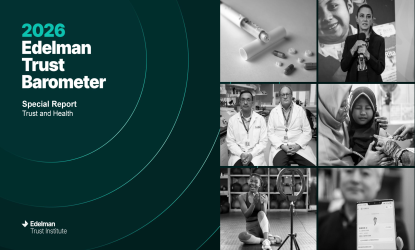
2026 Edelman Trust Barometer - Special Report: Trust and Health UAE Report

While healthcare systems globally are grappling with declining confidence, misinformation and growing competition for influence, the UAE presents a different picture.

Find out more

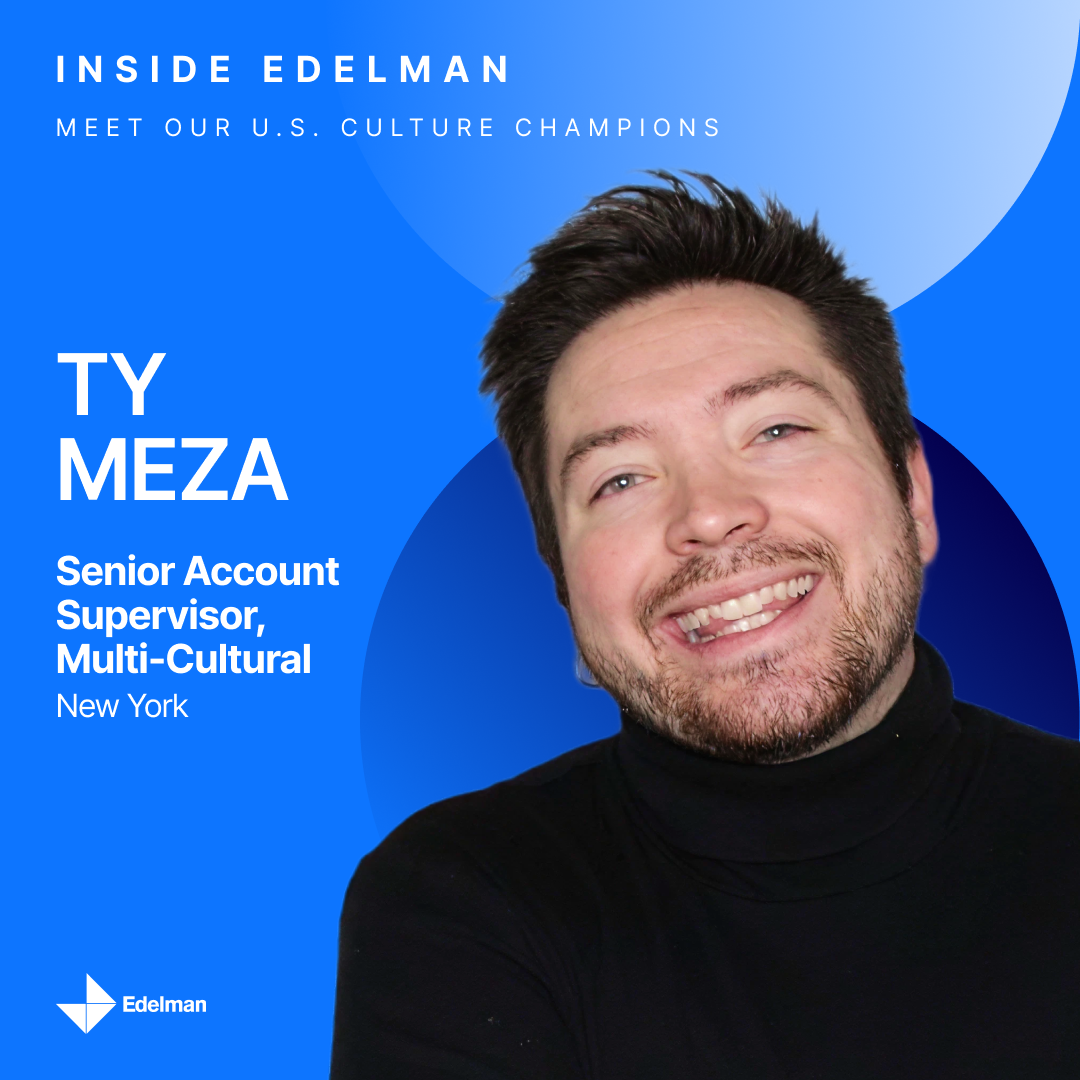
We’re spotlighting our Edelman Culture Champions, individuals recognized by their peers for exceptional dedication, positivity, and contributions to fostering a supportive workplace environment. These champions play a pivotal role in cultivating a culture where every voice is heard and valued. This edition of Inside Edelman features profiles of these outstanding colleagues from our U.S. offices, showcasing their efforts to uphold Edelman’s values of Diversity, Equity, Inclusion, and Belonging (DEIB).


Tell us about your Edelman journey.

Growing up in a small town outside of Houston, Texas, I had high hopes to work at a reputable PR firm in the fast-paced, never-sleeping, icon that is New York City. I would have never believed I’d actually be going on 4 years at the most reputable firm of them all – Edelman. In my time here I have been able to work on incredible campaigns alongside some of the most brilliant people in our industry. Together our teams have brought a wealth of knowledge and insight to our clients and truly put culture first.


You were nominated for Culture Champion by your colleagues – how do you foster a collaborative and respectful culture within your team?

Honestly – I write down little memos to myself. I try to keep track of all the small things, people’s kid's names, their allergies (that’s an important one!), their coffee order, and even their astrological sign. Those little things help me better understand who I’m working with and allow me to show up for them in ways that matter. I really try to ensure everyone on the team feels seen and is not treated necessarily the same, but in the way they want to be treated.


How does your personal background play a role in your professional life?

I do feel my Latinidad and Queerness show up in my work, especially being on the Multicultural Brand team and leading Equal’s NY Branch. How I process briefs, lead workstreams, and guide clients are all through lens of my identities and in the spirit of being culture forward. In fact, my first ever real agency gig was for a Multicultural PR & Creative firm (my first boss poached me when I was waiting tables!) and that’s where I developed the strong connections and strategy I leverage every day at Edelman.


When you think about the future of Edelman, what does it look like for you?

I think it’s a bright future, and a future where everyone is adaptable to change. It’s always been true of our industry that you must be agile, but now more than ever agility is table stakes. I’m hopeful, we can bridge the gap between the new age mentality and retain some tried and true PR practices for stellar results.


What recommendations would you give to colleagues who are trying to make more connections at work? How do you think these connections have benefited your work?

Studies show work quality and team member satisfaction increases when people feel they have a “work bestie.” I encourage everyone to seek out connection because at the end of the day Public Relations is so much more than media relations, it’s relations with clients, vendors, and colleagues. Strong relationships with all these parties are what make us successful. So get involved, reach out! Maybe it’s ENGs, post-work happy hours where we celebrate and commiserate, 1:1s with no agenda what-so-ever. I know these moments have made all the difference in my time here at Edelman.

Ty Meza is a Senior Account Supervisor on the Multi-Cultural team based in New York.


I attended the graduation of my stepson, Joshua Gisiger, last weekend at Rice University in Houston. He had two ceremonies, the awarding of the degree at Rice Stadium and the convocation of the engineering graduates on the prior day at the field house. The engineering students proceeded one by one to the stage to put their hands through a large metal circle on a table, then were awarded a ring that they are to wear henceforth as a sign of their fealty to the profession.

These words were read by the dean of engineering at Rice, as they are at other schools, and as they have been read since 1950. “As an engineer, I pledge to practice integrity and fair dealing, tolerance and respect, and to uphold devotion to the standards and dignity of my profession, conscious always that my skill carries with it the obligation to serve humanity by making the best use of the Earth’s precious wealth.”

The graduates in computer science took a similar vow, as they promised the following. “I am a computing professional. My work affects people’s lives, both now and into the future. As a result, I bear moral and ethical responsibilities to society. I pledge to practice my profession with the highest level of integrity and competence. I shall always use my skills for the public good. I shall be honest about my limitations, continuously seeking to improve my skills through lifelong learning. I shall engage only in honorable and upstanding endeavors. By my actions I pledge to honor my chosen profession.”

It is in this context that I recommend to all my readers The Thinking Game, a 2024 documentary on the life of Demis Hassabis, founder of DeepMind, now Google DeepMind. Hassabis is a child genius, designing a top ten video game at age 16, then founding the first artificial general intelligence company, DeepMind, on graduation from Cambridge University. His first goal was to develop a program that could beat the best in games ranging from PONG to GO. Within four years, DeepMind bested the Korean and Chinese GO champions. Then it was on to the real-life challenge of solving the “grand challenge of biology, the protein folding problem.” The AlphaFold AI system can predict the 3D structure of proteins, thereby speeding the development of drugs. Hassabis and his colleague John Jumper were awarded the Nobel Prize in Chemistry in 2024 for this work. It should also be noted that Hassabis made a fortune selling to Google in 2017. I reference Hassabis because his work reflects the very ideals those engineering pledges are meant to uphold: innovation in service of humanity, guided by responsibility and ethics.

The vows taken by those graduates stayed with me as I read a recent New York Times article, “How a Secretive Firm Tried (and Failed) to Fix an Epstein Friend’s Tattered Image.” The piece examined the work of Terakeet, a reputation management firm, that worked to burnish the tarnished image of Kathryn Ruemmler, until recently the general counsel of Goldman Sachs. The Times article goes on to say that the firm “resorted to the furtive, algorithm-placating digital tradecraft that made it one of the most exclusive firms in the booming world of reputation management.” Mac Cummings, the owner of Terakeet issued this rebuttal. “Terakeet’s technology is built on a simple mandate: organizations must tell their own story. If they do not, third-party bias combined with generative AI will shape it for them.”

That explanation, however, speaks to a broader tension within the communications profession about the responsibilities that come with shaping public perception. The Arthur Page principles remain the proper guidelines for behavior in public relations: tell the truth, prove it with action, and conduct PR as if the whole enterprise depends on it. In a world where information reaches people directly as well as through media, and where the lines between fact and fiction are increasingly blurred, we have a responsibility to help people better understand the truth, not make it harder to find. Otherwise, the media will doubt our veracity, the public will rightly question our motives, and employees will feel betrayed when money is substituted for judgment.

Richard Edelman is CEO.


Trust Corridors

Edelman’s Trust and Health report reveals declining trust, division, and confusion, with many people believing contested health claims worldwide.

Find out more

AI in marketing isn’t theoretical anymore, it’s operational. That reality was front and centre at DigiMarCon Toronto, where leaders focused on how AI is driving measurable business impact. In creator marketing, the implications are immediate and structural. The gap between organizations using AI with rigor and those using it superficially is becoming impossible to ignore.

Let’s be clear: AI is not just making creator marketing more efficient; it’s redefining how the entire discipline operates.

The playbook is being rewritten

From how creators are discovered to how partnerships are structured to how performance is predicted and measured; the playbook is being rewritten in real time. Leaders who treat this as incremental change will fall behind those who recognize it as an operating shift.

Creator discovery illustrates this point. What once relied heavily on manual identification and vetting is now powered by systems that can analyze audience quality, content patterns and brand alignment in seconds. That does more than just save time, it raises the baseline for decision-making. If your process still looks the same as it did two years ago, you’re not just behind, you’re making weaker decisions with less information.

From instinct to accountability

The same shift is underway across creative and performance. AI can now forecast which content is likely to resonate before it goes live and optimize campaigns as they run. This shifts the role of the marketer from subjective selection to accountable decision-making. The expectation is no longer instinct alone, but informed judgement backed by data and tied to outcomes.

The discipline gap

Yet many organizations remain misaligned with this reality.

There is no shortage of AI tools in the market. There is a shortage of discipline in how they are applied. Too many teams are experimenting at the edges instead of integrating AI into the core of how Creator Marketing drives revenue and customer experience. If AI is not directly influencing who you partner with, briefing, how you optimization and measurement, it’s not a strategy. It’s a side project.

The highest-value applications are clear and tied to business outcomes. Better creator selection. Smarter content decisions. More efficient spend. Stronger conversion. Anything else is noise.

Scale without losing trust

At the same time, scaling AI without clear guardrails is a mistake. Creator Marketing is built on relationships, credibility and audience trust. Creators are not interchangeable media units. They are partners whose values depends on authenticity. Applying AI without thoughtful governance risks optimizing for short-term performance while eroding long-term trust.

That’s why governance cannot be an afterthought. It should define how AI is used, what decisions it informs and where human judgment is non-negotiable. The goal is not to replace intuition, but to sharpen it and ensure it’s applied in the right places.

Closing the gap

Closing the gap between experimentation and impact requires deliberate operating changes. Leaders should prioritize four actions:

  1. Integrate AI into core workflows: Apply it to creator selection, briefing, optimization and measurement. If it doesn’t shape these decisions, it’s not driving business value.
  2. Pressure-test decisions before launch: Use AI to evaluate creator fit and campaign strategy before committing.
  3. Redesign role and workflows around AI: If AI is just an extra step, it won’t stick.
  4. Invest in capability, not just tools: Platforms don’t create impact without training, standards and internal expertise.

AI’s value comes down to execution. Insights have limited impact unless they translate into stronger briefs, more strategic partnerships and measurable results. Organizations that fail to operationalize AI will add complexity without improving performance.

The critical divide in Creator Marketing is no longer access to AI; It’s a willingness to rethink the operating model.

Leaders who act now will move faster, spend smarter, and win more consistently. Those who don’t will continue to frame incremental change as innovation while losing ground where it matters most.

Gabe Mederos, Vice President of Creator Marketing.


Counter Disinformation Unit

Edelman’s Counter-Disinformation Unit brings together senior crisis, digital, geopolitical, intelligence, and trust advisers across markets. Our team helps organisations prepare for, assess, and respond to narrative threats in high-pressure environments.

Find out more

LONDON, 7 MAY – Edelman today announced a leadership transition across its EMEA business, with Julian Payne appointed CEO, EMEA, and Justin Westcott appointed CEO, Middle East, in addition to his role as EMEA Chief Operating Officer.

Arent Jan (AJ) Hesselink, who currently holds the role, will step down after a decade at the firm. He will remain with Edelman until June 1 to support the transition.

Hesselink has played a central role in shaping Edelman’s EMEA business, having previously served as General Manager of Amsterdam and EMEA COO before becoming CEO in 2023. During his tenure, the region delivered sustained growth, strengthened its client portfolio, and evolved its operating model to better serve clients in an increasingly complex global environment.

Ed Williams, President, International, Edelman, said: “AJ has made an outstanding contribution to Edelman over the past ten years. He has helped build a more integrated, resilient and high-performing EMEA business, and has led the region through a period of extraordinary complexity with clarity and determination. Just as importantly, he has built a strong leadership team and a culture that reflects the very best of our firm. We are grateful for everything he has done and wish him every success in what comes next.”

Julian Payne will assume the role of CEO, EMEA, alongside his current responsibilities as Global Chair, Crisis & Risk. During the period of transition, he will continue in his role as UK CEO. Payne joined Edelman in 2021 and has held senior leadership roles across corporate affairs and crisis advisory including as Chair of Corporate Affairs for EMEA. He brings more than 30 years of experience across agency and in-house roles, including senior positions at the BBC, Burberry, and Sky, as well as serving as Communications Secretary to The King and Queen in their roles as Prince of Wales and Duchess of Cornwall.

Williams added: “Julian is a highly experienced leader with deep expertise in reputation, corporate affairs and leadership communications. Since taking on leadership of our UK business, he has been focused on driving growth through diversification of our capabilities into sectors like sport and luxury, while deepening expertise and integration across the market. He has also had a significant impact on our broader business, strengthening our corporate offering and advising clients through complex, high-stakes situations. He brings sound judgement, strong client instincts and a clear sense of where our industry is heading. I am confident he will build on the strong foundation in EMEA and lead the region into its next phase.”

Justin Westcott will take on the additional role of CEO, Middle East, while continuing as EMEA COO. A long-standing Edelman leader, Westcott has held a number of senior roles across the firm, including Global Chair, Technology, UK COO, and previously served in the Middle East, where he also led the Dubai office.

His expanded remit reflects the strategic importance of the Middle East as a growth market for Edelman, as well as his experience in driving operational excellence and transformation across the region.

Williams continued: “Justin’s appointment reflects both the importance of the Middle East to Edelman’s future growth and the strength of his leadership across the region. He combines deep regional knowledge with operational and technological expertise and has a proven ability to drive transformation and build high-performing teams. He will play a critical role in accelerating our growth in this important area of the world.”

Julian Payne said: “It’s a privilege to take on the role of CEO for EMEA at such a dynamic moment for our business and our industry. We are operating in a more complex environment than ever before, geopolitically, technologically and socially, and our clients need clear, integrated and forward-looking counsel. Edelman has exceptional talent across the region, and I’m excited to work with our teams to build on our momentum, deepen our capabilities and continue delivering for our clients. It really is a fantastic time to be in communications.”

Justin Westcott added: “The Middle East represents a significant opportunity for Edelman, with ambitious clients and rapidly evolving markets. Having worked in the region earlier in my career, I’ve seen first-hand its pace of growth and potential. I’m looking forward to working with our teams to continue building a business that brings together our full range of capabilities to deliver impact for clients across the region.”

As Edelman strengthens its position as a leading communications agency across brand and corporate, these appointments reflect the depth of senior talent across the firm and their ability to lead seamlessly across disciplines. They also demonstrate how Edelman is evolving its leadership model to combine market leadership, specialist expertise, and operational excellence in service of clients and future growth.

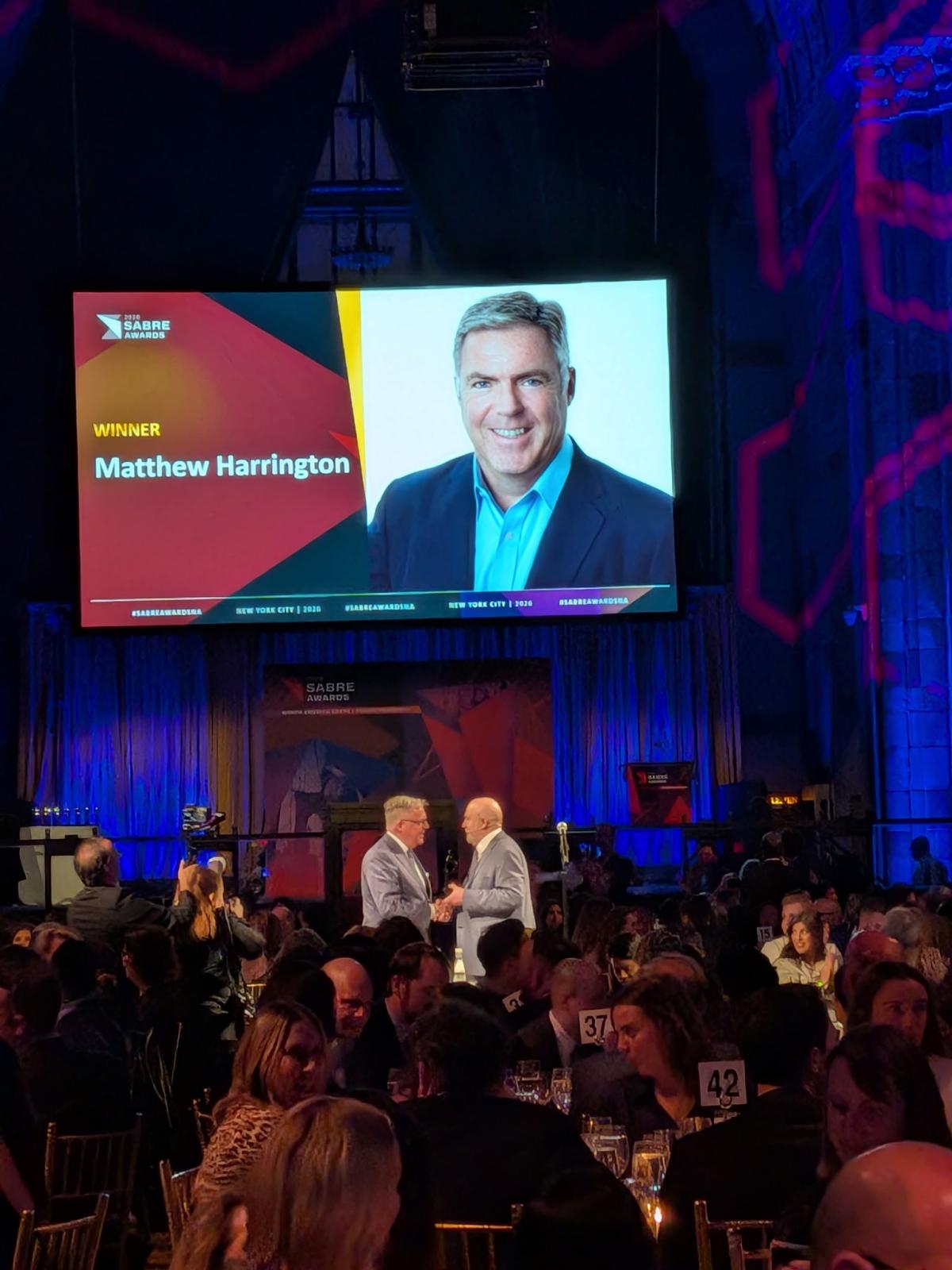
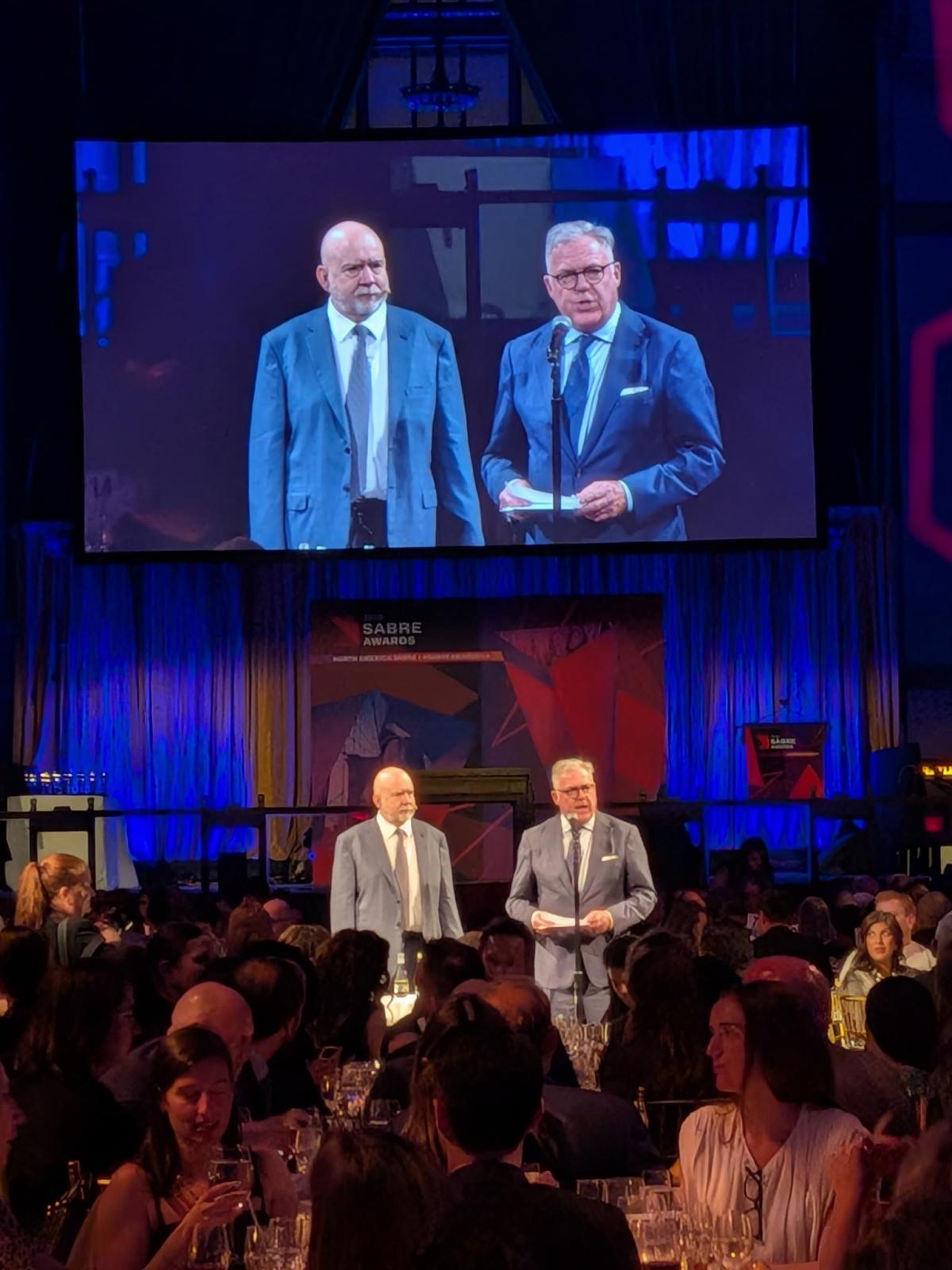
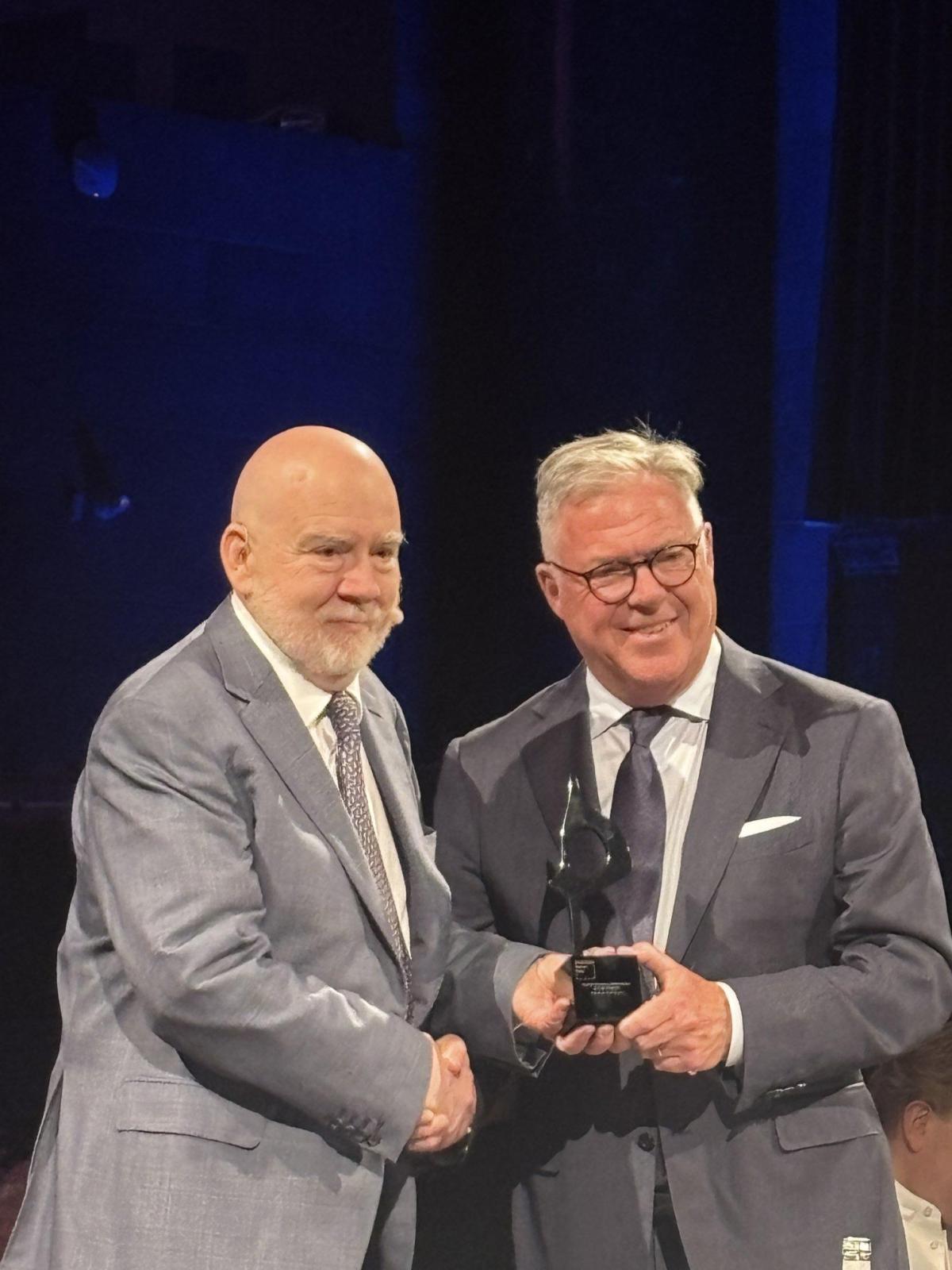
Matthew Harrington, our Executive Vice Chairman, received the SABRE Individual Achievement Award for distinguished service in public relations at PRovoke Media’s North American SABRE Awards this evening. I want to add my own thoughts about a man who has been such a singular force in the success of Edelman over the past four decades.

His first day at the firm is the stuff of legend. I met Matt through his cousin Becky, who was the girlfriend of my pal Dave Wagener in college. Matt came to our New York office at 1775 Broadway. I quickly concluded that he was bright and energetic, hiring him on the spot. We were short of staff, so I sent him out right away to help our client Scitex on its first quarterly earnings release since listing on Nasdaq. I had not thought to ask Matt whether he had done one of these before. Our client, Arthur Low, gamely guided Matt through the process and the release went out on time.

As one of our rising young executives, Matt put his hand up to move to the West Coast in the early 90s to lead our growing Visa International relationship out of the San Francisco office. He was then named General Manager when the incumbent moved to the client and ultimately became Head of West Coast Operations. Among the clients he attracted to Edelman during his tenure on the left coast were Starbucks and Charles Schwab, which are still pillars of DJE’s business. He was the first dedicated client leader to Microsoft and among the first Edelman executives to work with Samsung Electronics; his relationship with both companies continues today.

Through his work as both a client and CEO counselor, he has helped elevate and redefine the role of today’s communications professional. He has led our clients and our firm through defining moments post 9/11: Leading the Cantor Fitzgerald grieving center at the Pierre Hotel, the 2008 financial crisis and the recovery from COVID. One of his most groundbreaking engagements was with Odwalla, where he helped pioneer the use of the internet for crisis management, providing real-time updates to consumers on product safety and earning a PRSA Silver Anvil for best Communications Campaign of 1997.

Matt has been a leader on the ethical practice of public relations. He helped establish our firm’s core set of values and has been outspoken in his role as board member at USC Annenberg School’s Center for Public Relations to ensure that graduates take these values into the workplace. He has worked closely with our Crisis and Issues team to fight disinformation.

As our Chief Operating Officer for the past fifteen years, he has been my true partner in growing the business to its nearly $1 billion level. He has carried the flag for the Edelman brand to our far-flung markets, presenting the Edelman Trust Barometer, doing new business development, and meeting with opinion leaders in Davos. He is the calm, cool operator who has translated nascent ideas such as the Circle of Cross Influence into revenue and top client service.

It is important to note that he has balanced work and family life. He is an incredible husband, father and now grandfather. He has been a role model to so many in the company, mentoring Judy Mackey, Justin Blake, Lisa Sepulveda, Russell Dubner and my three daughters. I have also been the direct beneficiary of Matt’s wisdom; he is a trusted counselor whose judgment and perspective have guided me through many of the firm’s most important moments.

He has also done impressive community service on the board of his alma mater, Denison University, and Classic Stage Theatre (you need to know that Matt gave up a promising acting career to go into PR).

Matt is the epitome of the Edel-person, smart, devoted to clients, global-minded and committed to excellence. I congratulate Matt on his well-deserved award and count on him for many more years of partnership.

Richard Edelman is CEO.


Subscribe to 2026