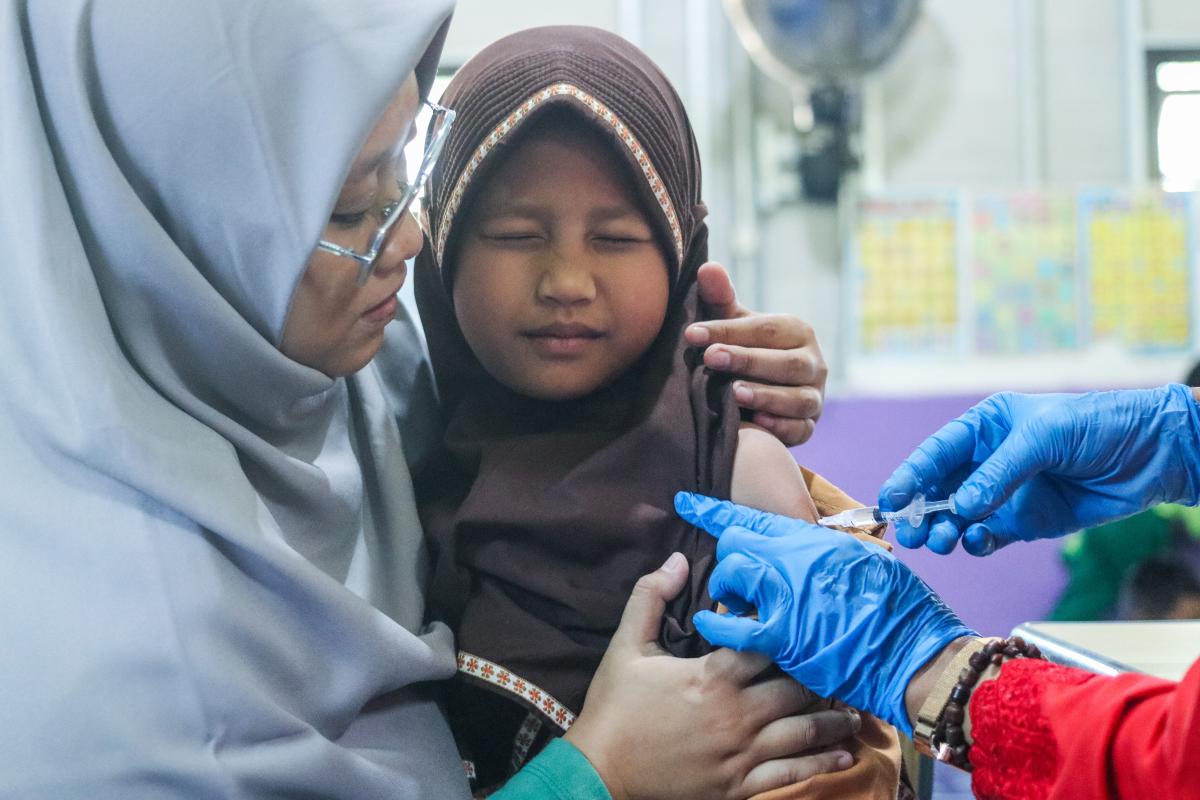

Our assumptions about who believes what about health are spectacularly wrong. Doubts about nutrition, vaccination, and public safety recommendations are no longer a fringe view. They stem neither from a single ideology nor lack of education and do not result from distrust of doctors or experts. In fact, our latest 2026 Edelman Trust Barometer Special Report: Trust and Health, based on a survey of 16,000 respondents across 16 countries, finds that a staggering 70% believe at least one of six divisive health claims about foods, vaccines and medicines to be true. Understanding the worldview and concerns of the public is everything. CEOs and communicators in health must wake up to this radical new reality.

Divisive health beliefs span the globe, highest in the developing nations of India (89%) and South Africa (88%), lowest in Japan, Canada, and the U.S. (50-61%). The divisive health beliefs apply equally across educational levels (university degreed versus non-university degreed) and are more acute among young people (79% for ages 18-34 ) and right-leaning voters (78%), though majorities hold for ages 55 and older (60%) and the left-leaning (64%). It is shocking that only a slight majority (52%) believes the risks of childhood vaccination outweigh the benefits to be false, while slightly over one third (36%) of respondents say adding fluoride in drinking water is harmful is false, a public health staple in the many Anglophone countries since the 1960s.

The one-year drop in confidence (-10 points to 51%) to make informed health decisions for ourselves and our families is staggering. From China to the UAE to Mexico, the majority of people feel their country is divided on key health issues, potentially leading to a profound loss of trust in the healthcare system. Artificial intelligence has already displaced medical expertise in the eyes of many; doctors are competing to influence health decisions with AI, peers, friends and other non-credentialed sources.

More information alone is not the way out of this. Those with more divisive health beliefs are in fact more immersed in information, with on average two thirds saying that they frequently consume health news or consult AI platforms for answers, double or triple the engagement of those who believe no divisive claims. They are nearly three times as likely to read health news from different political orientations. We see evidence of confusion: They are also more likely to be getting mixed advice from credentialed and uncredentialed voices, and so it follows that they’re three times more likely to disregard HCP medical guidance in favor of advice from friends, family, or social media in the past year than those who disbelieve divisive health claims. This is not a story of too little; it’s a matter of too much information without proper context.

Science needs a reset to adapt to this unstable world of trust, offering a new deal to patients and health providers. To date institutional science has solely focused on the WHAT, expressed by top-down communication from credentialed authority figures. That is no longer sufficient for those with skepticism about global institutions, experts, and government borne of the COVID-19 ordeal. The HOW must be explained in simple terms, using data visualizations and with greater transparency on clinical trial processes. The WHY requires acknowledgement of benefits versus side effects and the relative value of the innovation versus cost.

Here is a five-point communications strategy for Health:

  1. Institutions and providers alike need to show up as guides, not advocates.
  2. Trust must be brokered across groups with different views, elevating shared goals without needing to achieve unanimity.
  3. Acknowledge that we don’t have all the answers. Luckily, this is already a built-in part of the scientific method to correct as we learn.
  4. Frequency, frequency, frequency. People need to hear and be heard multiple times before they consider a recommendation on health.
  5. Surround sound. We should utilize a broader circle of trust, valuing friends and family and patient advocacy groups alongside medical experts.

It is time for science to go on offense, to recognize the futility of facts alone, and bring the public along as partner in a better life.

Richard Edelman is CEO.

This post originally appeared on Fortune.com 


I have just visited the Anne Frank House installation at the Griffin Museum of Science and Industry (MSI) in Chicago, which will open to the public on May 1. This is the first time that the Anne Frank House in Amsterdam has allowed its precious artifacts to come to the U.S. The installation is a precise copy of the Annex built behind the original Frank family apartment in Amsterdam. I sit on the board of the museum and have been very involved in this project.

When I asked Dr. Chevy Humphrey, President & CEO of the museum, why she wanted to host this exhibit, she told me, “Julius Rosenwald, who made Sears, Roebuck and Company a dominant retailer in the U.S., was the original funder of the museum. He was Jewish, proud of his religion and determined to use his financial success to improve society. He funded the building of schools throughout the South from 1913-32 to educate African American children in towns where local school boards did more to support white students. This exhibit carries on his work, providing students with context about the Holocaust, explained by a young girl their own age.”

The Diary of Anne Frank is a collection of writings by a teenager who lived in isolation with her family for two years in Amsterdam, hiding from the Nazi SS. Thirty million copies of the book in seventy languages have been sold since it was published first in the U.S. in 1952. The Diary also became a play on Broadway, then a movie in 1958.

Anne Frank was born in Frankfurt in 1929 to Otto and Edith Frank. Otto Frank was a successful businessman, running a food business. With the rise of Hitler, the Franks moved to Amsterdam, living above a food processing factory. As the Nazi onslaught proceeded across Europe, he constructed an annex behind their original apartment. In 1942, the deportation of Jews from Holland began. The Franks moved into their annex, fed and clothed by loyal company employees.

This deception worked until August,1944, when two workers in the factory were forced by the SS to give up the Franks. The entire family was sent to Auschwitz. The two daughters, Margot and Anne, were later transferred to Bergen Belsen, another death camp, where they died in February 1945. Their mother died in January 1945 in Auschwitz. Otto Frank lived through the ordeal and was freed by Russian troops in late January 1945, then took six months to find his way back to Amsterdam through Odessa and Marseille, only to find himself the sole survivor.

On his return to his factory in Amsterdam, he met his secretaries, who presented him with four volumes of Anne’s diaries. Her first diary was a 13th birthday present from her parents. Her first entry was, “I hope I will be able to confide everything to you, as I have never been able to confide in anyone, and I hope you will be a great source of comfort and support.” There is an incredibly moving video of one of the secretaries, showing how she delivered the diaries into Otto Frank’s hands.

There are three objects from the house that I found deeply moving. First there was a bicycle hung on the wall alongside a backpack. It was useless for the hideaways except as a source of continuing hope for a better future. Second was a makeshift menorah, carved of wood, its candles the symbol of resistance. Third was the cut-out photos of movie stars on the wall above the beds of the two girls; the first awakening of teens to a life on the outside that they could only dream about.

Dr. Humphrey is a singular leader who understands the power of her office to influence and educate the community. She understands that the primary mission of her institution is to improve the understanding of science, enabling visitors to dream about careers in technology. But she told me, “You need an appreciation of humanities to fully appreciate science. The racial pseudo-scientific theories of the Nazis, a master race that sits above Jews and people of color or those with deep religious faith, need to be understood and rejected today. That is the message of the Anne Frank exhibit, painful truth through history.” To all my readers, please come to Chicago in the next nine months to see this all-important exhibition at the Griffin MSI.

Richard Edelman is CEO.
Edelman Canada's Power of 55, the Québec Edition (ENG)

Discover Edelman’s Power of 55 – a curated list of trusted 55+ creators shaping longevity marketing and helping brands reach today’s high-spend older consumers.

Find out more

MONTRÉAL, QC (April 20, 2026) — Edelman’s Longevity Lab today announces the Québec launch of The Power of 55, a dynamic, ever evolving list of content creators in their fifties and beyond who are changing the face of influence and delivering measurable brand value. Following an initial international rollout, the initiative now officially enters the Québec market.

In an economy increasingly driven by influence, one thing remains constant. Trust is the foundation of authentic connection. Globally, Edelman has observed the impact of creators in their fifties through the launch of its Power of 55 global ranking last November. Edelman’s Longevity Lab has demonstrated that influence does not decline with age. On the contrary, it grows through experience, credibility, and the strong relationships creators build with their communities.

Today, Edelman is proud to bring this initiative to Québec, spotlighting a curated group of Québec based creators aged 50 and up who shape conversations within their communities and beyond, and who hold significant influence over consumers aged 55 and above.

This launch comes at a critical moment for marketers. Consumers aged 55 and over now control more than half of global spending and are projected to spend $15 trillion annually by 2030. Yet, less than 10 percent of marketing budgets are allocated to this audience. Key to unlocking this economic power is activating this generation’s social influence. The Power of 55 was developed to help brands quickly and credibly address this commercial blind spot with trusted, brand‑safe creators who are ready to activate.

“Marketers aren’t just underestimating this audience. They’re overlooking them entirely,” says Jackie Cooper, Global Chief Brand Officer at Edelman and co‑founder of the Edelman Longevity Lab. “The Longevity Generation, of which I’m a part, is digital, discerning, and at the peak of its spending power. The more we explore this space, the more we realize how undervalued it has been. There is far more economic and cultural influence here than most brands recognize. With The Power of 55, we’re giving brands a simple and credible on‑ramp into this audience and its broader halo effect.”

“The Edelman Longevity Lab has shown that influence does not diminish with age; on the contrary, it grows richer through experience, credibility, and the connections forged with diverse communities. “Today, we are proud to launch this initiative in Quebec, featuring a list of Quebec content creators aged 50 and older who are shaping conversations within their communities and exerting significant influence on consumers aged 55 and older,” said Martine St-Victor, General Manager of Edelman’s Montreal office. “We’re living in the golden age of longevity”, she added.

Edelman’s Power of 55 creators were selected for their credibility, cultural resonance, and performance across platforms. In Québec, the list highlights Isabelle Racicot, Ricardo, and Véronique Cloutier. Internationally, it also includes creators such as Crazy Auntie Ann in the United Kingdom, Jennifer Valentyne in Canada, Jannik Diefenbach in Germany, Makrye Park in South Korea, Olajumoke Adenowo in Nigeria, and Granny Guns in the United States. The list covers a wide range of categories including wellness, fashion, health, food, travel, and lifestyle.

Each creator on the list was evaluated using Edelman’s proprietary Trusted Creator Score. This methodology blends AI‑powered analysis with expert human review to assess content quality, platform behavior, audience alignment, and brand safety. The result is a low‑risk, high‑impact group of creators with established credibility, category authority, and proven influence across sectors such as health, finance, wellness, and lifestyle.

“These aren’t simply creators. They are trusted advisors, subject‑matter experts, and cultural contributors,” says Sara Rezaee, Head of Creator Marketing for North America at Edelman. “They speak from lived experience with authenticity and consistently outperform younger creators in engagement, particularly among the 55‑plus audience that brands have long overlooked.”

The Power of 55 is part of the continued expansion of Edelman’s Longevity Lab, an offering designed to help brands future‑proof their strategies through trusted engagement with a 50‑plus audience. As with Edelman’s Gen Z Lab, the Longevity Lab combines human insight, creator marketing expertise, and cultural intelligence to help brands move from generational insight to action.

“This isn’t about visibility, but about value, especially in today’s economic context,” Cooper concludes. “Brands that partner with Power of 55 creators won’t just reach a high‑spending audience. They’ll earn trust, strengthen relevance, and generate real commercial outcomes.”

For more information or to access The Power of 55, visit edelman.com or edelman.ca.


Singapore, 15 April, 2026 – Edelman has strengthened its Public and Government Affairs capability in Southeast Asia under the leadership of Wai Leong Tang, expanding senior advisory support for CEOs, boards and strategy leaders operating across the region.

Edelman’s Public and Government Affairs offering sits at the intersection of corporate reputation, public affairs and policy. The firm advises multinational and regional organisations on how political context, regulatory shifts and public expectations shape corporate reputation, licence to operate and business outcomes.

Based in Singapore, Wai Leong joins Edelman from H/Advisors, where he served as Head of Public Affairs for the region. As Head of Public and Government Affairs for Southeast Asia, he reports to Delicia Tan, Edelman’s CEO for Singapore, Hong Kong and Taiwan.

Speaking on the appointment, Delicia says: “As the cost of getting politics wrong rises, leaders need partners who understand how government works across this region. This expanded capability strengthens our ability to help CEOs stay ahead of risk, not just respond to it. Wai Leong brings a clear regional perspective on how these dynamics play out market by market, and how leaders can engage governments with confidence and credibility.”

Regional Leadership for a Fragmented and Politicised Business Environment

Wai Leong will work closely with Edelman’s market teams across Singapore, Indonesia, Vietnam, Thailand, Malaysia and beyond to help organisations align regional decision-making with locally credible government engagement, recognising differing political, regulatory and stakeholder realities across markets.

This reflects a growing reality for CEOs: decisions taken at regional headquarters increasingly intersect with national policy agendas, domestic political sensitivities and fast-moving regulatory change. Public affairs can no longer be treated as a reactive or standalone function.

Under Wai Leong’s leadership, Edelman integrates government engagement, policy intelligence and policy communications into broader business and growth strategies, helping leaders anticipate risk, avoid missteps and operate with confidence amid rising scrutiny and geopolitical tension.

Speaking on his new role, Wai Leong says: “Across Southeast Asia, politics and policy are no longer peripheral issues; they are core drivers of business risk, trust and growth. Leaders today must balance regional strategy with local political realities, while demonstrating credibility with governments, regulators and the public. Our role at Edelman is to help them do that with clarity and confidence.”

Deeper Policy, Technology and Digital Risk Expertise

Supporting this capability is Senior Program Manager, Kenn Yee, who brings expertise in technology policy, AI, data governance, cybersecurity and critical information infrastructure across Asia-Pacific.

Based in Singapore, Kenn advises organisations navigating complex regulatory environments. As governments increase scrutiny over data, technology and digital infrastructure, he helps clients understand policy risk and design practical engagement strategies with regulators.

Kenn’s appointment further strengthens Edelman’s ability to translate complex policy, technology and security issues into clear, decision-ready guidance for senior leaders, ensuring public affairs strategies are technically sound and politically credible.

Purpose-Built for CEOs, Boards and Strategy Leaders

Together, Wai Leong and Kenn form part of Edelman’s strengthened Southeast Asia Public and Government Affairs capability. The focus is on strategic foresight—helping organisations engage governments earlier, align public affairs with long-term business strategy, and build durable trust across stakeholders in a more politicised and volatile environment.

SB Jang, Edelman’s Senior Regional Advisor for Public & Government Affairs, Asia-Pacific, adds: “We are delighted to welcome Wai Leong to Edelman. His leadership will be critical as organisations across Southeast Asia navigate a business environment increasingly shaped by geopolitical dynamics, trade considerations and government decision-making.”


In today’s low-trust, high-anxiety environment, business has an outsized role in bridging divides and rebuilding trust in institutions. Not because it’s perfect, but because it is often the most proximate institution in people’s lives and among the most trusted. Employers and CEOs, in particular, are seen as highly credible sources of information.

That matters more than ever because trust isn’t just low; it’s fragmented.

The 2026 Edelman Trust Barometer shows that seven in ten people are hesitant or unwilling to trust someone who has different values and backgrounds, consumes different sources of information, or holds differing views on ideas for solving societal problems than them. At the same time, economic anxiety is pervasive, with growing concern about recession and trade conflict-related job impacts.

Importantly, that anxiety is not evenly distributed. The data shows a widening trust gap between higher- and lower-income groups, with fundamentally different views of how institutions are performing and who they are serving. For many, the promise that innovation creates opportunity no longer feels credible.

As economies transition toward more technology and AI-enabled models, a sizable share of people, particularly those who are lower-income, worry they will be left behind rather than realize any actual advantages. Business leaders are echoing this concern, warning that AI disruption, geopolitical instability and declining institutional trust are converging risks.

This combination of low trust, high anxiety, and unequal experience defines today’s public affairs environment. People are not just uncertain; they are operating with a sense of personal risk. They are turning inward, relying more on their immediate networks including employers, peers and local communities, while becoming more skeptical of national and global institutions.

For business, that creates both a challenge and a responsibility.

The traditional model of public affairs - top-down messaging and reliance on institutional authority - is less effective in this environment. Authority alone doesn’t persuade. Proximity and relevance do. That shift is already visible in the data. Trust is increasingly local. People place more confidence in institutions and voices that are close to their day-to-day lives and less in those that feel distant or abstract.

At the same time, there’s a clear expectation gap. Institutions are widely expected to help bridge divides, but far fewer believe they’re doing it effectively. Business, and especially employers, are uniquely positioned to close that gap.

Increasingly, that role extends beyond communication into something closer to diplomacy. In a polarized, high-anxiety environment, there is also a growing expectation that businesses help lower the partisan temperature, bringing people together around shared interests and creating space for more constructive dialogue.

This is where trust brokering becomes critical.

Trust brokering is not about persuading people to change their views. It’s about creating enough shared understanding to move forward toward common goals despite differences. It means acknowledging that people have different values, sources of information and lived experiences, and translating across those differences to find common ground. Working together, rather than in opposition to one another, enables collective action, stimulates growth, and strengthens competitiveness.

The data shows this approach works. When institutions are seen as effectively brokering trust, overall trust levels increase by 18 points among lower-income groups that tend to be the most skeptical, making their levels of trust on par with high-income.

The reality is that trust has become a form of strategic infrastructure. Without it, even well-designed policies struggle to gain traction. With it, institutions are far better positioned to navigate complexity, economic volatility, and change.

For business leaders, the implication is clear: trust is no longer just a reputational asset. It is an operating requirement.

In this environment, there are three things business must get right:

  • Make it real: Connect policy and global issues to tangible local impact such as jobs, costs, security, and economic opportunity. If people can’t see how policy and action affect their daily lives, it won’t land. Multi-nationals must start behaving as multi-locals.
  • Focus on shared stakes: Avoid zero-sum or overly adversarial framing. In a high-anxiety environment, lowering the temperature matters. Emphasize what people have in common and what we’re solving for together.
  • Choose the right messengers: The messenger now matters as much as the message. Trust is built through credible, relatable voices: employees, business leaders, and experts who can translate complexity into something people understand.

As Tip O’Neill famously said, all politics is local and in today’s environment, trust follows the same pattern. It’s earned through proximity, consistency, and action.

And that matters, because action earns trust and trust drives growth.

Aaron Guiterman, U.S. Head of Government & Public Affairs.


I had lunch last Friday with Daisy Veerasingham, President and CEO of The Associated Press. She is the first non-American to hold the role of this all-important news organization, operating in 100 countries and in all 50 states in the U.S.

The changes in the business model are profound. AP has historically been funded primarily by U.S. newspapers, which now account for only 10 percent of revenue. Key customers include TV stations, digital platforms such as Google, Yahoo and OpenAI, and foreign media. Forty percent of revenue originates outside of the U.S. from broadcasters such as BBC, Al Jazeera, and Channel 18 in India. Now AP is working with influencers on some specific stories and projects.

The AP’s content is now 80 percent visual. The global news organization produced 1.34 million photos, 85,000 news and sports videos and 40,000 hours of live video in 2025. Contrast that to the 344,000 text stories produced by AP reporters. Over four billion people see AP journalism every day.

Veerasingham told me that “AP is a source of truth at scale. We have a foundational level of facts. We want to be the first out with the news, but it must be verified and correct. We must provide a nonpartisan view. We are doing first-hand journalism.”

AP is using AI in the story production process, translating articles into multiple languages, transcribing press conferences. “The story must start and end with a human being,” she noted.

The key editor for PR people is Cara Rubinsky, global business editor, based in London.

AP is going direct to consumers through APNews.com. It is a free service that depends on reader donations and advertising. The site attracted 54 million monthly users and 2.6-billion-page views last year. Veerasingham is coming to the Cannes Festival of Creativity in June to meet with advertisers.

We need to root for the success of AP, a truly independent global news organization devoted to truth and facts in a time of disinformation.

Richard Edelman is CEO.
APAC CMOs do not lack data. What they lack is clarity. 

Advertising Value Equivalency (AVE) belongs to a time when exposure could be assumed to drive impact. That assumption no longer holds in APAC. The region is too diverse, too fragmented, and too platform‑led for visibility to mean very much on its own. A headline placement does not mean a message landed. Reach does not mean relevance. Volume does not mean influence. 

Across APAC, media models have shifted faster than most measurement frameworks. Independent digital publishers, niche business titles, creators and platform‑native journalists now shape perception alongside traditional outlets. Audiences consume content across feeds, messaging apps, professional communities and closed networks. In this environment, AVE does more than oversimplify performance. It actively masks what is working. 

This is why attention‑based metrics are gaining traction with CMOs across the region. They force a more commercially useful question: did the content earn attention, and was that attention efficient compared with other marketing investments? 

At Edelman, we anchor measurement in the A3 framework of Attention, Attitude and Action. For APAC CMOs, this structure matters because attention is the gateway metric. Without it, nothing downstream converts. 

The challenge is that attention behaves very differently by market. 

In Hong Kong, a mature and highly competitive media environment now sits alongside fast‑growing digital business platforms, financial communities and closed professional networks. For many brands, especially in finance, technology and professional services, influence is no longer driven by mass exposure but by depth of readership among decision‑makers. A story that earns sustained attention in the right business circles often outperforms broader but shallow visibility. 

In Greater China, scale is rarely the problem. Attention is. With audiences consuming content across super‑apps, platform‑native media, KOL ecosystems and private groups, attention is fragmented and highly conditional. Content competes not just with other brands, but with commerce, entertainment and peer recommendation. Attention‑based measurement helps CMOs understand which narratives genuinely hold focus across platforms and which simply register as noise. 

In Southeast Asia, the picture is equally complex. In Malaysia, independent digital publishers and business platforms often deliver deeper engagement than larger legacy outlets. In Indonesia, scale is easy to buy, but sustained attention across platforms is not. In Singapore, influence increasingly comes from niche business titles and professional communities where depth of readership matters more than mass exposure. A single regional metric cannot capture these dynamics. 

Attention‑based measurement changes behaviour in ways CMOs recognise. It shifts focus from volume to effectiveness. It sharpens decisions about where teams invest effort and budget. And it brings PR closer to the commercial language CMOs are accountable for, without stripping earned media of its credibility advantage. 

But attention is not the KPI. It is the filter. Within A3, attention only matters if it leads to attitude change and, ultimately, action. Treating attention as a standalone score simply replaces one weak proxy with another. 

For APAC CMOs, the move away from AVE is not about adopting a new metric. It is about demanding sharper accountability from communications. In a region defined by diversity, platform fragmentation and selective audiences, the question is no longer how widely a story travels. It is whether it earns attention, shapes perception, and drives outcomes that matter to the business.


Delicia Tan is CEO of Edelman Singapore, Hong Kong & Taiwan.

Tonight is the happiest night in the Jewish year, celebrating our journey from slavery in Egypt to freedom on the way to Israel. It has been the model for so many other peoples as they have sought their own path to liberty from the oppressor.

It has been a deeply disturbing year for Jews. There is a massive surge in anti-Semitism from both the Left and the Right. There have been violent incidents around the globe, most recently the attack on a synagogue in suburban Detroit which forced an emergency evacuation of school children, the torching of Jewish voluntary ambulances in London and an explosion at the Liège Synagogue in Belgium. Rather than dwell on the negative, I thought that readers would enjoy the story of a Jewish woman who endured tragedy and came out the other side to lead a life of importance.

Anne Skorecki Levy is the grandmother of my son-in-law, Marcel Garon. Known as Mamaw, Anne was born in Łódź, Poland three years before the outbreak of World War II. Her father, mother, sister, and she are the only family unit to survive intact through the ordeal of the Warsaw Ghetto. Alongside her younger sister, Lila (who recently passed away last year), she hid inside pieces of furniture inside the Ghetto that her father, a masterful carpenter created. Emerging from the shattered Europe in 1945, the family moved to New Orleans in 1947, where she ultimately married Stanley Levy.

She rose to public consciousness through her confrontation in 1989 with David Duke, grand wizard of the Ku Klux Klan and a recently elected state legislator, who was running for Governor of Louisiana. Levy had come to Baton Rouge at the invitation of the Simon Wiesenthal Center, which was opening an exhibition at the state Capitol. Duke was strolling through the exhibit, hands clasped behind his back. This struck Levy as reminiscent of the pose of Nazi officers. She went up and tapped Duke on the back, asking, “What are you doing here? Why are you looking at these posters? I thought you said it never happened.” Duke replied, “I never said it didn’t happen, just that it was exaggerated.”

The confrontation was seen by Capitol reporters, who then followed up with Duke. “I know there were terrible atrocities against the Jewish people, but it is fair to question certain aspects of the Holocaust,” said Duke. Levy decided to follow Duke around the state as he ran for Governor, confronting him about the Holocaust. She said, “I never wanted to be in the papers, and I never wanted to find myself a nuisance. But my children look at me differently because I did speak up.” Levy went on to be a driving force in educating public school students across Louisiana and the deep South about the Holocaust and became very involved in New Orleans' world renowned World War II Museum and was the linchpin of a warm and loving family.

As the holiday approaches, I am considering my own role in preserving freedom for Jews in the U.S., which has been a blessing for immigrant families such as my own, fleeing the horrors in Europe. My commitment is to build alliances with ethnic or religious groups that have similar values of family, hard work, community, and charity. My wife Claudia and I have organized dinners for Latinos and Jews in Chicago, Houston, Long Island and New York City so that leaders in both communities can stand up for each other in challenging moments. This year, we need to find new friends, educate and cultivate them, turn them into powerful advocates for the truth about Jews in America and the world.

Richard Edelman is CEO.

*I’ve included photos of Anne Frank, who was a teenager in Amsterdam at the outbreak of WWII. She and her family hid for two years before being betrayed to the Nazis. The first U.S. exhibit of items from the Anne Frank House opens May 1 at the Griffin Museum of Science and Industry in Chicago.

Reputational risk is no longer confined to headlines or trending topics. It is increasingly shaped in harder-to-monitor spaces – such as private or semi-closed platforms like TikTok and Telegram – where narratives can form, evolve, and spread before organisations are even aware they exist. 

What begins as online discourse can quickly move beyond perception. New analysis from Edelman and Osavul shows how these narratives are now closely tied to legal exposure, operational disruption, and physical-world risk. In many cases, they act as early signals of broader challenges – surfacing issues that can trigger regulatory scrutiny, stakeholder action, or real-world consequences.

This reflects a deeper shift. Reputational threats are no longer isolated incidents to be managed by communications teams alone. They are part of a wider risk landscape; one that cuts across legal, security, and operational functions. Yet many organisations remain structured to respond in silos, slowing decision-making at the very moment speed and coordination matter most.

The findings also challenge common assumptions about misinformation. The most effective narratives are rarely entirely false. They often combine selective truths, unresolved issues, and emotionally resonant framing – making them harder to rebut and more likely to influence stakeholder behaviour.

For leaders, this raises a critical question: how prepared is your organisation to detect and respond to risks that emerge outside traditional lines of sight?

Read the full report, authored by Oliver Hayes OBE (EMEA Head of Counter-Disinformation, Edelman), Dave Fleet (Global Head of Digital Crisis, Edelman), and Dmytro Bilash (CBDO & Co-founder, Osavul, to understand what this means in practice and how organisations can better prepare.

Explore the findings 


Interested in hearing more? In our latest podcast episode, Oliver Hayes OBE and Dmytro Bilash explore how baseless claims and distorted interpretations of real events can spread rapidly in fragmented digital communities. While most fade within days, a small number can escalate, creating confusion and disruption. Tune in to hear how disinformation and selective framing can reshape perception, erode trust, and cause tangible harm to businesses.


Subscribe to 2026