Edelman celebrated an extraordinary week at The Drum Awards, earning top honors across categories, including the Experiential Grand Prix for “The Unburied Casket” created for Women for Change in South Africa.

The recognition underscores Edelman’s commitment to building work that earns attention, drives cultural conversation and delivers impact.

A Spotlight on ‘The Unburied Casket’ – Grand Prix Winner

At the center of this year’s success is “The Unburied Casket”, a powerful campaign developed for Women for Change, a South African organization fighting gender-based violence. The work confronted the systemic failures affecting femicide cases across the country, turning a symbolic casket into a national call for justice and a catalyst for action.

Winning the Grand Prix is a testament to the courage of Women for Change, the craft and dedication of our teams and the role that creativity can play in driving conversation, and social and political change, at scale.

Celebrating a Week of Wins Across Categories

In addition to the Experiential Grand Prix, Edelman teams across markets were recognized for exceptional work spanning brand creativity, social impact, and earned-first storytelling.

This year’s results include:

  • 1 Grand Prix – Women for Change, “The Unburied Casket” in Experiential
  • 11 Gold Awards – including work for Ampara, Omo, Dove, Knorr, Hellmann's and Women for Change, across Experiential, Social Purpose, Social and PR
  • 6 Silver Awards – with standout campaigns for Progresso, Dove, Omo and Taco Bell, across PR, Social, Experiential and Advertising
  • 3 Bronze Awards – with wins for Taco Bell, Dove and Omo, across Advertising and PR

Advancing Work That Moves People and Culture

These prizes represent more than award-winning ideas; they reflect Edelman’s belief in the power of earned creativity - work that people choose to engage with, share, debate and act on.

We’re proud of our teams and grateful to our clients for their trust, ambition, and partnership. Together, we continue to prove that when creativity is grounded in purpose, it has the power to transform narratives and accelerate change.
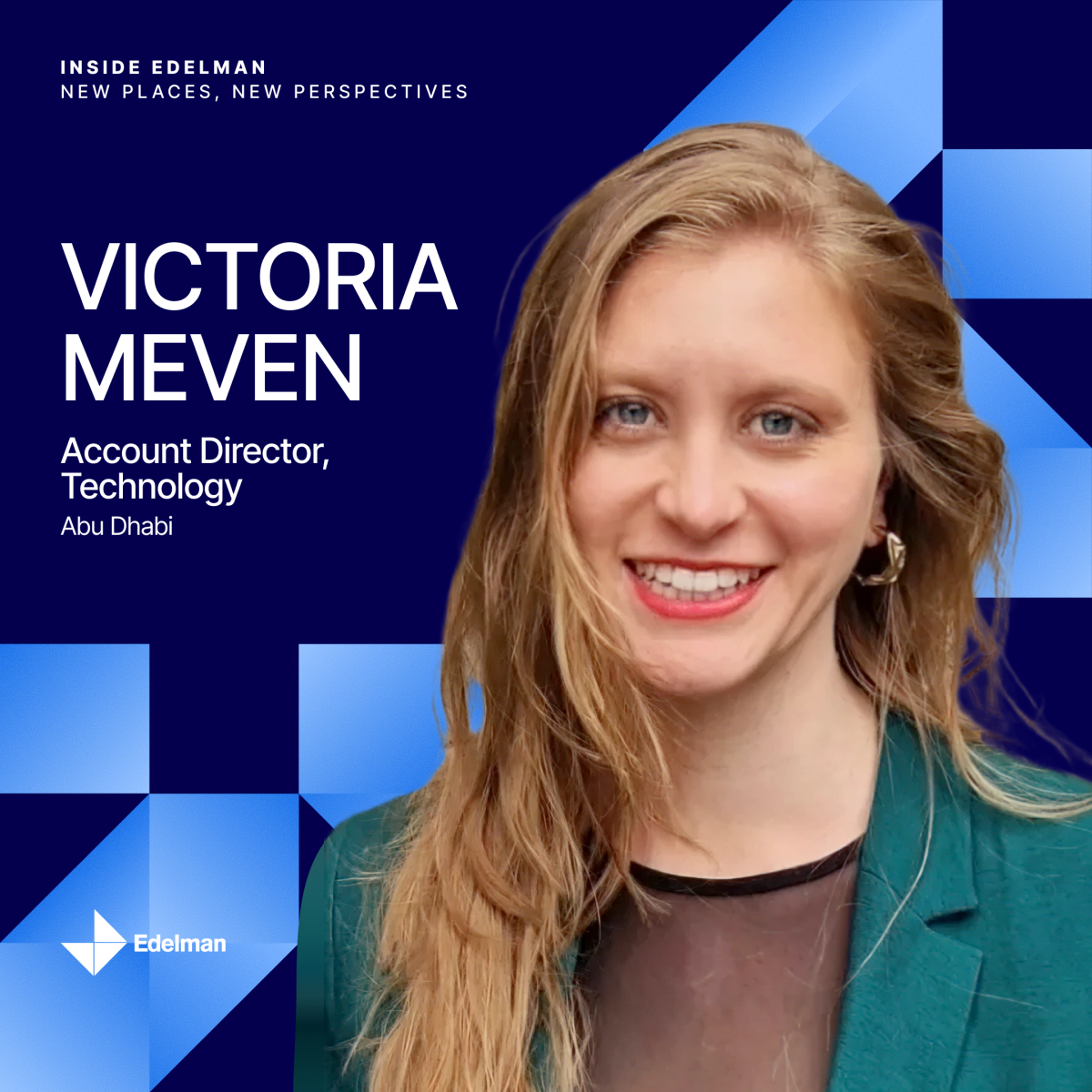

 

Victoria Meven’s journey with Edelman has been anything but ordinary. Starting out as a trainee in Munich back in 2017, she quickly discovered a love for working across markets and connecting with colleagues around the world. Fast forward to today, and Victoria is based in the UAE, embracing life and work in a completely new cultural setting. In this interview, she shares what inspired her move, the lessons she’s learned along the way, and the experiences that have made this chapter so rewarding.


Tell us about your Edelman journey

I joined Edelman in June 2017 as a trainee in the Munich office, working across a mix of brand, corporate and tech clients. Over the following year, , I spent time in both Munich and Berlin and had the chance to work with teams across multiple markets, which quickly became one of the most fulfilling parts of the job. I also spent a month in the London office, which I really enjoyed because it allowed me to work more closely with colleagues I’d only collaborated with remotely before.

After almost seven years in Germany, an opportunity came up to support the tech team in the Middle East. I had always hoped to experience Edelman beyond my home market, so even though the move felt daunting, it also felt like the right step. I’ve now been in the UAE for just over a year.

What has been one of the most memorable or meaningful experiences you’ve had since relocating?

One thing I’ve really valued since relocating is working with such an international team. People here come from all over the world , and that naturally brings a range of perspectives into our day-to-day work. It shapes how we think, how we tackle challenges and how we learn from each other. Being part of that environment has been a real highlight of my time here.

How has working in a new cultural environment influenced the way you collaborate or communicate at work?

Working in a new cultural environment comes with its own way of doing things, and getting used to that has definitely influenced how I work. The pace, the expectations and the style of communication can differ from what I was familiar with, so I’ve had to be more conscious about how I communicate andset expectations. It’s made me more flexible in my approach and more intentional in how I collaborate day to day.

What aspect of your host country’s culture have you particularly enjoyed or connected with?

Something I’ve really appreciated since moving here is how many different cultures live side by side. You feel it everywhere – in the workplace, in conversations and in the smallest everyday interactions. There’s such a variety of perspectives and experiences around you, and I’ve enjoyed being part of an environment that brings all of that together.

Can you share an example of a project or responsibility in your host office that helped you grow professionally?

A standout experience for me was a secondment to one of my longest-standing clients. I’ve worked with the brand since my early days at Edelman, so I knew it well, but supporting the comms team directly gave me a completely new perspective. It felt a bit like switching sides for a moment - seeing how decisions are made internally, helping plan and deliver major events and working with teams across different markets. It stretched me in all the right ways and definitely helped me grow professionally.

What positive impact has this move had on your life overall — personally or professionally?

Looking back over the past year, a few things stand out immediately. I’ve met people who’ve become genuinely important to me and made friends that will stay with me long after this chapter.

Being based in such a well-connected part of the world has fueled my love of travel. It’s allowed me to explore places I hadn’t been to before, and many of my favourite moments from this year came from those trips.

Professionally, stepping into a new environment has pushed me to grow in ways I wouldn’t have experienced otherwise. It’s also made me a lot more resilient, both in how I work and how I navigate day-to-day life.

Victoria Meven is an Account Director on the Technology team based in Abu Dhabi.


Tech Analyst Benedict Evans on How AI Is Reshaping Work, Trust, and Daily Life

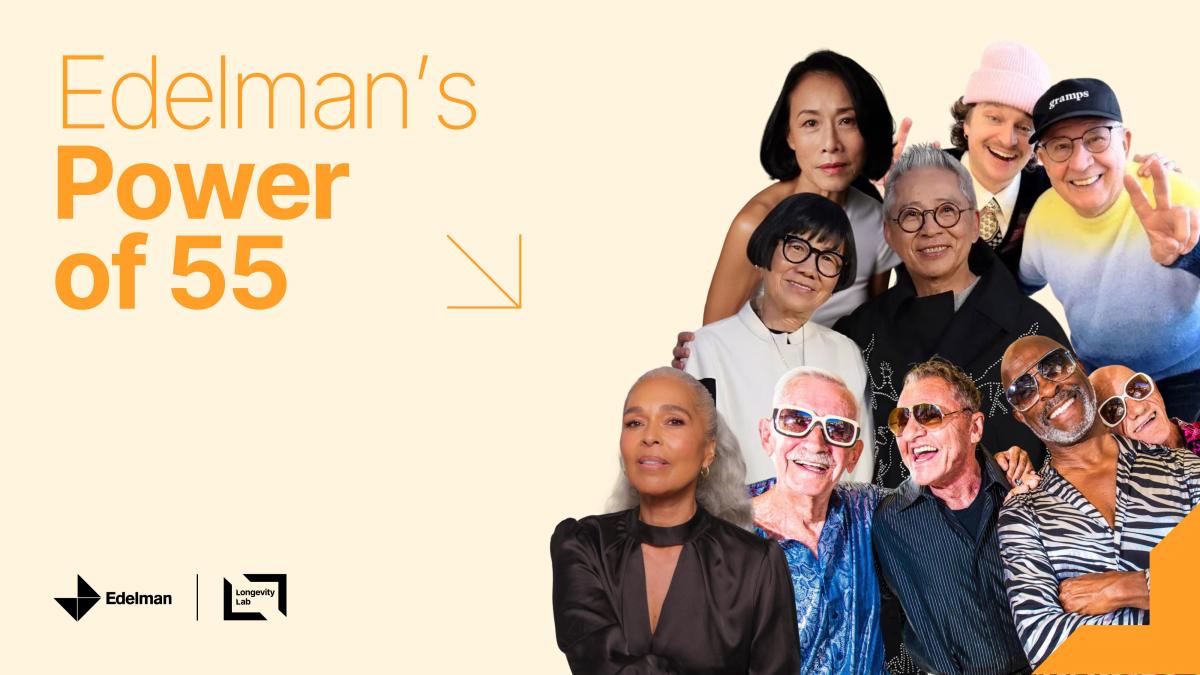
LONDON, UK (November 19, 2025) — Edelman’s Longevity Lab today announces the launch of The Power of 55, a dynamic, ever-evolving list of Creators over the age of 55, who are changing the face of influence and delivering measurable brand value in the process.

This launch comes at a critical moment for marketers. Consumers aged 55+ now control over half of global spending and are projected to spend $15 trillion annually by 2030. Yet, less than 10% of marketing budgets are allocated to this audience. Key to accessing these dollars is unlocking this generation’s social influence. The Power of 55 was developed to help brands quickly and credibly tap into this commercial blind spot with creators who are trusted, brand-safe, and ready to activate.

“Marketers aren’t just underestimating this audience, they’re overlooking them entirely,” says Jackie Cooper, Edelman’s Global Chief Brand Officer and co-founder of the Edelman Longevity Lab. “The Longevity Generation, of which I’m a part, is digital, discerning, and in the prime of their spending power. The more we explore this space, the more surprise we uncover. There is far more economic and cultural influence here than most brands realize. With Edelman’s Power of 55 list, we’re giving brands an easy on-ramp into this audience and its broader halo effect.”

Cooper adds: “At the heart of Edelman's Creator offering is insight, knowledge, protection and trust. ‘The Power of 55’ asks brands a critical question: what is your plan for the runway of longevity – for your brand and for the lives of the people you serve?”

Spanning 12+ markets and multiple sectors, Edelman’s Power of 55 Creators were selected for their credibility, cultural resonance, and performance across platforms. From Crazy Auntie Ann in the UK to Jennifer Valentyne in Canada, Jannik Diefenbach in Germany, Makrye Park in South Korea, Olajumoke Adenowo in Nigeria, and Granny Gunsin the U.S., the list highlights Creators across wellness, finance, fashion, health, food, travel, and lifestyle.

Each Creator on the list was vetted through Edelman’s proprietary Trusted Creator Score, a methodology that blends AI-powered analysis with expert human review to assess content quality, platform behaviour, audience alignment, and brand safety. The result: a low-risk, high-impact pipeline of Creators with credibility, category authority, and proven influence in sectors like health, finance, wellness, and lifestyle.

“These aren’t just Creators - they’re trusted advisors, subject-matter experts, and cultural contributors,” says Sara Rezaee, Head of Creator Marketing, North America at Edelman. “They speak with lived experience and authenticity, and they consistently outperform younger Creators in engagement, especially with the 55+ audience brands have been overlooking.”

The Power of 55 is part of a broader expansion of Edelman’s Longevity Lab, an offering built to help brands future-proof their strategies through trusted engagement with the 55+ audience. As with Edelman’s Gen Z Lab, the Longevity Lab combines human insight, Creator marketing expertise, and cultural intelligence to help brands move from generational insight to action.

“This isn’t about visibility, it’s about value, especially in our current economy,” says Jackie Cooper. “Brands that partner with Power of 55 Creators won’t just reach a high-spend audience, they’ll earn trust, build relevance, and drive real commercial outcomes.”

For more information or to access Edelman’s Power of 55, visit edelman.com or contact.

###

About the Methodology
Creators for Edelman’s Power of 55 list were first sourced analysing their strengths in content creation, engagement, reach, topical authority and relevance. They are then evaluated and scored using Edelman’s Trusted Creator Score – a proprietary vetting matrix that blends human expertise and AI to assess brand safety across key factors such as public track record, disclosure and conduct around politics or sensitive topics, use of profanity or other high-risk content, affiliations, and compliance with local advertising standards and regulations. Every Creator on the list has been deemed brand-safe per Edelman’s rigorous vetting standards. The process is anchored in a detailed profile of the ideal 55+ influencer, emphasizing relevance, trustworthiness, cultural and community connection, and audience impact across global markets. This meticulous process ensures that selected creators reinforce Edelman’s commitment to credibility and trust, while prioritizing diversity, global reach, and measurable brand impact.

About Edelman’s Longevity Lab
Launched in 2024, the Longevity Lab is Edelman’s global offering focused on unlocking commercial and cultural opportunity through the 55+ audience—also known as The Longevity Generation. Powered by insights, trust data, and global creator strategy, the Lab helps brands engage this demographic with intention, credibility, and results.

Longevity Lab

Your source for understanding and engaging the influential 55+ demographic. This generation is redefining aging and holds substantial economic power, making them a critical audience for brands.

Find out more

The development and deployment of AI across industries has been one of the year’s defining stories, marked by soaring market valuations, rapid data-center buildouts and nonstop corporate experimentation. But there is a soft underbelly of the AI Boom, a deep sense of unease about the employment effects of the technology and a lack of understanding of the benefits to the average consumer. The 2025 Edelman Trust Barometer Flash Poll: Trust and Artificial Intelligence at a Crossroads, conducted across five nations (Brazil, China, Germany, UK, U.S.) and released today shows that trust in AI is at an inflection point. In fact, in the three developed markets surveyed, acceptance of AI is linked to trust, an average of 100-point swing in attitude from those who distrust and reject to those who trust and embrace the technology.

There are four significant trust divides for AI: Geography; Industry; Income; and Age.

  • Developing markets such as Brazil and China are much more enthusiastic about AI than respondents in Germany, the UK, and U.S. Three times as many Americans reject the growing use of AI (49 percent) as embrace it (17 percent) while the Chinese are the mirror image, with almost five and a half times as many embracing AI (54 percent) as rejecting the technology (10 percent).
  • Our Industry findings were surprising, with Technology (3.5 to 1) and Financial Services (1.5 to 1) employees embracing AI at work, those in Retail, Manufacturing and Healthcare ambivalent, while those in Education (1.5 to 1)Food (1.5 to 1)and Transportation reject it (2 to 1).
  • There is a large Mass-Class Divide on AI in the Developed Markets, with 71 percent of the UK and 65 percent of the American bottom income quartile feeling they will be left behind rather than realize any advantages from gen AI. Importantly half of the Middle- and nearly half of the High-Income American respondents also believe they will be left behind without realizing net gains from AI.
  • Unsurprisingly, the youngest cohort is most supportive of AI; in the UK there is a forty-one-point difference between the 18-34 and the 55+ generations (59 percent trust in AI vs. 18 percent), though in the U.S. only 40 percent of the young generation trust AI, perhaps because of the slow market for entry level jobs.

How to Bridge The Divides?

The most powerful driver of AI enthusiasm is information. There is real benefit in personal experience; when Gen AI helps me understand complex ideas, there is a near 40-point rise in trust in most markets, with near 50-point rise in the UK. Gen AI also gets credit for getting things done faster and enhancing creative skills. Among the AI resistant respondents, we find that there is scant evidence of very negative personal experiences (under 20 percent). Those who avoid the technology do so because of data concerns, not because they’re intimidated. We have uncovered a powerful data point around truth and transparency; in the developed nations, two-thirds of respondents or more believe that Business leaders potentially won’t be fully honest with employees on the impact of AI on jobs.

Who Should Take the Lead on Building Trust in AI?

It must be My Employer, respondents are on average1.5 times more likely to feel comfortable with their employer using AI than Business in general and twice as likely than Government. Employees are 2.5 times more motivated to embrace AI if they feel their job security is increasing, not the threat of Job Insecurity (50 percent vs. 21 percent). Employees also want to feel that their embrace of AI is voluntary, not mandatory; in the UK and U.S., 2 in 3 AI distrusters feel it’s being forced upon them. There is a Mass-Class Divide in the workplace, with only one in four non-managers regularly using AI, versus nearly two-thirds of the people managers. The winning formula for trust is employees finding that AI is helping them find solutions at work, doubling their trust in the underlying technology in some markets. Employers need to use peer-to-peer communications on AI instead of top-down missives, with “someone like me” on average two times more trusted than a CEO or government leader to tell the truth about AI. It is also a workplace priority to get a high-quality training program for effective AI use; this is supported across all political affiliations as well.

A lingering fear in developed economies is slowing AI adoption. This is driven by job losses tied to globalization and eroded trust in leaders and experts after COVID-19 and rampant disinformation. Yet there is a strong countersignal. Respondents say they would be comfortable using agentic AI for finances, healthcare, major purchases, and job searches by an average of 5.5-to-1 margin if they trust the technology.

AI is transforming daily life at unprecedented speed, making it essential for companies to build the conditions for its acceptance. The talk track for CEOs of AI companies should embrace the simplicity of Franklin Delano Roosevelt’s Four Freedoms, which he articulated in the wake of the Great Depression. Freedom of Speech and Expression. Freedom of Worship. Freedom from Want. Freedom from Fear. Trust will drive growth of AI but is conditional on Actions earning Trust, from training to job transformation. The technology industry and anyone seeking to leverage AI needs to take this special report seriously because there is no divine right of acceptance of innovation.

Richard Edelman is CEO.


This article originally appeared on Fortune.com


Familiarity breeds contempt,” the saying goes, except when it comes to artificial intelligence.

According to the Fall 2025 Edelman Trust Barometer Flash Poll: Trust and Artificial Intelligence at a Crossroads, hands-on experience is the fastest route to trust. The more people use AI, the more they trust it, and the more they trust it, the faster they embrace it.

Across five major markets surveyed—Brazil, China, Germany, the UK, and the United States—trust has emerged as one of the most powerful forces determining whether AI adoption accelerates or stalls. In the poll, trust in AI ranged from 87 percent in China and 67 percent in Brazil to just 39 percent in Germany, 36 percent in the UK, and 32 percent in the United States.

Beneath these national divides, one pattern stands out everywhere. Positive personal experience transforms perception. Among respondents who said AI had improved their understanding of complex ideas, majority in Brazil, Germany, UK, and the U.S. expressed trust in AI technology.

Trust Sets the Pace of Innovation

For the past several years, the industry has focused on persuading people to accept AI through ethical frameworks or assurances of safety. This remains important, but the new evidence suggests it’s not enough. The data show that trust in AI increased the likelihood of enthusiastic adoption by about 16 percent, making it one of the two strongest predictors, just behind how informed people feel about AI.

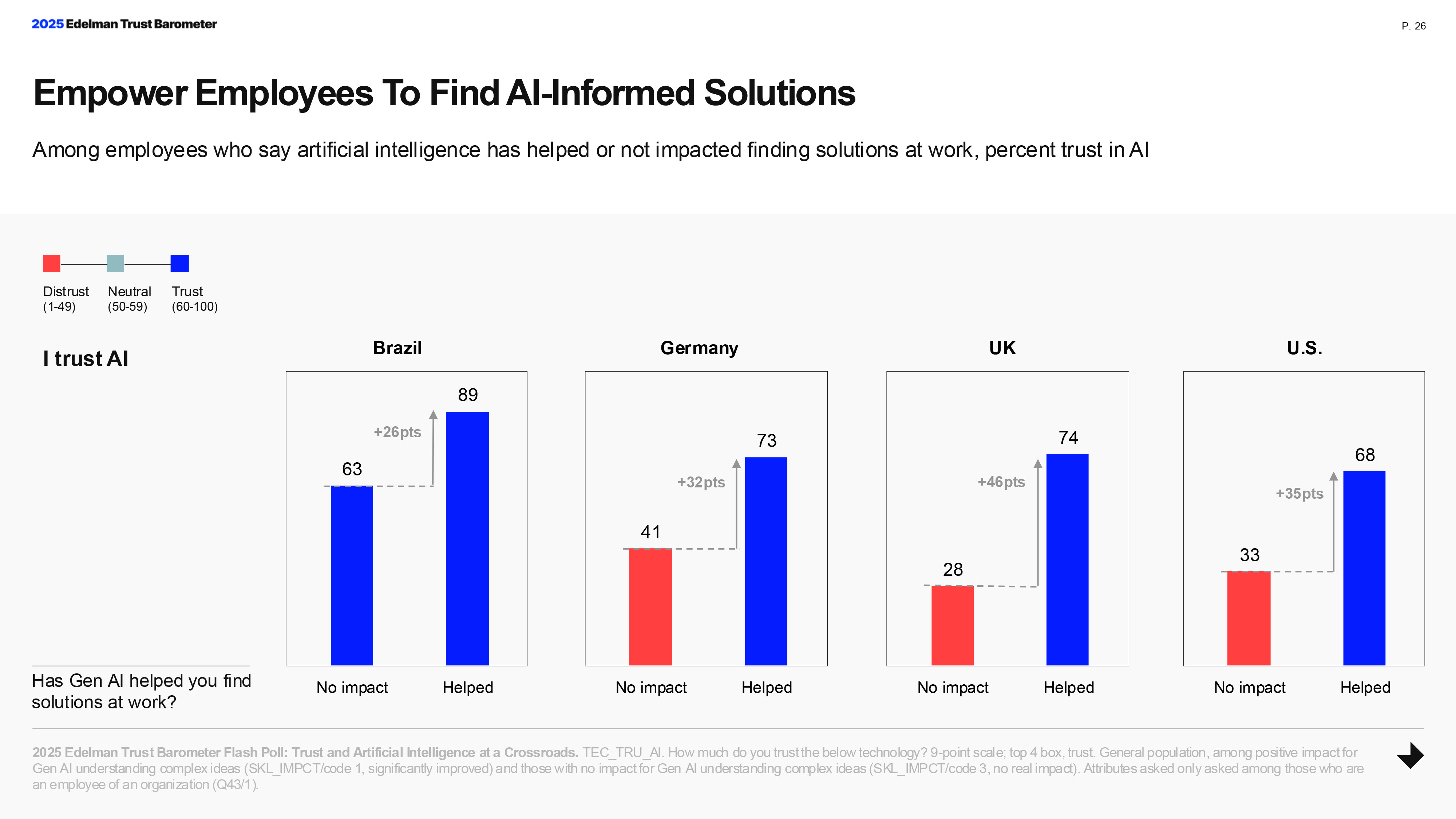
And trust grows from experience. When people personally benefit from AI, when it helps them work faster, understand complex ideas, or solve real problems, their confidence rises sharply. Across four of the five markets surveyed, employees who said AI had helped them find solutions at work were far more likely to express trust in it than those who said it had made no impact – and the gap ranged from 26 to 46 percentage points.

Flash Poll Trust and Artificial Intelligence at a Crossroads

That link between confidence and adoption suggests that the path forward for business and government is not simply to innovate faster, but to earn trust faster.

For companies developing or deploying AI, this insight has immediate implications. Building trust requires more than public commitments to transparency and responsible design. It requires giving people meaningful ways to interact with AI technology and see its value firsthand. Training programs, pilot projects, and open demonstrations can build this credibility.

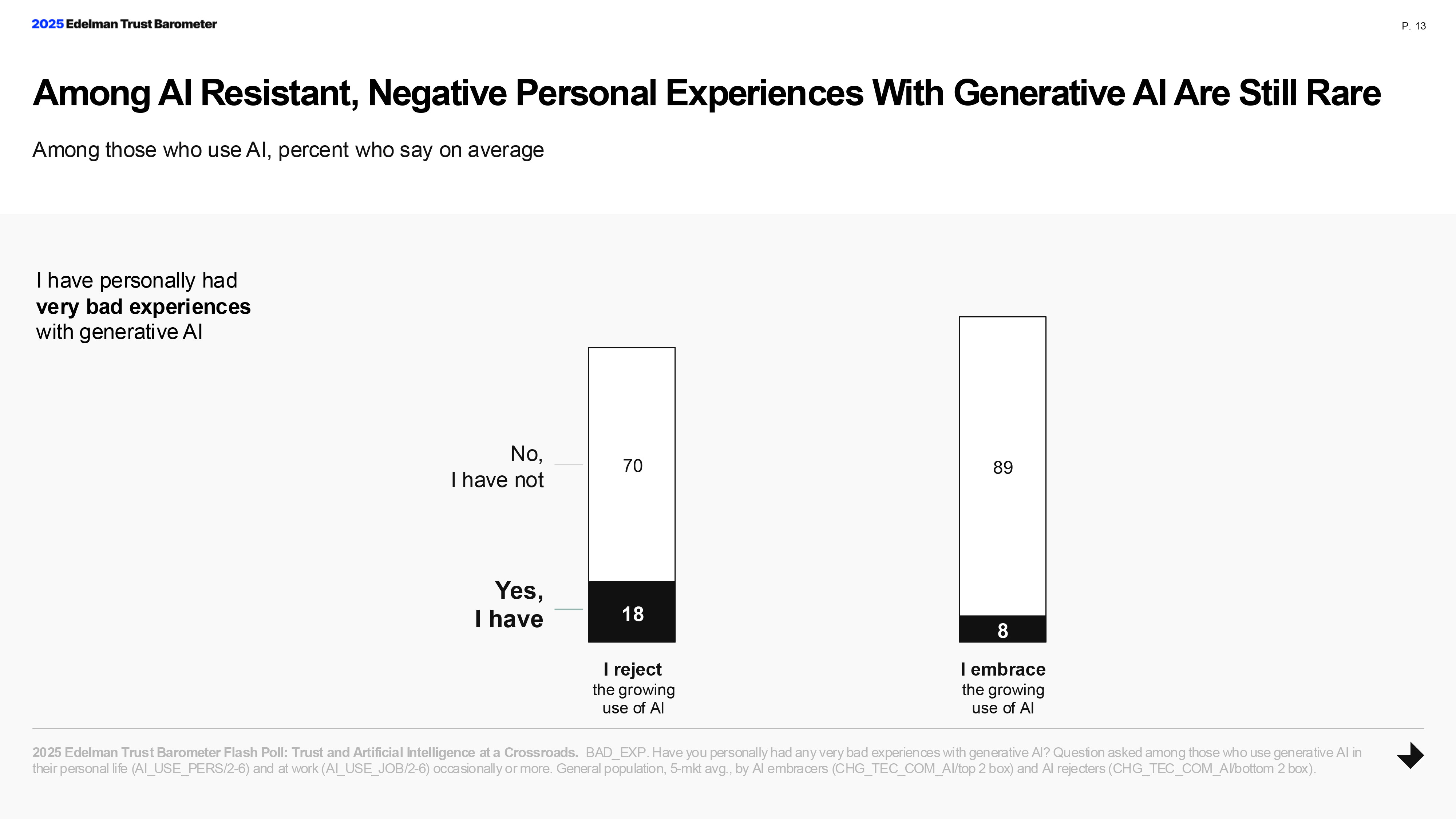
At the same time, the data show that fear of AI is often rooted more in perception than experience. Even among those who reject AI, only 18 percent report having a bad experience. This suggests that distrust is largely anticipatory or imagined. Bridging that gap between perception and lived experience may be the single biggest opportunity for business and government to build confidence in AI technology.

Flash Poll Trust and Artificial Intelligence at a Crossroads

Two Worlds of AI Adoption

The poll reveals a stark divide in how societies are approaching AI. Brazil and China stand apart as high-trust environments where optimism is fueling widespread adoption. In both countries, more than two-thirds of respondents say they trust AI, and majorities report feeling confident that generative technologies will improve their mental health and work lives. By contrast, in Germany, the UK, and the United States, trust levels are near or below forty percent, and skepticism remains the dominant sentiment.

For businesses and policymakers, this divergence presents a double challenge. In high-trust markets, the task is to sustain optimism through responsible deployment and straightforward evidence of benefit. In low-trust markets, the task is to rebuild confidence in the institutions behind the technology. Without that foundation, even the most advanced systems will struggle to gain acceptance. In this environment, the role of business becomes pivotal.

Business Has the License to Lead

Understanding where trust resides is equally important. One finding from the poll stands out: people place greater confidence in business than in government to use AI responsibly. Across the five markets, only 34 percent of respondents on average said they were comfortable with government’s use of AI, 46 percent said the same about business overall, and 56 percent of employees are comfortable with their own employer.

This pattern mirrors a broader trend seen in the Trust Barometer over the past several years. According to the 2025 Edelman Trust Barometer, business is now the only institution viewed as both competent and increasingly ethical, while other institutions continue to lag on credibility. In the context of AI, that trust creates both opportunity and obligation. Companies that deploy AI in their operations are expected to lead with transparency, explain how AI affects jobs, and invest in retraining to help employees adapt.

If trust determines the pace of adoption, then business determines the direction. By demonstrating openness, accountability, and a commitment to shared benefit, companies can turn cautious interest into confident engagement and show that responsible use of AI can advance both innovation and inclusion.

The challenge for leaders is no longer just to innovate faster, but to earn trust faster, because in the years ahead, trust will decide not only who adopts AI, but who benefits most from it.

Gary Grossman is Executive Vice President of Corporate Technology US at Edelman and has published extensively on AI issues and trends.


Flash Poll: Trust and Artificial Intelligence at a Crossroads

Our latest study reveals what fuels enthusiasm for adopting artificial intelligence - and the critical role trust plays in that journey.

Find out more

From São Paulo to Toronto and back again — Michael’s journey is one of growth, discovery, and connection. Now back home in Brazil, he reflects on what he learned from his time in Canada — from embracing new challenges and cultures to discovering just how connected our global teams really are.


Tell us about your Edelman journey

My journey at Edelman began in October 2019, when I joined the People team in our São Paulo office. From day one, I had the opportunity to collaborate with colleagues across different teams and practices, both in Brazil and around the world.

After taking on multiple roles and spending nearly five years in Brazil, an opportunity came up in Canada — a move that felt like the next big step. Getting to know a new market, culture, and country was an opportunity I couldn’t turn down.

Moving to Toronto became one of the most exciting chapters of my career. I learned so much, met incredibly talented people, and gained experiences I’ll always treasure.

Eventually, home called. The chance to return to one of my favorite areas — Talent Acquisition — and help shape the future of Edelman’s recruiting capabilities in Latin America felt like another milestone I couldn’t pass up. Six years in, I’m still learning, growing, and collaborating with inspiring colleagues every day.

What is something you’ve discovered about yourself during your time abroad?

I’ve learned that I’m capable of handling big challenges. Moving abroad is exciting, but it can also be daunting — there’s so much to navigate and a lot of responsibility that comes with it. I realized that the less time you spend worrying about what might happen, and the more you focus on tackling things as they come, the easier it all gets.

How has the experience of working in a new market expanded your understanding of Edelman’s global work or approach?

It showed me that no matter where you are — regardless of culture, background, or geography — Edelman teams share the same curiosity, creativity, and collaborative spirit. I also discovered that amazing stories and talented people are everywhere, not just in the office where I started. That realization made me even prouder to be part of a company filled with so much passion and talent. That’s what truly makes Edelman, Edelman.

Is there a favorite local custom, place, or routine that became meaningful to you in your host country?

When I lived in Toronto, I fell in love with the city — its food, sports, and culture. My wife and I developed a favorite routine of walking to a cozy spot in Koreatown called Yummy, where we’d enjoy incredible Korean dishes and a warm neighborhood vibe.

Now that I’m back in São Paulo — my hometown and another city rich in food and culture — I often head to Zur Alten Mühle, a German pub filled with vintage football jerseys from the 70s to 90s. It’s where I go to unwind, enjoy great food, and reconnect with the same sense of community I loved abroad.

What new skills, perspectives, or ways of working have you gained from your host team?

I’ve learned that real talent doesn’t come from a specific degree or background — it’s about the unique perspectives people bring to their work. Collaborating with such a diverse, talented team strengthened me both personally and professionally. One of the biggest lessons I took away was the true meaning of team spirit — knowing that no matter what, there’s always someone ready to support you.

What’s one highlight or proud moment from your time abroad that you’ll carry forward in your career?

That’s a tough one because there were so many! At Edelman Canada, I helped organize and host events, worked on exciting new projects, met talented colleagues from around the world, and even played in a beach volleyball tournament.

But if I had to pick one moment, it would be realizing that people could truly count on me — that no matter where I was in the Edelman network, I could show up, deliver my best, and support my team.

Now, back in Brazil as Regional Talent Acquisition Lead for LatAm, I see that experience as the foundation for my next big adventure — the biggest challenge of my career so far, and definitely the most exciting.

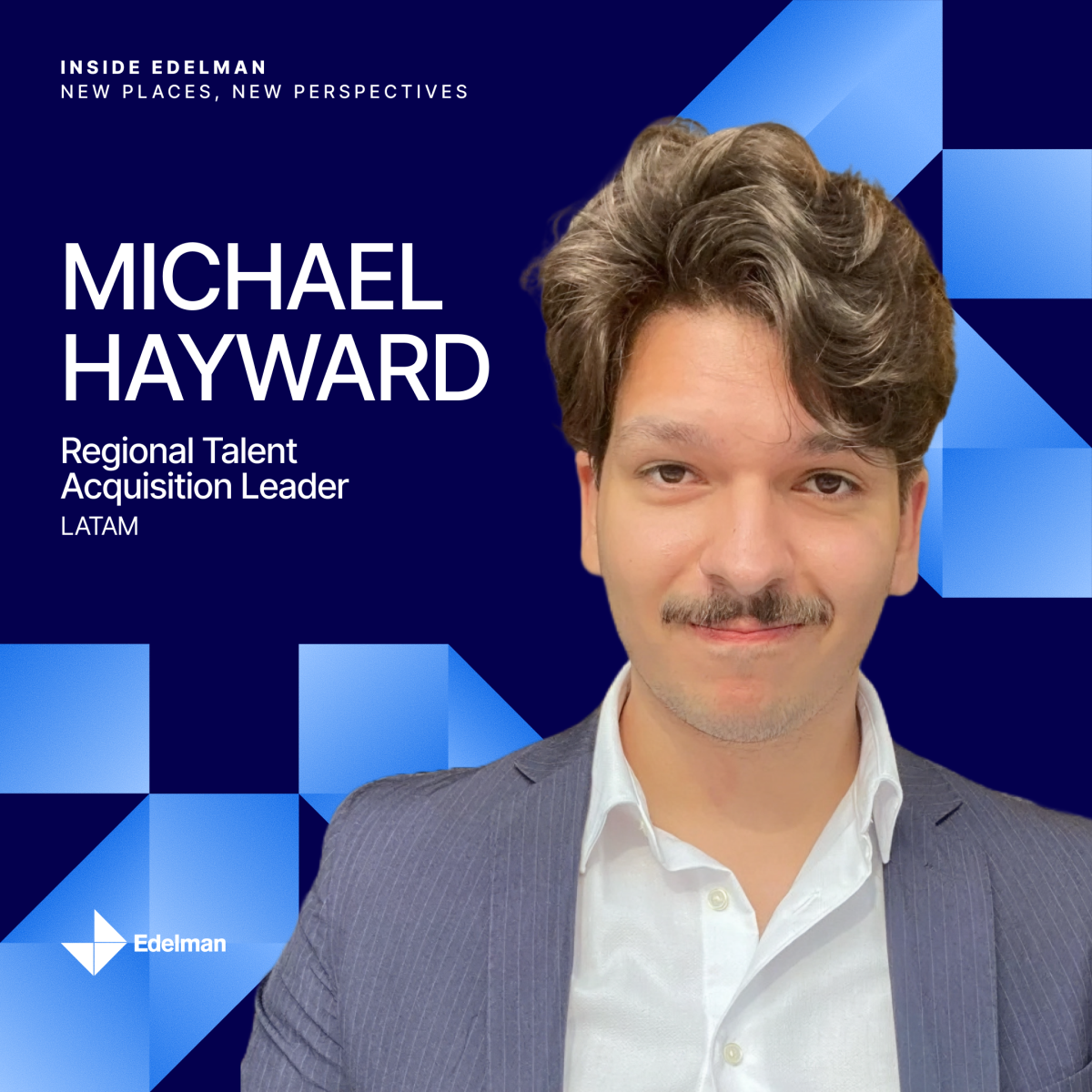
Michael Hayward is a Regional Talent Acquisition Leader based in the São Paulo office.


There was real energy and dynamism at The Drum’s 2025 B2B WorldFest this month, as marketers convened to shape the future of the industry. One theme resonated across many of the panel discussions and conversations: trust is the new currency of B2B marketing.  

The myth that customers follow a linear purchasing journey has long been disproved. However, the context in which businesses operate has been further complicated by increasing business caution and disruption (particularly within large buying groups), generational shifts, and the role of AI in reshaping expectations of content and how brands are discovered.

This complexity has illustrated that marketers need to earn the right to the time of busy business decision-makers. To cut through the noise, communicating with trust and authenticity is more important than ever — two elements high on attendees’ agendas. 

We were delighted to speak to this need in a special Edelman panel on how B2B brands earn and sustain trust, leverage reputation, and ultimately turn brand strength into commercial advantage. I was joined on stage by Paola Garbini (Head of European Marketing, Oliver Wyman), Mike Argile (EMEA Senior Marketing Lead: Copilot & Agents, Microsoft), and Kate Stanners (International Chief Creative Officer, Edelman) for the discussion, which you can watch via The Drum here.

The theme of trust and authenticity continued throughout the day’s conversations; here are my takeaways from the action-packed event reflecting this trend: 

Trust is the biggest competitive advantage for businesses 
When it is challenging to reach a consensus across large buying committees, to convince the CEO and CFO to sign off on large contracts, and to grow existing customers, trust is a powerful factor in getting a company shortlisted to tender — accelerating decisions and closing deals. While it may seem intangible, trust can be quantified, benchmarked, and used as a commercial metric. 

Authenticity builds connection in a sceptical age 
Bloomberg’s Mishal Husain reminded marketers that “authenticity starts with noticing the small details.” In B2B, this means sharing genuine stories of people, problems, and progress without being overly polished. Long-form, honest storytelling still matters, especially as decision-makers crave depth over noise.  Brands that showcase vulnerability and purpose will earn credibility, not just clicks — beautifully illustrated when Paola Garbini talked about Oliver Wyman’s ‘Behind the Breakthrough’ series, where the firm’s C-suite clients speak openly about overcoming transformation in their business and the defining moments in their professional growth. 

We need to drive action as well as thinking
Thought leadership is a widely used term, but one of the best ways for business brands to build trust, authenticity, and evidence is to go beyond theory and drive tangible action through their campaigns. Mike Argile pointed to actions like Microsoft investing $30 billion in the UK AI sector to demonstrate the company's vision and ambition. DP World’s ‘Move to -15’ campaign was another example of a business convening its wider industry to bring about major reductions in energy and emissions from the shipping of frozen food. 

Gen Z buyers demand transparency, not targeting 
Meta’s Andrea Gellert described younger, digital-native buyers as “allergic to the sales funnel” and the notion of a sales meeting. They expect to research, decide, and engage on their own terms, using LLMs, online research, peer-led communities, and seeking views of ‘people like them.’ B2B brands must meet them where they already are and consider how much and where they share information — a key theme identified in our Gen Z Lab’s recent ‘The Great Gen Z Divide’ Report.

Communities are the new marketing channels 
A panel with Trustpilot and Open Banking marketers reinforced that the most trusted voices aren’t brands, but peers. “Community is the new persona,” said Open Banking’s Mel Lazarus. Building spaces for advocates to connect, share, and influence each other delivers more credibility than any ad campaign.

Brand and demand are roommates, not rivals 
Sage’s Harry Davies and EY’s John Rudaizky both challenged the outdated divide between brand and demand. Davies noted that “when we pause brand investment, our cost per sale rises — and we can prove it.” Rudaizky also emphasised that emotion is a force multiplier in B2B, which earns attention, builds credibility, and proves that creativity and commercial outcomes are inseparable.

Creativity fuels trust and differentiation 
My colleague, Kate Stanners (Edelman’s International Chief Creative Officer), urged marketers to rediscover imagination, sharing an example of a construction equipment manufacturer which refitted its bulldozers to clear mines in conflict zones and used animations of its engineers to tell the story. Microsoft’s Mike Argile was inspired by Lego-creating experiences, which encourage play in business as a process of unlocking new ideas and strengthening teams. 

Partnerships outperform sponsorships 
Tata Consulting Services and Iron Mountain showcased how long-term sports partnerships, built on shared innovation and purpose, create sustainable brand value. Brand Finance revealed fascinating data demonstrating that a high proportion of senior business leaders identify with long-distance running — informing a marketing programme centred on marathons, which boosted brand recall, authenticity, and storytelling for a services brand. 

AI is an enabler, not the storyteller 
While AI can amplify reach and efficiency, as well as act as a brilliant sparring partner, real-world cultural nuances, unexpected connections, authentic imperfections, humour, and human judgment are what will enable business brands to stand out and build trust. 

ABM x Brand Orchestration 
Account-Based Marketing (ABM) and Brand should not function as separate silos, but as unified, orchestrated tactics across the entire buyer journey. My colleague, Suraya Adnan, highlighted this as the smart strategy with all channels and tactics unified towards a single objective, driving pipeline today and in the future. 

In short, if the buyer journey is disrupted, we’re overwhelmed by content. At a time when audiences are increasingly sceptical and self-selecting in how they engage, earning trust is what builds relationships, closes deals, and drives growth. 

Andrew Mildren is Managing Director, Business Marketing for Edelman EMEA

Subscribe to 2025