GEOsight

Edelman’s GEOsight ensures your brand shows up accurately, authoritatively, and ahead of the competition when it matters most.

Find out more

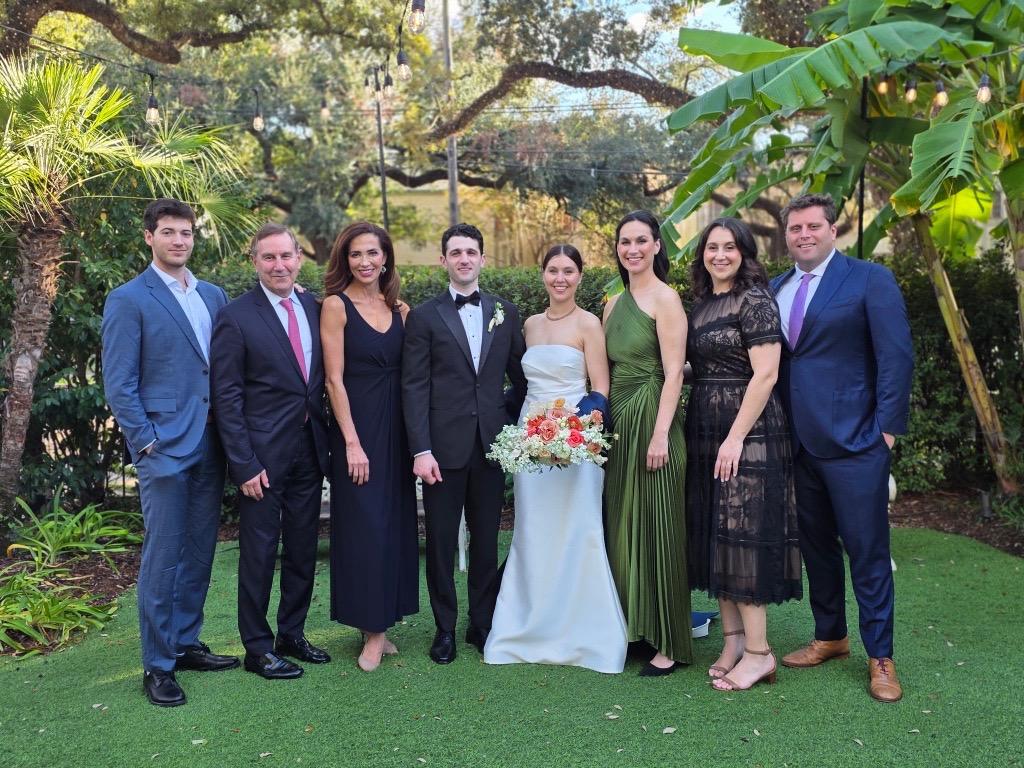
My first order of business tonight is to welcome Marcel to the family. You are a true son of New Orleans; you remember Hurricane Katrina and follow your beloved LSU Tigers. Your commitment to Judaism in its broadest construct, through Tzedakah, is deeply moving. It has been a joy getting to know you, from our many conversations to that huge wave you sent my way on your jet ski in Sarasota; the boy needed to show who was really the boss. Your parents, Bobby and Robin are justifiably proud of their son. Most importantly, you cherish Amanda as a partner and a best friend.

Now onto the main subject of my talk; Amanda. Everyone in our house had a nickname; Margot was Boo Boo, Tory was the Nipper. Amanda was Lambie. She had big cheeks, a winning smile, and the stealthy approach of the youngest who got her way through charm and negotiation. Here is your official Fort Collins Lambie t-shirt.

Margot was the inspiration, setting a high bar for achievement in the classroom. Tory and Amanda shared a bunk bed. She was Tory’s right hand accomplice; the inseparable Bear Cubs (note that I used my two favorite Chicago teams). Amanda had a special trick for the swing in Riverside Park; when I pushed her, she came back and tried to kick me. Bath time always turned into an epic dinosaur battle, with Amanda’s Triceratops defeating my Velociraptor. She even beat me at a crawling race in Mount Fuji restaurant when she was four years old, prompting the owner to post a sign, “Control your children, no crawling allowed.” Marcel, you have married a force of nature. Amanda, here is your Triceratops, Marcel you get the Raptor.

Amanda was shaped by her experience in basketball. Her journey began at the gym in the Frederick Douglass Center in Harlem. She played every Saturday and Sunday. She learned how to get along and how to contribute where she could. She improved her game. And through relentless training and hard work she went on to become the second highest scorer in Trinity School history with over 1,000 points in her high school career. This journey was the basis of her application to Stanford; her legendary day on the West Fourth Street Court of can’t miss three-point shooting when passersby cheered her on; “Man, that girl can shoot.” Marcel, you were clever to reserve a hoops court in London for your official wedding proposal, the perfect spot for the union of two-point guards.

Amanda has an innate sense of politics. She understands that you get ahead by listening even more than talking; that persuasion is better than authority. What other undergraduate campaigned for Class President by zooming around Stanford on a skateboard festooned with a large Abe Lincoln image. Here’s your new skateboard to win votes if you ever run in Chicago.

She made it clear four years ago when she joined Edelman that she required a new nickname. We agreed on Lioness. You are the Natural at Edelman as you have been in all the other stages of your life, from running the Gen Z lab to overseeing the Chicago office. Grandpa Dan and Grandma Ruth are smiling down on you today. Here is your official Nala the Lioness shirt; you earned it.

Amanda, your first Shakespeare play at Trinity was Romeo and Juliet. This line from Juliet is so fitting for today; “My love is deep; the more I give to thee, the more I have, both are infinite.” Remember this line always; marriage is about giving and comforting and being each other’s best friend. Keep laughing and having new adventures. Do things together always. And Marcel, keep standing up for my daughter just like you did on the Harvard Business School basketball court when she took that hard foul.

I speak for the entire Edelman family wishing you all of life’s joys, patience with your partner, and commitment to a full life, of business achievement, culture, sports and social progress. Amanda and Marcel, I am looking forward to all that life will bring you. You are a magical couple, with mutual respect, great work ethic and zest for life. I love you both beyond words.

Richard Edelman is CEO.
 

Edelman Sport: Pushed to the Limit

Commercial success in modern sport is no longer measured by performance alone, and not everyone agrees on what success looks like.

Find out more

Today’s culture is increasingly fragmented, fleeting, and fast-moving.

Trends emerge and scatter in moments, surfacing across a fragmented media landscape where the average person is active on seven social platforms. Social media is also accelerating the news cycle, overtaking TV and online news as the number one source of news for U.S. consumers for the first time, according to Reuters.

At the same time, artificial intelligence is reshaping how content is created, spread and consumed. This has raised the stakes for communicators: we’re not just competing with brands, but with AI-generated noise and misinformation at industrial scale.

In this landscape, trust must be earned every day. To protect and promote your brand in a fast-paced, volatile world brands and corporations must constantly refresh the message, tailor it to every stakeholder and break through the noise with strategies that resonate with audiences in the moment.

The Need for Always-on Audience Intelligence

Today, cultural context shifts daily. Teams need a real-time layer of insight in between research cycles that complements foundational research and is actionable, validated, and sensitive to nuance.

Delivering that level of intelligence at speed can be challenging and resource-intensive, particularly when audiences are polarized and fragmented. With the added pressure of getting it right the first time, the need for fast, safe, and responsible ways to anticipate audience response is essential.

Archie AI Personas: Simulate how Audiences Think, Feel, and Respond

Edelman’s new AI solution, Archie AI Personas, helps fill this critical gap through expert-built synthetic audience models trained to simulate how real audiences would respond to events and communications. These personas blend expert human understanding with AI precision to reflect how people think and feel in the real world.

Archie AI Personas are trained and validated on diverse, trusted data sources and proprietary research and psychographic analysis. We leverage these models in combination with Edelman’s deep communications expertise and ArchieAI, the first large language model trained on over twenty years of trust research and data, to inform stakeholder-centric strategies in real-time.

  • Greater speed when you need it: Accelerate the path from idea to directional guidance, keeping momentum between research cycles.
  • Personalized insights: Replicate highly niche stakeholder groups.
  • Ongoing learning: Extend the value of research between studies by continuously refreshing understanding as cultural and audience contexts rapidly shift.
  • Cost-effective: Test ideas safely before committing to spend or exposure.

The Voice of Your Stakeholders Always by your Side

Archie AI Personas complement and extend human-led research, keeping insights alive between studies and transforming existing data into a living, always-on audience model. They can be fine-tuned to imitate even the most niche groups.

  • Media audiences: Specific journalist segments such as tech reporters covering innovation and ethics, lifestyle editors focused on cultural trends, and policy journalists shaping corporate reputation.
  • Consumer audiences: Distinct groups like midscale family travelers comparing value and comfort, working parents making purchase decisions, and culture seekers choosing where to spend their time.
  • Professional groups: Key decision-makers such as IT buyers evaluating solutions, healthcare professionals interpreting new data, and investors assessing long-term brand trust.

Insight at the Speed of Culture

Through the synthesized insights we can generate with Archie AI Personas, we’re enabling Edelman clients to drive real-world relevance in the moment. From research to deployment, AI Personas can accelerate the development of higher impact campaigns and target each audience profile with greater precision and relevance.

  • Understand stakeholders in real-time: With regular analysis of audience’s perceptions & attitudes and quick-turn cultural resonance & sensitivity checks.
  • Surface unmet needs and underleveraged narratives: Co-create with AI to generate ideas, draft communications and tailor persona-specific variations.
  • Refine messaging & mitigate risk: Run quick-turn tests on copy, concepts, and campaign ideas before they go live.

Archie AI Personas joins our expanding suite of AI solutions purpose-built for communicators in today’s fast-moving cultural landscape. We pair deep earned expertise and trust thinking with pragmatic AI that fits how modern communicators work to help our clients break through at the speed of culture.

Learn more about Archie AI Personas and other Edelman AI offerings.

Nick Taylor is Vice President, Product Marketing, AI. 


I spent three days last week with Latino leaders, who gathered in New York City for the Hispanic Leadership Summit. My wife, Claudia, has organized these convenings for Hispanics working at large companies, Latino entrepreneurs, and academics through her foundation, We Are All Human. What I observe is a community bruised by the events of the last year, the presence of ICE agents in major cities, the reversal of DEI policies at corporations, and the raising of walls for immigrants. Yet one sees a steely determination to achieve the American Dream. And with Bad Bunny headlining this year’s Super Bowl halftime show, it’s clear that Latino culture is American culture.

There has been a dramatic increase in Latino awareness of their contribution to the country over the past eight years. According to the Hispanic Sentiment Study, in 2018 only 14 percent of Latinos believed they were making a big contribution; that number has risen to 77 percent in 2025. As Claudia observed in her speech last night, “The switch has been flipped. With confidence, everything is possible for the Latino community.”

The Edelman Trust Barometer’s January and July studies highlight the serious challenges facing Latinos today.

  • Two thirds of the Hispanic community have experienced financial hardship, including skipping meals, accumulated credit card debt and paying bills late. This is higher than any other ethnic group in the U.S. study.
  • Fear of discrimination among Hispanics has risen 11 points in a year to 64 percent, driven by concerns over prejudice and racism.
  • Latinos have lost their belief in the future, with only one third feeling that the next generation will be better off.
  • Trust in institutions has declined, especially in government, which now stands at 38 percent among Hispanics.

For companies and brands seeking to reach Latinos with credible information, here are three important tips:

  • Latinos trust ‘my employer’ and ‘brands I use’ much more (25 points at 72 percent) than the four traditional institutions of Business, Government, Media and NGOs.
  • Latinos trust peers and friends and family for information on brands. Customers like me, friends and family, and customer reviews far outpace the power of influencers. In fact, for health decisions, Latinos trust their MD and ‘my friends and family’ more than medical experts and much more than content creators.
  • Brands are expected to do, not just say. Latinos want brands to help them ‘do good’ (74 percent), ‘feel good’ (70 percent), ‘give me optimism’ (67 percent) and ‘educate me’ (63 percent).

The most compelling story of the week came from Dr. Juan Andrade, Jr., a revered senior member of the Latino community, who serves as President of the United States Hispanic Leadership Institute. At the beginning of his career, he served as a teacher in a small town in Texas near the border with Mexico. His classroom was filled with Latinos. He decided to teach in Spanish so that his students could make progress in math and science. Two weeks into his tenure, he was summoned by the school principal, who informed him that it was against the law in Texas to teach in Spanish. Undaunted, Dr. Andrade worked with a local legislator on a bill that would allow teachers to instruct their pupils in Spanish if that were the most effective way of getting them ahead. The bill passed the Texas Legislature.

In a speech delivered at this year’s summit, New York Times columnist Bret Stephens said, “there's also no denying that 68 million Latinos in the United States aren't going anywhere -- nowhere except up. Try to remember the words of Bill Clinton: ‘There is nothing wrong with America that cannot be cured by what is right with America.’ The Hispanic community, in its ambition, artistry, brilliance, compassion, creativity, drive, entrepreneurship, humanity, resilience, resourcefulness, responsibility, and warmth, is what's right with America.”

This is the message to Latinos: There is always a way forward. My wife frames this as possibility. The smart business will see this as opportunity.

Richard Edelman is CEO.


Jimmy Wales on How Wikipedia Earned the World's Trust

Offer focused on helping brands promote and protect their reputation in sport 

  • Formalises growing client demand for deeper sector expertise across integrated sports communications and advisory
  • Where passion meets scrutiny, the new division is dedicated to elevating and safeguarding the reputation of sports brands

29 October 2025, London:

Edelman UK has launched Edelman Sport, a dedicated sports division, in response to growing client demand and the continued expansion of its work in the sector. This evolution reflects the firm’s momentum and success across a series of high-profile campaigns and partnerships, formalising a capability that has long operated at the intersection of culture, commerce, and competition.

Edelman’s expanded focus on sports communications reflects the continued growth and transformation of the sector. Sport has become an integral part of culture, business, and public dialogue, bringing with it increased visibility, stakeholder interest, and reputational considerations.

The firm’s enhanced capability is designed to help clients promote – by earning cultural relevance through meaningful action – and protect – by building trust and resilience when it matters most. By blending a heritage in trust and corporate reputation with world-class brand strategy and integrated creative excellence, Edelman enables clients to engage in sport with confidence, clarity, and cultural impact.

Julian Payne, UK CEO, Edelman, said: “At Edelman we have long understood the delicate balance between promoting and protecting reputations and nowhere is this more in focus than the world of sport.

In recent years, the reputations of teams, sponsors and governing bodies have become subject to much greater scrutiny as audiences grow ever larger around the world. To be able to thrive in this environment you must establish a strong identity and a relationship of trust with your audiences.

We have studied what it takes to build trust for more than 25 years and we have seen that there are unique forces at play within the sporting arena which is why we have decided to create a dedicated space to serve this industry. We have an incredible array of clients already and I am excited to see where this team can go next.”

Edelman UK’s sports division is driven by a cross-practice hub that unites specialists from Corporate, Brand, Strategy, Creator, Crisis & Risk and Talent. Fraser Walters (Corporate Director), Nick Parnell (Brand Senior Director), Will Butterworth (Strategy Lead), and Loulou Dundas (Talent & Content Senior Director), will co-lead the group. This collaborative approach leverages Edelman’s UK and global network to deliver integrated communications programmes for some of the world’s leading sports organisations. 

With more than 6,000 people in over 60 offices worldwide, Edelman brings unmatched scale and depth to sports communications, offering clients local insight with global reach. From global governing bodies and grassroots charities to elite athletes, iconic teams, brand sponsors, and leading media platforms, Edelman’s deep experience across every corner of the sporting landscape offers a unique vantage point. 

The move follows the agency’s appointment by European Football Clubs (EFC) – the independent body representing over 800 professional football clubs across Europe – the latest in a string of major client wins that includes multiple motorsports teams and world-leading fitness brands. Together, these partnerships underscore Edelman’s growing reputation as a trusted advisor to the world’s most ambitious brands and organisations in sport. 

EFC selected the agency after a competitive pitch to support its pan-European communications strategy and stakeholder engagement as part of a major repositioning and rebranding exercise earlier this month. Edelman’s new sports division, in collaboration with Edelman offices in several European markets, will help articulate EFC’s increasingly influential role in shaping the future of European club football. 

Alongside these latest signings, the team has worked with some of the biggest names in sport and sponsorship including Heineken, Unilever, and Ascot Racecourse. From the relaunch of Formula 1 under Liberty Media’s ownership to the Cannes Lions Grand Prix-winning Eternal Run for ASICS, Edelman has a rich heritage in the sector, advising brands and organisations at the heart of sport’s cultural and commercial evolution. For more information, please visit the website here


About Edelman 
Edelman is a global communications firm that partners with businesses and organisations to evolve, promote and protect their brands and reputations. Our 6,000 people in more than 60 offices deliver communications strategies that give our clients the confidence to lead and act with certainty, earning the trust of their stakeholders. For more than 20 years, we have studied the influence of trust across society — government, media, business, and NGOs — to shape conversation, drive results and earn action. 

In 2024 alone, we were awarded the EMEA SABRE Award for Large Regional Consultancy of the Year, ranked 2nd across the board at Cannes Lions for Independent Network of the Year, were the first legacy PR agency to win a Titanium Lion, recognised as PRWeek's Dynasty Agency for the Past 25 Years and named an Agency Stand Out by AdAge. 

Since our founding in 1952, we have remained an independent, family-run business. Edelman owns specialty companies Edelman Data x Intelligence (research, data), Edelman Smithfield (financial communications), EGA (government and public affairs advisory), and UEG (entertainment, sports and lifestyle).

I have just read Andrew Ross Sorkin’s excellent new book, 1929: Inside the Greatest Crash in Wall Street History and How It Shattered a Nation. Sorkin tells the story of the Crash through the prism of business leaders and government officials in the fateful run-up to Black Tuesday in October 1929. The great characters include “Sunshine Charlie” Mitchell, president of National City Bank, predecessor to Citicorp, Ferdinand Pecora, the chief investigator for the U.S. Senate select committee and Jesse Livermore, famed Wall Street speculator who made $100 million shorting the market during the Crash.

The most salient part of the book is the Afterword, which begins as follows. “The USA that bounded full of hope and vigor into the fall of 1929 and the USA that emerged in the dark days of the 1930s were two very different nations…To the nation, experiencing the implosion of the stock market felt like watching a heavyweight champion getting knocked out by an untested, unheralded amateur…People started questioning all the things they had taken for granted…Did a capitalist society make sense anymore? One larger question lay behind all the others—who can be trusted?”

In the book, one finds the following trust-eviscerating facts:

  1. The collapse in stock prices took three years, not one. The overall decline in share value in 1929 was only 17 percent. In the next year, it was 33 percent. In 1931 it was 50 percent. This was falling dominos, as the decline in equity markets led to a drop in consumption, then a spike in joblessness to 25 percent of total workforce and then bank failures.
  2. The important figures on Wall Street paid no taxes. The CEO of National City Bank sold part of his holdings in the bank to his wife to generate a tax-loss, thereby eliminating his obligation to the IRS. None of the top twenty partners of J.P. Morgan Bank paid taxes in 1931 and 1932. These same J.P. Morgan partners sat on the boards of directors of dozens of the largest companies in the U.S.
  3. Nine thousand banks failed in the Great Depression, taking with them $7 billion in depositors’ assets. These banks failed because depositors rushed to get their cash out when rumors of insolvency were swirling. They also went under because they were lending money to customers to buy stock on margin, up to 90 percent of total invested.
  4. New York Stock Exchange President Richard Whitney pilfered securities from the Exchange’s life insurance fund and stole shares from his client, the New York Yacht Club, to make loans to himself. He was sentenced to 10 years in Sing Sing prison.
  5. The Smoot-Hawley tariffs were implemented in 1930, imposing 60 percent tariffs on imports to the U.S., ostensibly to protect American manufacturers. This caused a 60 percent drop in U.S. exports, prompting catastrophic damage to the farmers who relied on exports of grain to Europe.

What reversed this catastrophic downturn in trust? The Congress punished the financial sector by separating commercial banking from investment banking (Glass-Steagall Act). The New Deal created the Federal Deposit Insurance Corporation, which gave protection to depositors even if a bank failed. There was an investigation of Wall Street malfeasance run by Ferdinand Pecora, which exposed the shady tactics of the National City Bank’s sales force in hawking stocks to a largely unsophisticated public who believed the Bank to have “strength, prudence and high-mindedness.” In short, the public was able to see tangible changes in business practices, enforced by an activist Government.

In his Washington Post column “Democracy’s Crisis of Faith,” Fareed Zakaria cites a 2023 study by Harvard’s Peter A. Hall and Sun In Kim, which finds that citizens tend to favor direct, personalized leadership when they perceive the system as unfair or biased. The 2025 Edelman Trust Barometer finds that nearly two-thirds of respondents have a moderate to high sense of grievance, a belief that the system is rigged and that they no longer have the chance to do better than their parents. In response, governments are acting less as referees and more as fighters curbing migration, reshaping trade through tariffs, scaling back energy-transition incentives, and investing directly in strategic industries and companies such as Intel.

With Government in an activist mode, the question for Business is how to respond. Here is a four-point plan. First, work with Government on issues such as reskilling because there is an inevitable timing mismatch of jobs lost to AI and a redeployment of workers into new types of jobs. Second, advocate for constructive regulation instead of waiting for the inevitable blowback from a revived populism from the Left, on issues such as affordable energy and housing. Third, communicate beyond the classic mainstream media channels in a style consistent with the format so that social media is not monopolized by political advocacy. Fourth, work with NGOs for deep penetration of local markets and support organizations that come together to build trust through volunteerism that focuses on civic engagement. We need to overcome fears of deindustrialization, job loss to AI and migration, restoring optimism by showing that the system works for all.

Richard Edelman is CEO.

Archie AI Personas

Discover Archie AI Personas — Edelman’s proprietary AI solution that delivers real-time audience insight, built on 25 years of trust intelligence.

Find out more

Imagine coming across a video online with your company’s executives that’s going viral for all the wrong reasons. The footage looks real, the voices sound familiar, but no one knows when or where it was filmed. Welcome to the era of deepfake disinformation where fiction can become viral fact in minutes. 

Deepfakes, also known as AI-generated videos, audio, and images, are the most significant threat in the disinformation line-up. With AI software now easily accessible, malicious actors are able to create convincing, damaging content at breakneck speed, thereby blackmailing companies for money or damaging their reputations to serve their own needs. In fact, the World Economic Forum now ranks misinformation and disinformation as the most severe global risk over the next two years, ahead of extreme weather and cyberattacks. 

In 2023, when an AI-generated article detailed how AI company iFlytek allegedly breached user privacy and used sensitive information to train their models, the stock price dropped by 9% before the company was able to debunk the fake news story. In Hong Kong, an employee at engineering firm Arup was tricked by a deepfake video call impersonating the CFO, resulting in a USD25 million fraudulent transfer. 

The actors behind these attacks are varied. Competitors may seek commercial advantage, cybercriminals orchestrate scams and fraud, political actors aim to sway public opinion, and ideological activists target brands for perceived wrongs. No sector is immune. From consumer goods to financial services, deepfakes have triggered boycotts, market shocks, and multimillion-dollar losses. In 2024, according to Reality Defender, businesses reported average losses of $450,000 per deepfake incident, with financial firms hit even harder. 

Deepfake disinformation is fast, targeted, and often hidden in obscure corners of the web. Traditional crisis communications, like issuing a statement, are no match for its speed and reach. Chances are that by the time your team drafts a response, the narrative may already be out of your hands. What’s really needed is a multichannel, digital-first approach that combines the best of reputation management and legal resources. 

In Edelman’s approach to crisis communications specifically for the AI and disinformation space, we focus on three key steps: Preparation, Proactive Mitigation, and Rapid Response. 

1. Preparation Assess where you are vulnerable and to what 2. Proactive Mitigation Build resilience in your brand, narrative & audiences by "pre-bunking" 3. Response Target your counter- response digitally for maximum impact

1) Preparation means mapping your vulnerabilities and monitoring for emerging threats. AI-powered tools can help detect deepfakes, but protocols must be in place to respond quickly and systematically when an incident occurs. 

2) Proactive mitigation involves building resilience by “pre-bunking” or sharing protective narratives on topics where you are vulnerable before you’re targeted. Reinforcing your position through credible voices, both inside and outside your organization, can help inoculate audiences against falsehoods. 

3) Rapid response requires leading with digital assets, leveraging paid targeting, and activating influencers or partners to counterattack with facts and context. 

While reputation management is the frontline defense, legal and forensics teams are essential partners in the preparation process, not just a last resort. The most resilient organisations are those where communications, legal and technical partners work hand-in-hand on crisis preparedness and mitigation strategies. Legal counsel can help secure rapid injunctions to remove harmful content, freeze fraudulent accounts, and pursue perpetrators, while comms teams manage the narrative and stakeholder engagement. 

With this more holistic approach, combining reputation management and legal expertise, companies can build true resilience against emerging deepfake threats, thereby protecting their brand’s reputation and organisation’s future. 

Deepfake disinformation isn’t going away. But with vigilant preparation, proactive digital strategies, and cross-functional collaboration, brands can more effectively safeguard their reputation in the age of AI.

To learn how Edelman can help your organization prepare for and respond to AI-driven disinformation, contact the Edelman APAC Crisis team.


Subscribe to 2025